
NetArt: Tips (II)
Thomas Dreher
Short tips:
- Short tips in alphabetical order: Part of the website NetArt: Tips (I).
- Short tips in chronological order:
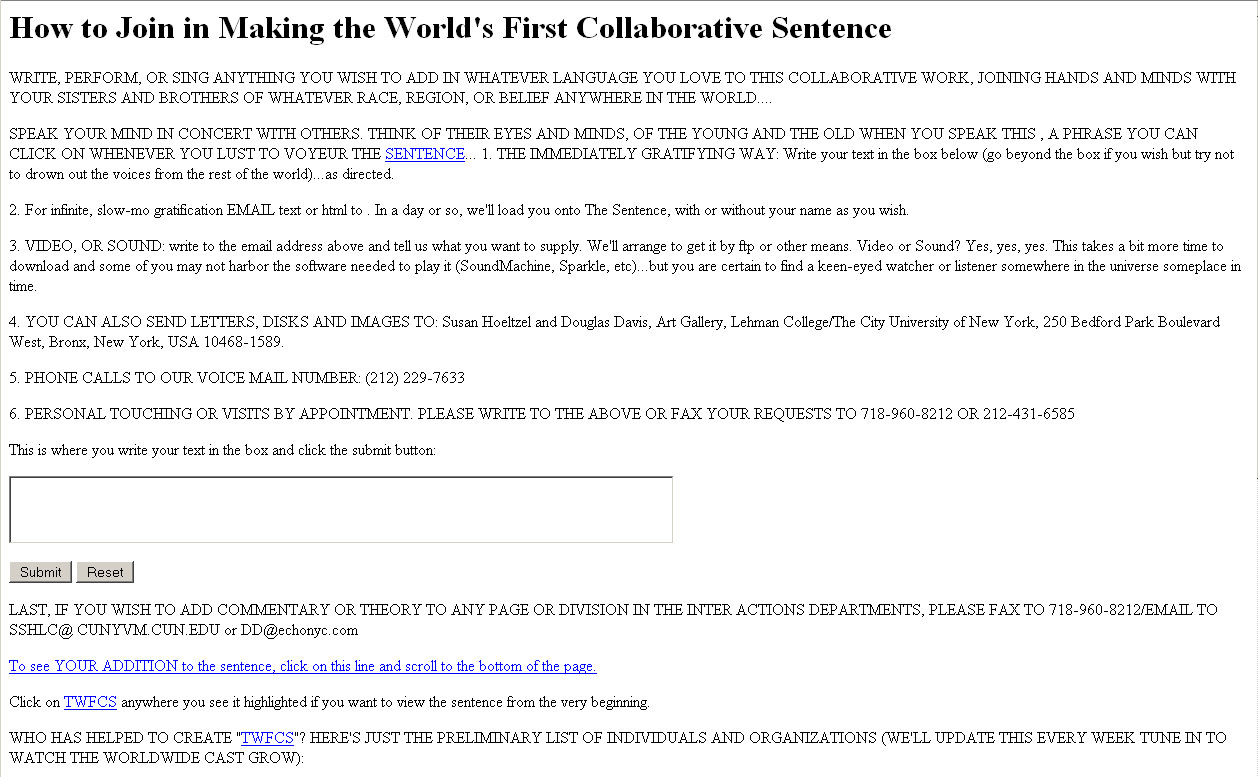
- Douglas Davis: The World´s First Collaborative Sentence, 1994: The classic of net projects for collaborative writing adds the contributions one after another like an exquisit corpse. Davis resists prescriptions except the rule that contributions have to close without point. Inventive users knocked out the program safeguarding the compliance with that rule. The ca. 200.000 contributions are divided in pages (in August 2003: 21 pages) (3/2003. 10/2010: Simultaneously documented in the Internet Archive).
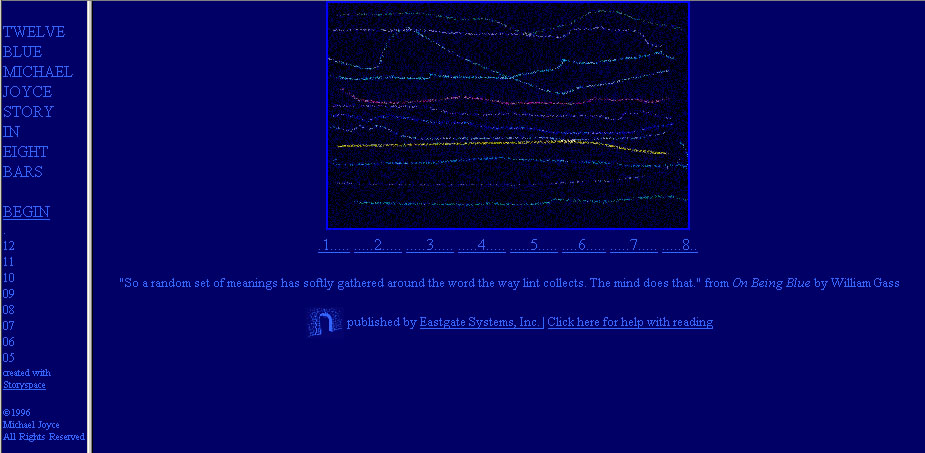
- Michael Joyce: Twelve Blue, 1996: The hyperfiction was programmed with Storyspace (Joyce developed the software with Pascal). The multilinear narration presents "8 bars" as horizontal textual lines which are segmented vertically in "12 threads". (12 x 8) textual segments are connected by 169 links. In the segments of the hyperfiction return metaphorical expressions for water and color ("blue") in 12 months ("12 threads" from December to November). These "threads" create a linear progression in the multilinear narration: Joyce´s segments offer progressive action lines (Heibach, Christiane: Literatur im Internet. Theorie und Praxis einer kooperativen Ästhetik. Thesis Universität Heidelberg 2000, p.260-266. 3/2003).
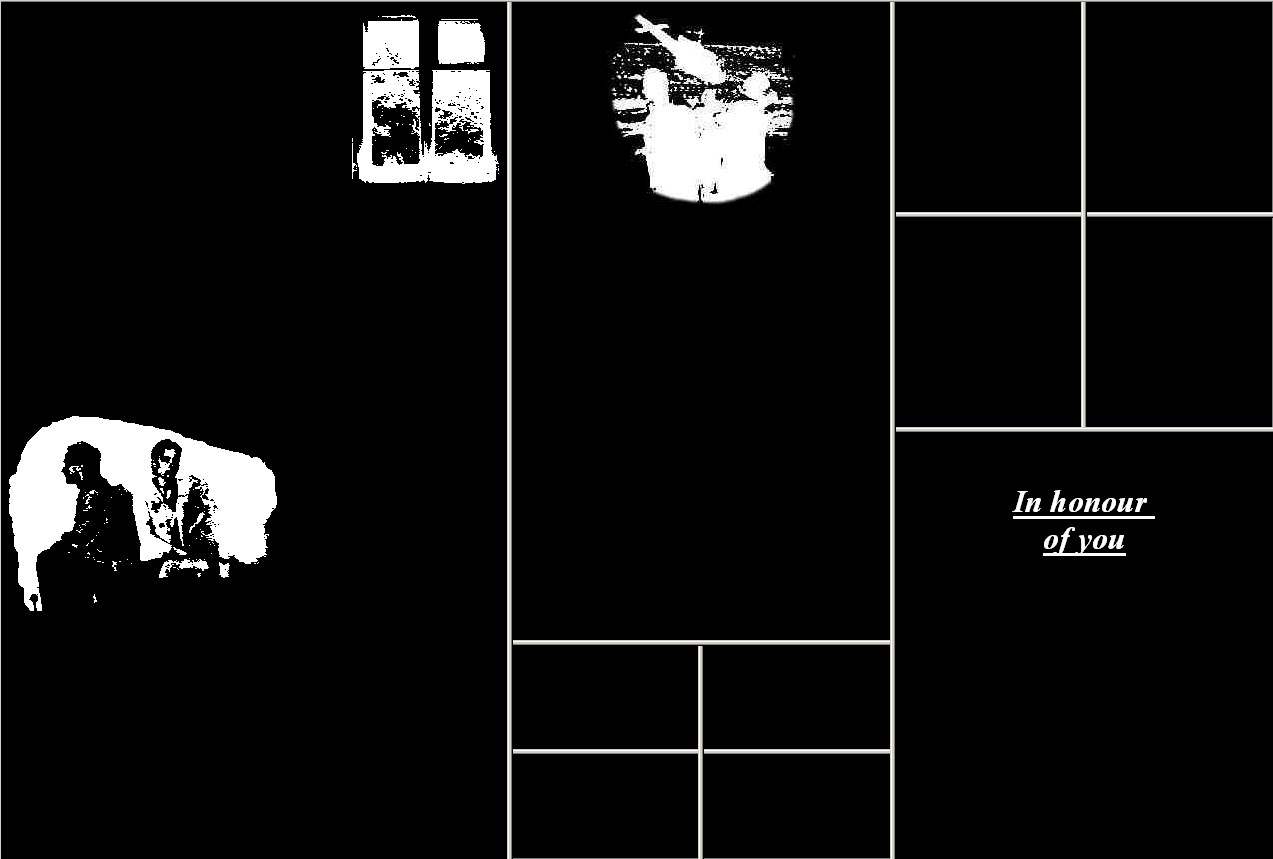
- Olia Lialina: My boyfriend came back from the war, 1996: The page appears first divided into two frames. On the left side appears a frame with two picture fragments (a window and a pair) without click functions. The right frame shows Lialina´s portrait and then divides itself from click to click into further frames with textual and illustrated fragments. Finally a lot of black frames are shown, except two frames on the left and right side. The first frame on the left side remains unchanged and the bottom of the right side presents Lialina´s name with a mailto-link. A classic of the frames application (3/2003).
- John Simon Jr: Every Icon, 1996/97: When starting the system begins to generate all variants of the possible combinations of black and white squares in a grid with 32 x 32 squares. The system (programmed in Java) will generate all variants in "several hundred trillion years" until all squares will be black. The processor of the computer conditions the project, not the web connectivity. The classic of computer art exists in variants for the Internet, Powerbook Monitor and Palm Pilot (Java. 3/2003).
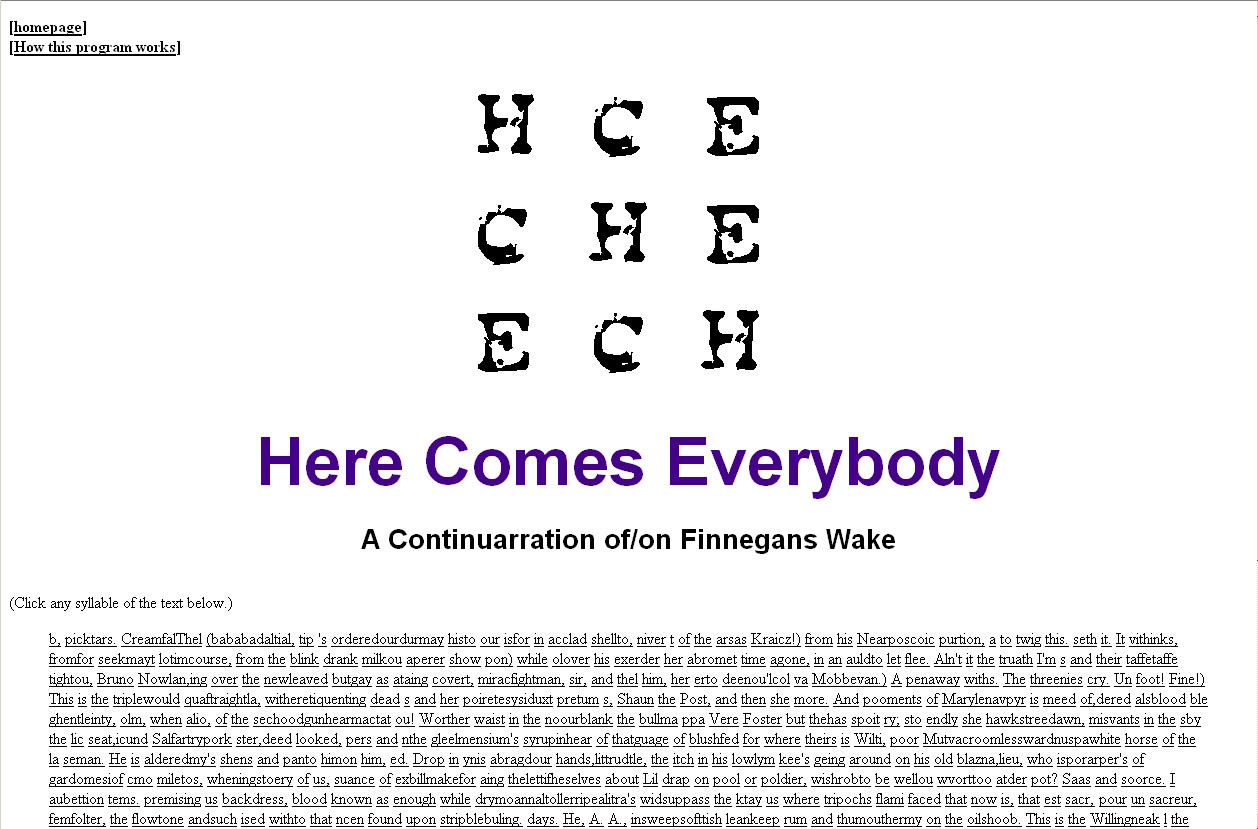
- Florian Cramer: Permutationen, Frühjahr 1996-1998: Cramer offers word combination machines, proteus lyrics and other literary chance operations in net reconstructions which allow to proceed playing with chances. It is possible to explore for example the "Systema Infinitum" (Anonymous, 1717) and Raymond Queneau´s «Cent mille milliards de poèmes» via game actions in Cramer´s web versions meanwhile Tristan Tzara´s instruction «pour faire un poème dadaiste» is executable with the help of a selection of newspapers, inscriptions of URL-addresses or inscriptions in a textual field. In "Here comes everybody" letters have to be chosen before syllables will be offered by a textual automat. Furthermore it presents syllable combinations in response to selected syllables and offered a procedure to invent words. James Joyce´s "Finnegans Wake" serves as a source for the construction of port manteau words (Perl, free software: GNU GPL. 3/2003).
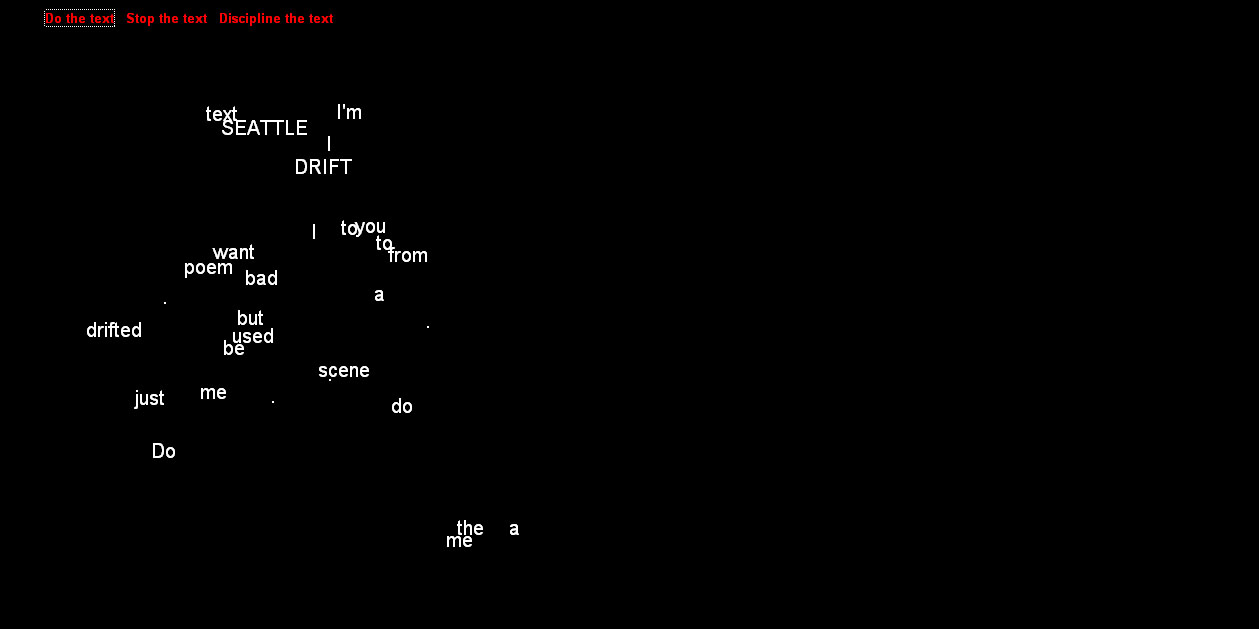
- Jim Andrews: Seattle Drift, 1997: The DHTML-poetry describes its own drift away. The drift can be stopped or refreshed, but it can´t be influenced. Andrews´ comments are integrated into the source code (3/2003).
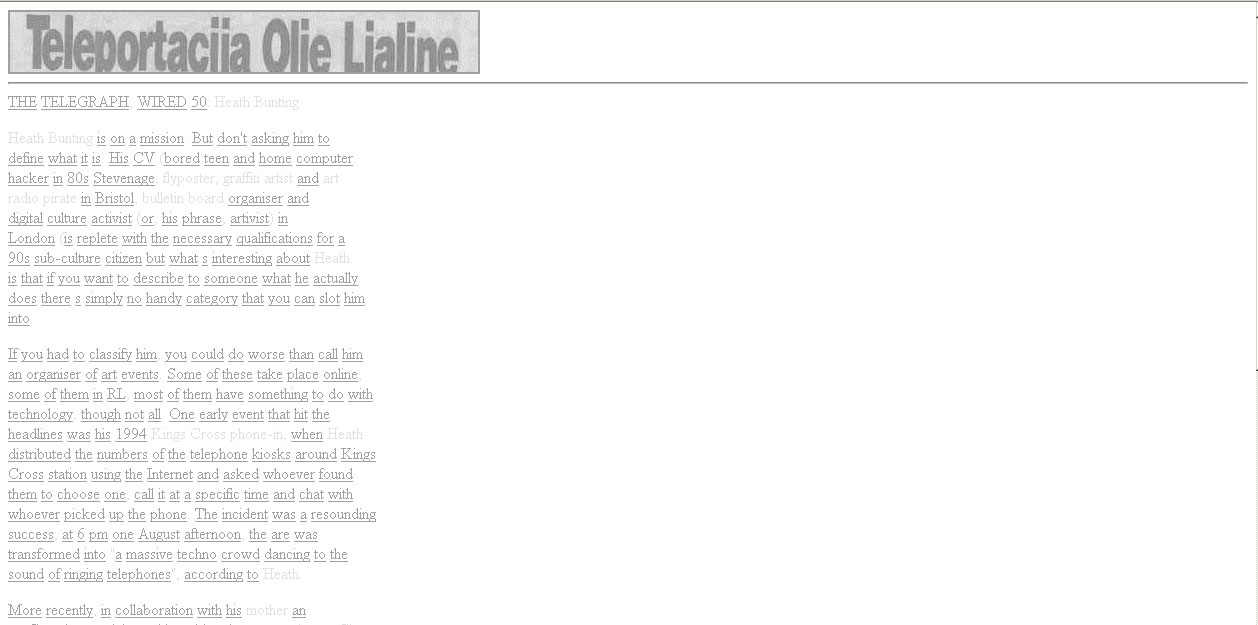
- Heath Bunting: _readme.html, own, be owned or remain invisible, 1997: The text source is an article on Bunting written by James Flint and published in The Daily Telegraph. Bunting uses the article´s words xyz as links to URL-addresses http://www.xyz.com. Since 1997 more and more of these constructed links connect to used web addresses. A classic project of NetArt (3/2003).
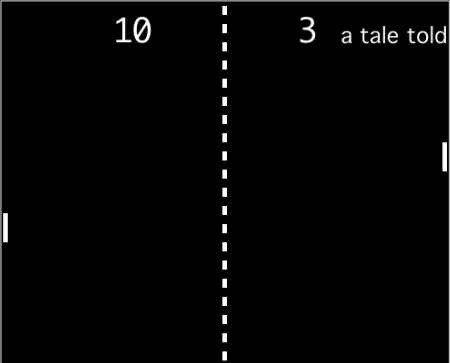
- Natalie Bookchin: The Intruder, 1999: In Jorge Luis Borges´ novel "La Intrusa" (The Intruder, 1966) two brothers desire the same woman. Bookchin transforms the story into a game with ten levels. The fictive actions of "shooting, fighting, catching, or colliding" (Bookchin, 2005) are rebuild as interfaces partially with modifications of game classics like "Pong" or "Space Invaders". The players take over the roles either of one of the brothers or of their victim. As a reward after having fulfilled the goal of a level the players can listen to further passages of the novel. The players fulfill the goals not only by winning but by losing, too. The players are forced into the roles of the brothers several times for whom the murder of the desired person saves their bortherly love (Shockwave. 6/2013).
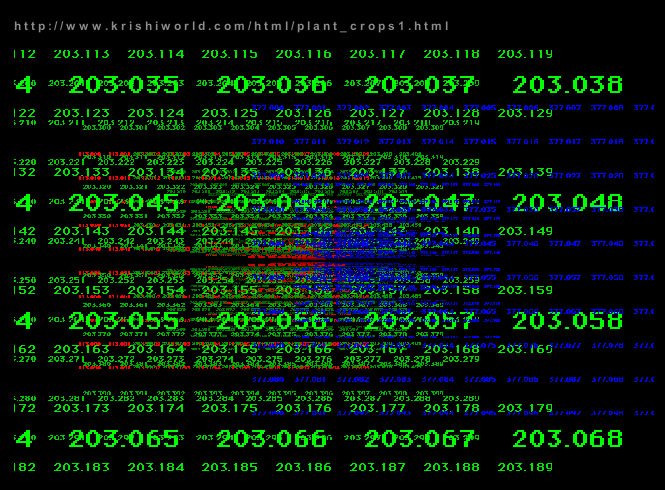
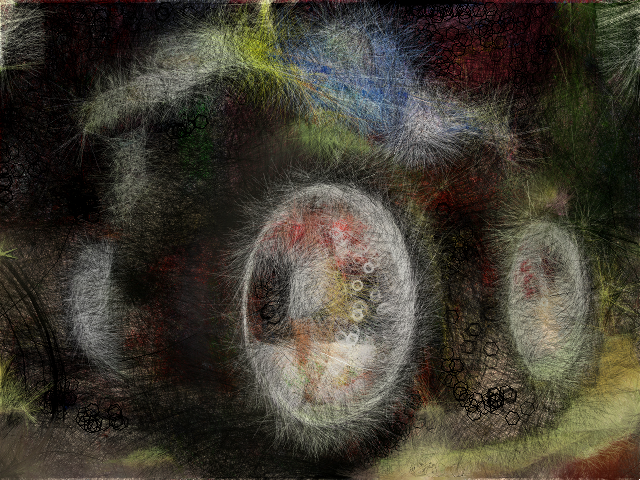
- Lisa Jevbratt/C5: 1:1(2), 1999/2001-2002: The first version of the database "1:1" was realized in 1999. It used IP (Internet Protocol) addresses which have been found with the help of crawlers. The database was actualized in 2001-2002 in the field of the IP addresses of 1999. The address research didn´t notice the kinds of accesses to sites. Five interfaces allow different entrances to both databases. The interface "migration" demonstrates the changes of IP addresses from 1999 (red) to 2001 (green) (3/2003).
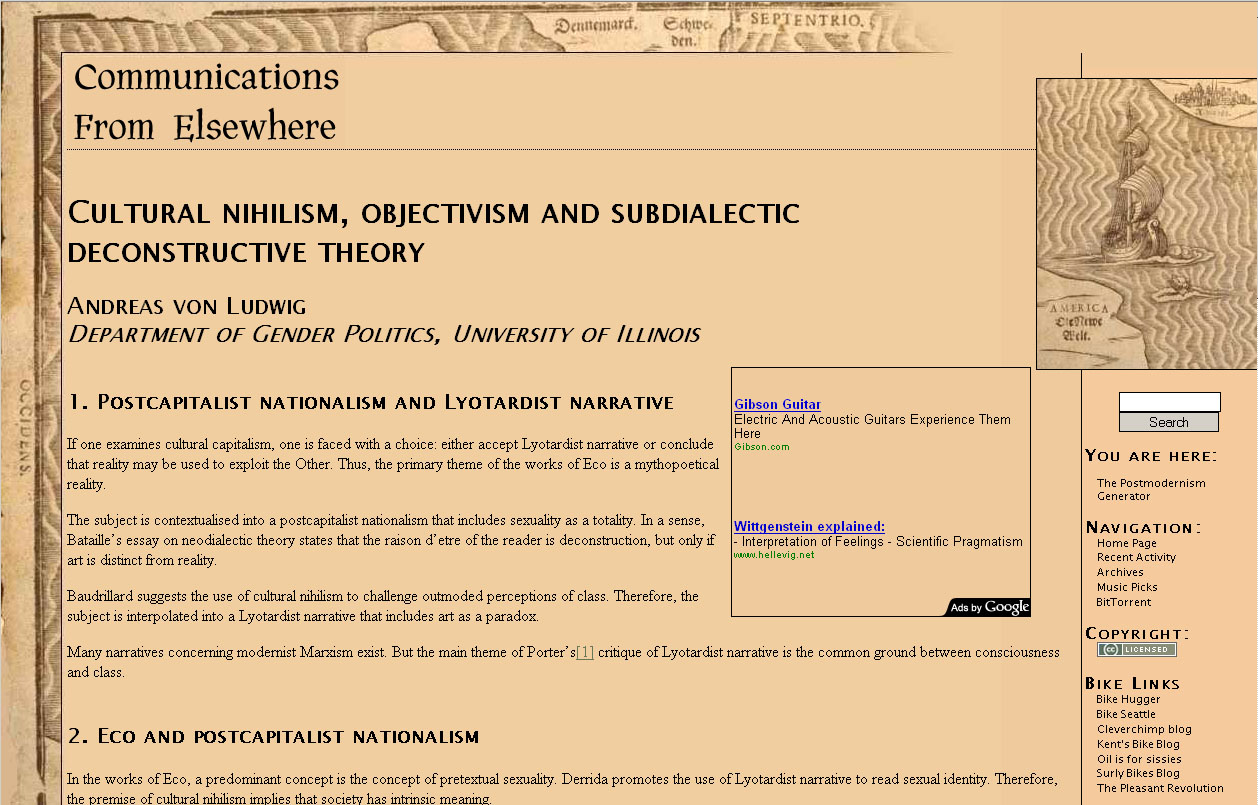
- Andrew C. Bulhak: The Postmodernism Generator, 2000: The "Postmodernism Generator" produced 887238 articles from 2/25/2000 to 8/18/2003. Each call causes the processing of a new text. Bulhak uses his Dada Engine in a version modified by Joash Larios to execute chance operations in syntactic recursions. The "Generator" and its travesty of postmodern theory allows a comprehension as a kind of consequence of the postmodern pastiche which suggests a transgression of the framework `postmodernism´ (3/2003).
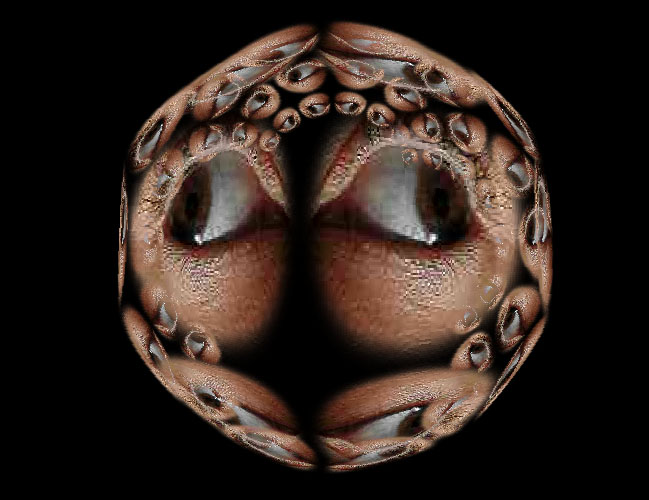
- Frédéric Durieu: Oeil complex, 2000: In moving their cursors users are able to explore the surprising constellations of 3D eyes in «oeil complex», the most interesting work of the project-set oeil pour oeil pour oeil (Director). Durieu tells he needed one day to write the source code of that example of an "algorithmic poetry" with the function 1/ (a+bi) (Interview with Jim Andrews, Paris Connection. 3/2003).
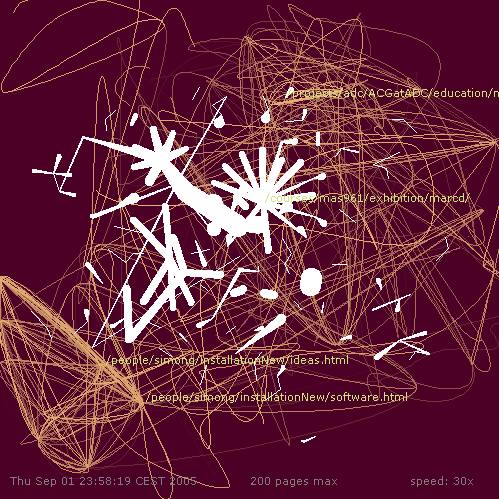
- Ben Fry: Anemone, 2000: The web installation of "Anemone´s" "toy version integrates the user logs in its reconstruction of the website with projects of The Aesthetics + Computation Group (ACG, MIT Media Laboratory, Leitung: John Maeda). The two-dimensional visualization exemplifies the concept of the Organic Information Design: Its growing ramification follows a "reproduction rule" and the relocatable branches are coordinated by a "movement rule". The project "Anemone" simplifies the oberservers´ orientation in complex structured websites with constant alterations. The thickness of white connections signifies the frequency of requests meanwhile orange lines present the obervers´ routes in the site of ACG. Clicks on branches and lines open the indicated URL-addresses (C++, OpenGL, Java. 6/2007).
- Simon Biggs: Babel, 2001: 3D number projections of the Dewey Decimal Classification System (used in libraries) are modifiable by click operations – and appear modified because the operations of other users are observable. Clicks on numbers open windows to ca. 1000 Websites which Biggs coordinated with numbers. These sites are subordinated to the hierarchical classification system of libraries. The flow of number projections demonstrates the non-observable plurality of available data and makes it possible at the same time to dive into thematically arranged websites. "Babel" creates a data space as well as an imagination area between the impossibility of an overview and arranged varieties (Shockwave; 3/2003, 10/2022: only found as video documentation).
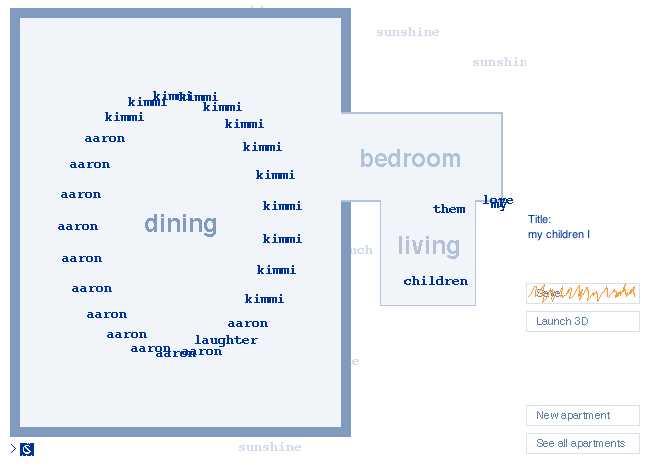
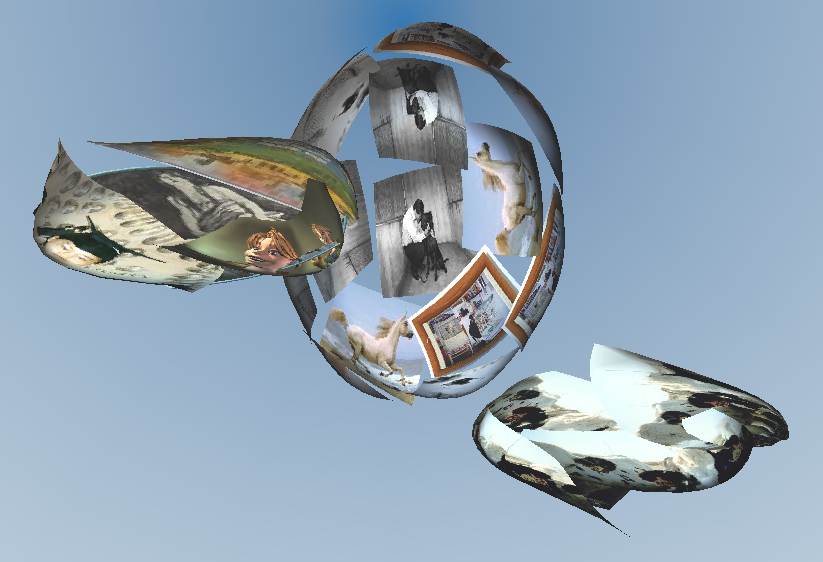
- Jonathan Feinberg/Marek Walczak/Martin Wattenberg: Apartment, 2001: Typed words with semantic fields of habitation are assigned to twelve categories for types of housing spaces. This coordination is the basis material for the generation of storable ground plans showing the categories of the housing spaces´ types and the typed terms. Some typed terms are presented on the ground plans as animated loops. Stored flats can be recalled with the help of maps ("cities") in configurations based on plan characteristics. Web search engines find pictures using the typed terms for the generation of three-dimensional elements. Observers are able to move through the VRML-elements and listen to the typed words via text-to-speech software (Java, VRML files f.e. you can construct files of the three-dimensional version with FreeWRL or Cortona and open the constructed WRL file in Firefox. 6/2007).
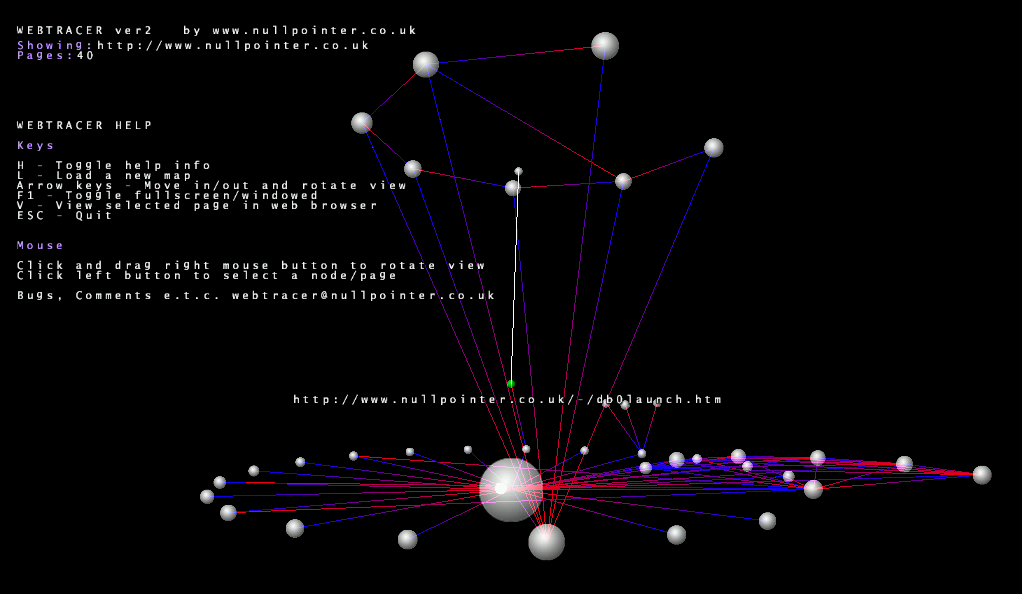
- Nullpointer (Tom Betts): WebTracer, version 1, 2001/version 2, 2003: The second version of the browser visualizes the links between pages of a website in a three-dimensional diagram: The graphic formation of lines between balls in different sizes and colours indicate the positions of webpages within the structure of a site. This formation is rotable with the arrow keys and it is scalable as well as diminishable. It indicates the names of the websites´ files in the case of crossing them with the cursor. The first vision allowed to open these files with a click meanwhile this function is eliminated in the second version. You can enter an URL address of a website in the second version to produce files with data about internal links for the "visualizer" and its construction of the site´s diagram (only for PC. OPENGL, DirectX, C++. 6/2007).
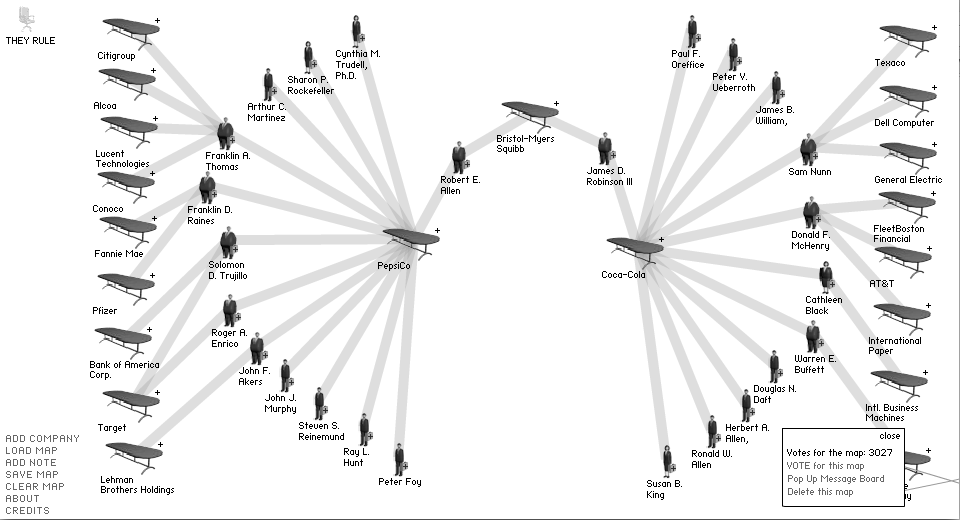
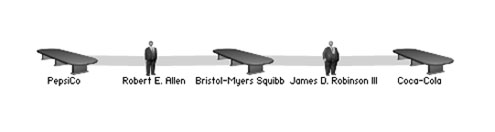
- Josh On & The Futurefarmers: They Rule, 2001/2004/2011: Several diagrams demonstrate power relations as the result of the distribution of places in supervisory boards of companies. The map "Pepsi urs Coke" of the first version (2001) allowed to recognize such connections particularly easy. The second version (2004) allows to request personal connections between corporations, f.e. you can request the personal connections between "PepsiCo" and "Coca-Cola". The data of the adjustable icons for supervisory boards appear in popups. Members of the activist group The Futurefarmers collected the data for the project enabling them (and us) to recognize relations of economic power and to use that knowledge in actions. In 2004 the maps were actualized. Since 2011 LittleSis.org supplies "They Rule" with dates of the 1000 top US companies for the creation of new maps (Flash, PSP, MySQL. 3/2003, 6/2007, 6/2013, 10/2022: video documentation).
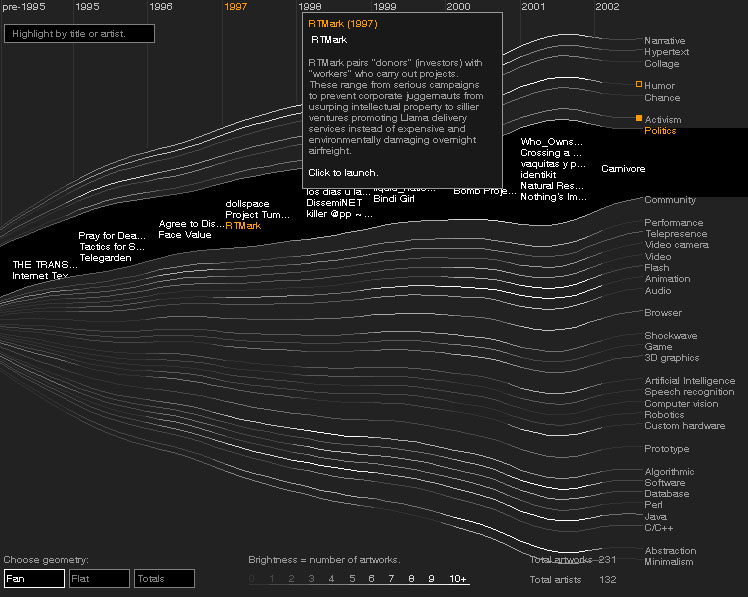
- Martin Wattenberg: A Net Art Idea Line, 2001: Fan-shaped lines are combined with designations for types of NetArt. The width of the lines increases in accordance with the quantity of examples. Cursor actions over lines widen the interspaces and the titles appear together with popups which include short descriptions of net projects of a certain type in a chronological order. Links connect users with the projects. Java webdesign of a NetArt chronology. (3/2003).
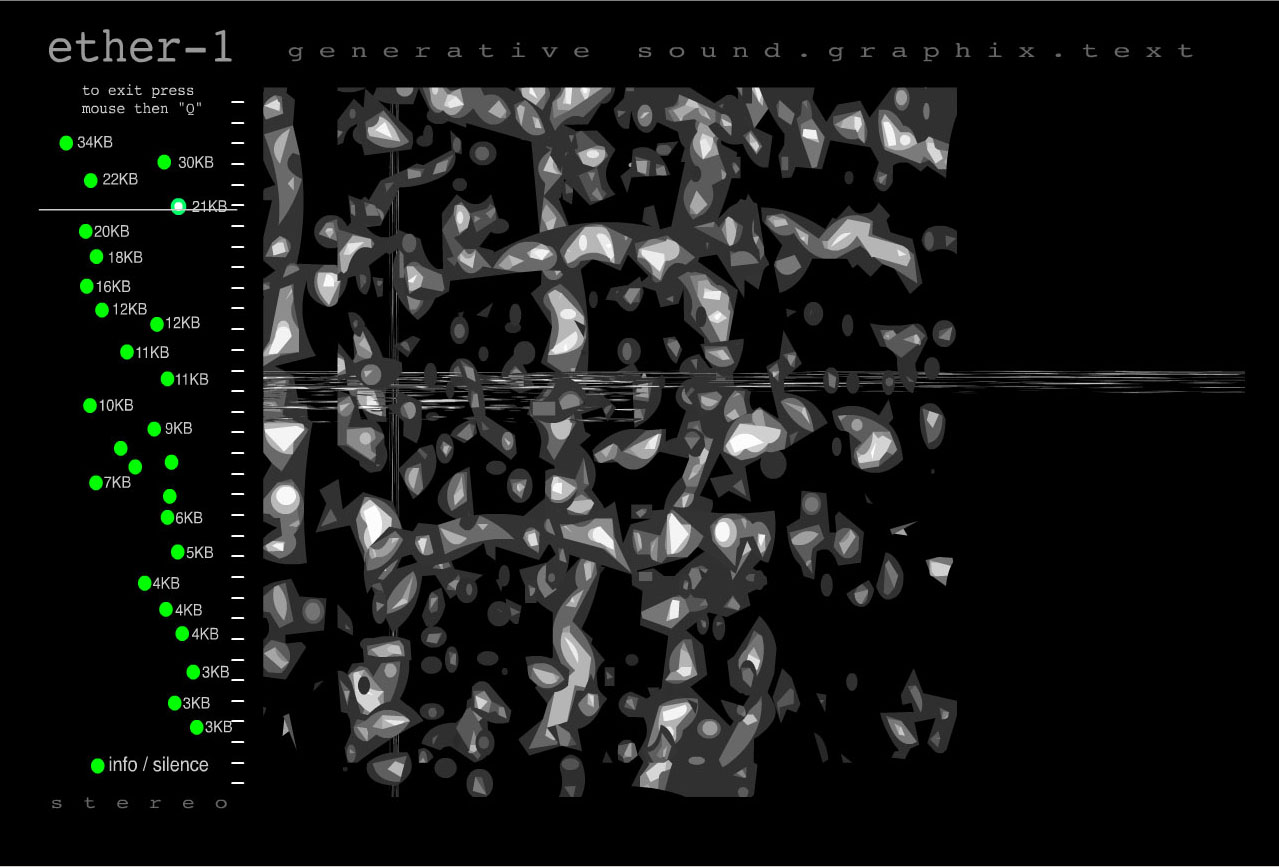
- Ian Andrews: Ether-1, 2002: The index to audiovisual Flash-Animations simulates the radio´s frequency search system. The radio scale of the wave frequency is substituted by a vertical scale of the files´ seizes in kBytes. The animations deal with characteristics of the literary, musical and artistic avant-gardes. The interface refers to the mass medium radio which was predominant together with newspaper and film in the beginning of these avant-gardes. The graduation within the vertical kB-scale from the left to the right side presents the needs of the microprocessor´s capacities to reproduce the animated time without delay (Flash. 3/2003).
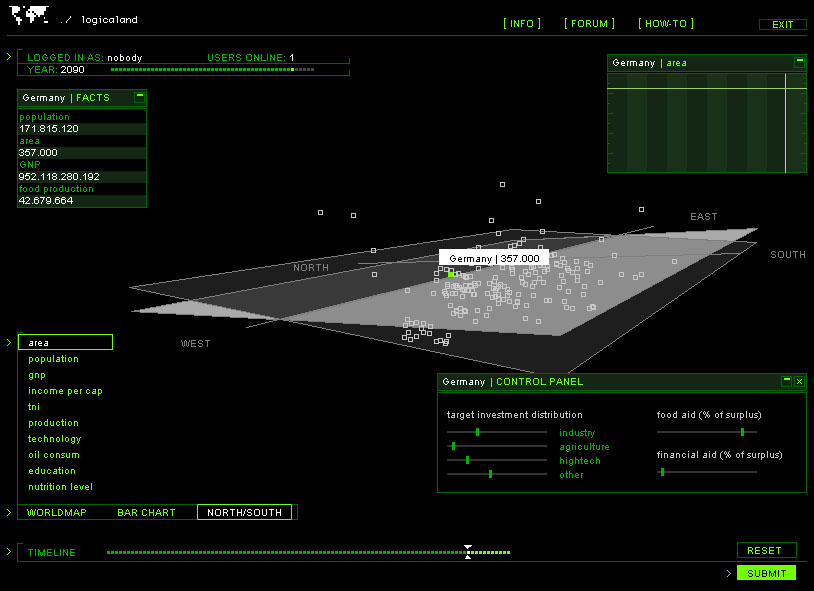
- Michael Aschauer, Josef Deinhöfer, Maia Gusberti, Nik Thönen: ./logicaland, 2002: The world model with statistics started in the "first run" with dates of the year 2000, ready for the users´ manipulations. Single users can´t produce recognizable visual changes because the system can solely register common modifications (free software: GNU GPL. 3/2003).
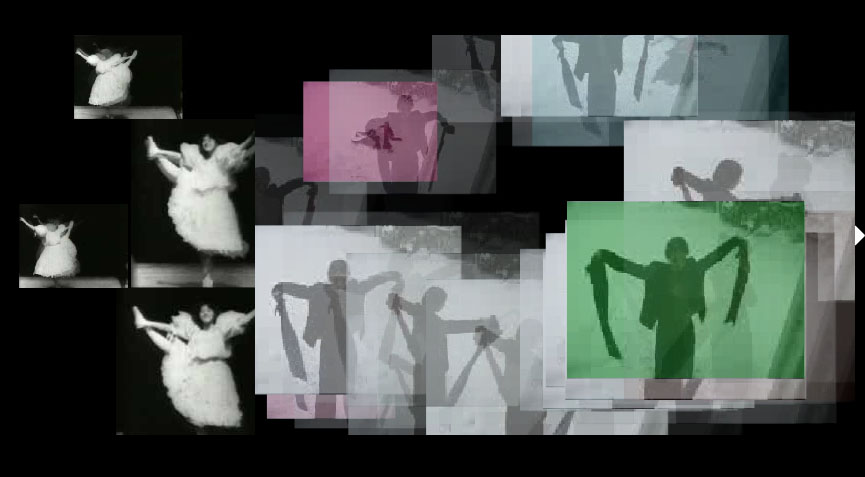
- Babel (Chris Joseph): Turnbaby, 2002: The experimental studies of Thomas Alva Edison (two films, end of 19th century) and a video of b´toch bet are presented in short sequences and stills. Moving pictures, video sequences and simultaneous presentations with possibilities for changes via click operations constitute net configurations of the photographic and filmic montage. The historicizing element is reduced to a short form of the relations between cultures of body movements and the history of media. In 2002, "Turnbaby" constituted an exemplary actualization of the visual net possibilities (HTML, Flash, Real Audio, JavaScript, Image. 3/2003, 6/2013).
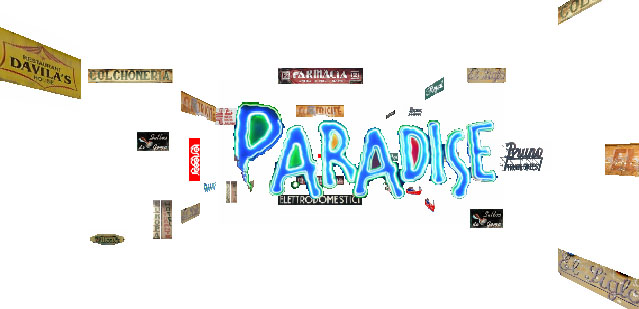
- Büro Destruct/CUE/Humantools: Los Logos, 2002: The site "Los Logos" is open for mails with photos of found logos and signets. The participation of users constitutes an archive which includes logos of corporations as well as signets of minor firms and shops. A lot of these signs disappear as a consequence of the concentration on a few corporations with many branches. The users´ contributions are integrated into a 3D logo-city together with references to the found locations. The simulation of an urban context with illustrations of more and more extincted real logos and signets serves the project to reconstruct the vanishing local refractions of urbanity which included elements of a former logo culture (JavaScript, Director). A logo memory game enriches the design oriented site (JavaScript, Flash. 3/2003, 10/2022: not found any more on the Web).
- Nicolas Clauss: Le Cri, 2002: Users are able to determine the performance of Stéphane Copin´s actions and the music ("Piano Phenstec" with music of Karlheinz Stockhausen) by faster or slower click sequences...as if the click operations cause sounds and cries, as if the performer Copin reacts to faster click sequences and louder sounds with faster head movements, as if an increasing pain forces him to act (Director, JavaScript. 3/2003, 6/2007, 10/2022: It can no longer be opened because Shockwave is no longer supported).
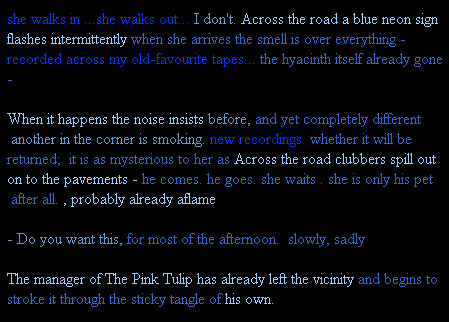
- Pauline Masurel: Blue Hyacinth, 2002: Four short novels appear in different blue tones. Two squares are partitioned in four fields in different tones which offer click surfaces for the call of the texts. Each of the texts is segmented in 30 pieces. Cursor movements over the selected text provokes integrations of textual pieces in other colors. In the source code Masurel explains the integration of numbered textual pieces in "slices" (Stir Fry Indices based on the DHTML inner HTML method). It is possible to generate 1.152.921.504.606.846.976 texts (3/2003).
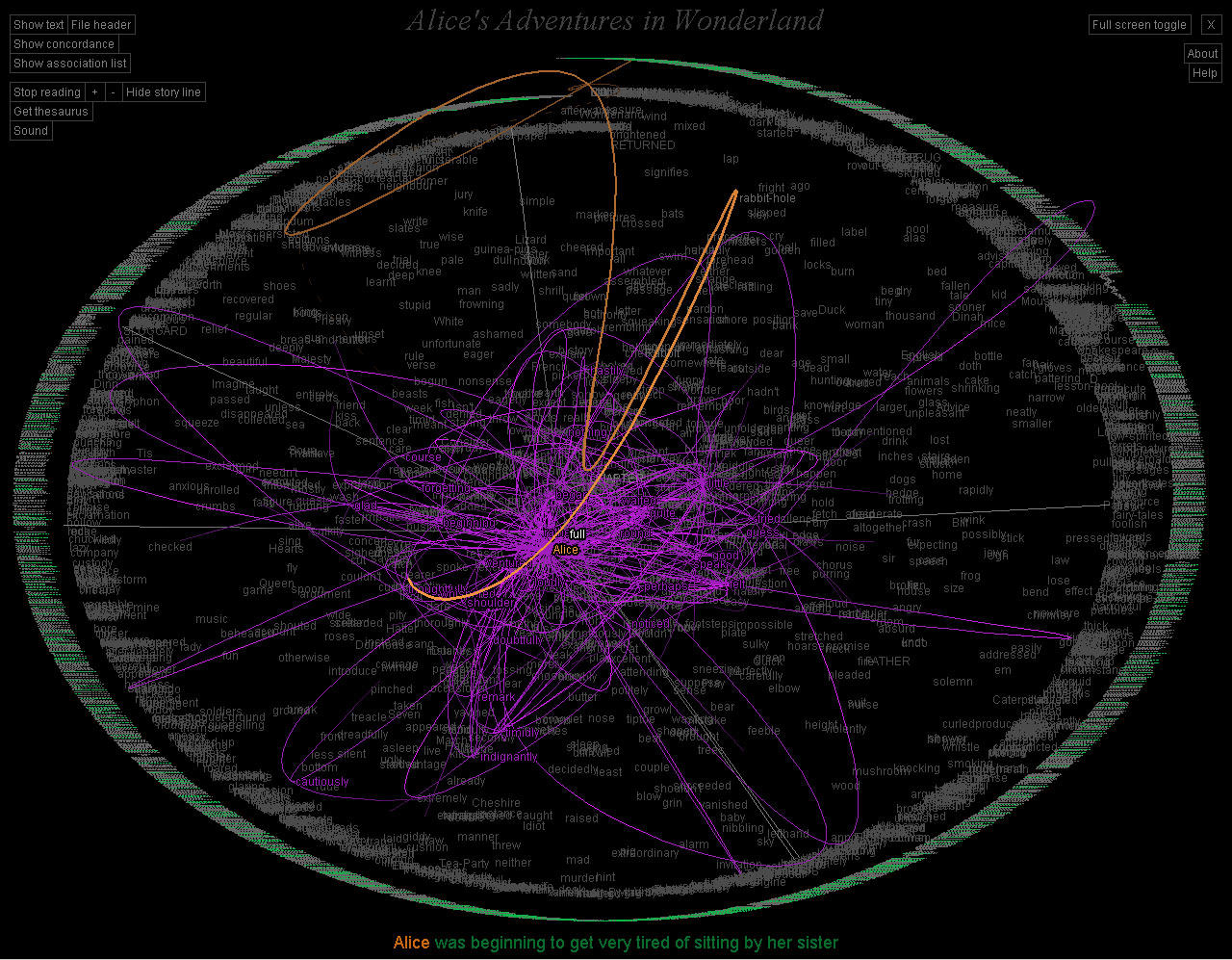
- W. Bradford Paley: TextArc, 2002: Relations between words of literary texts (exemplary realized in Shakespeare´s "Hamlet" and in Lewis Carroll´s "Alice´s Adventures in Wonderland", other cases offer the texts of the Project Gutenberg) are plotted by lines in an oval. Example "Hamlet": The frequency of the occurrence of the words is related to the brightness of their presentations. The verbal surroundings (the contexts in which words reoccur) are represented by grey straight lines. The function "Pairwise Associations" shows the sequence of word occurrences via lilac-coloured curved lines. The repeated uses of word pairs are presented as straight lines in colors from orange to red. Relations between groups of words with a common origin can be called up under "show concordance" (also over the Alt key or per double click) and are shown as straight orange lines (Java. 3/2003).
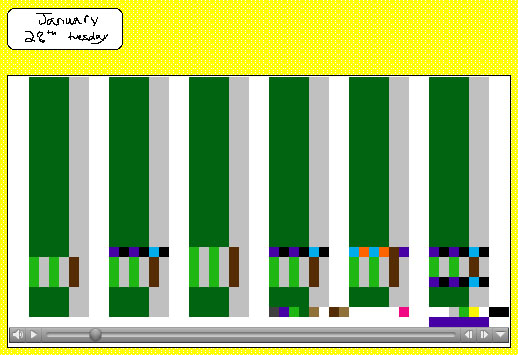
- Cory Arcangel: Data Diaries, 2003: The daily dates of Arcangel´s RAM in January 2003 are translated with Quicktime in colour and b/w-animations. The conversion of data with ready-made software fulfills anti-artistic intentions. Arcangel´s RAM-videos are discussed in controversies (Quicktime. 3/2003).
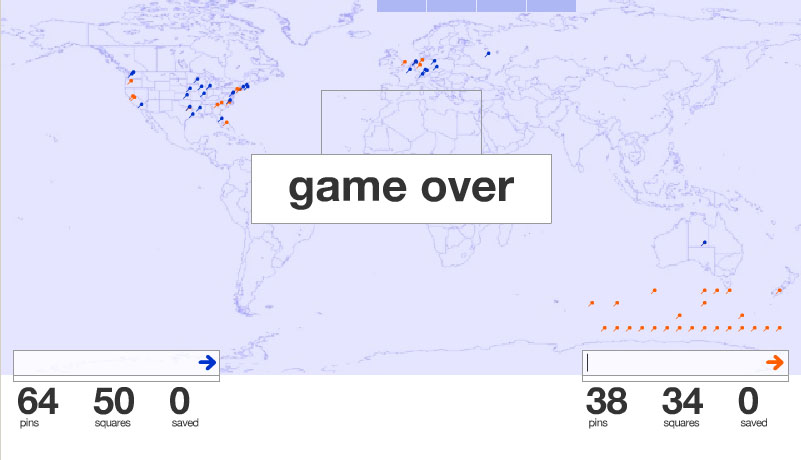
- Ralf Chille: Capture the Map, 2003: A player tries to win in games against the computer or another player. For both sides 64 blue or orange pins are hold available to be located on the world map following the terms typed by the players or chosen by the computer (on the left side for the blue party and on the right side for the orange adversary). Terms are assigned to places using the NetGeo-database of the Cooperative Association for Internet Data. The winner was able to place all pins faster than the adversary. If the game will be finished before the winner located all pins then the achieved points will be the measure for the ascertainment of the winner (The points are designated as "sticks" and if the amount of "sticks" achieved by both parties is the same then it will be critical which adversary has occupied and secured more "squares" respectively "fields" (on "saved fields": see the "introduction". Flash. 6/2007. 10/2009 not available in the net).
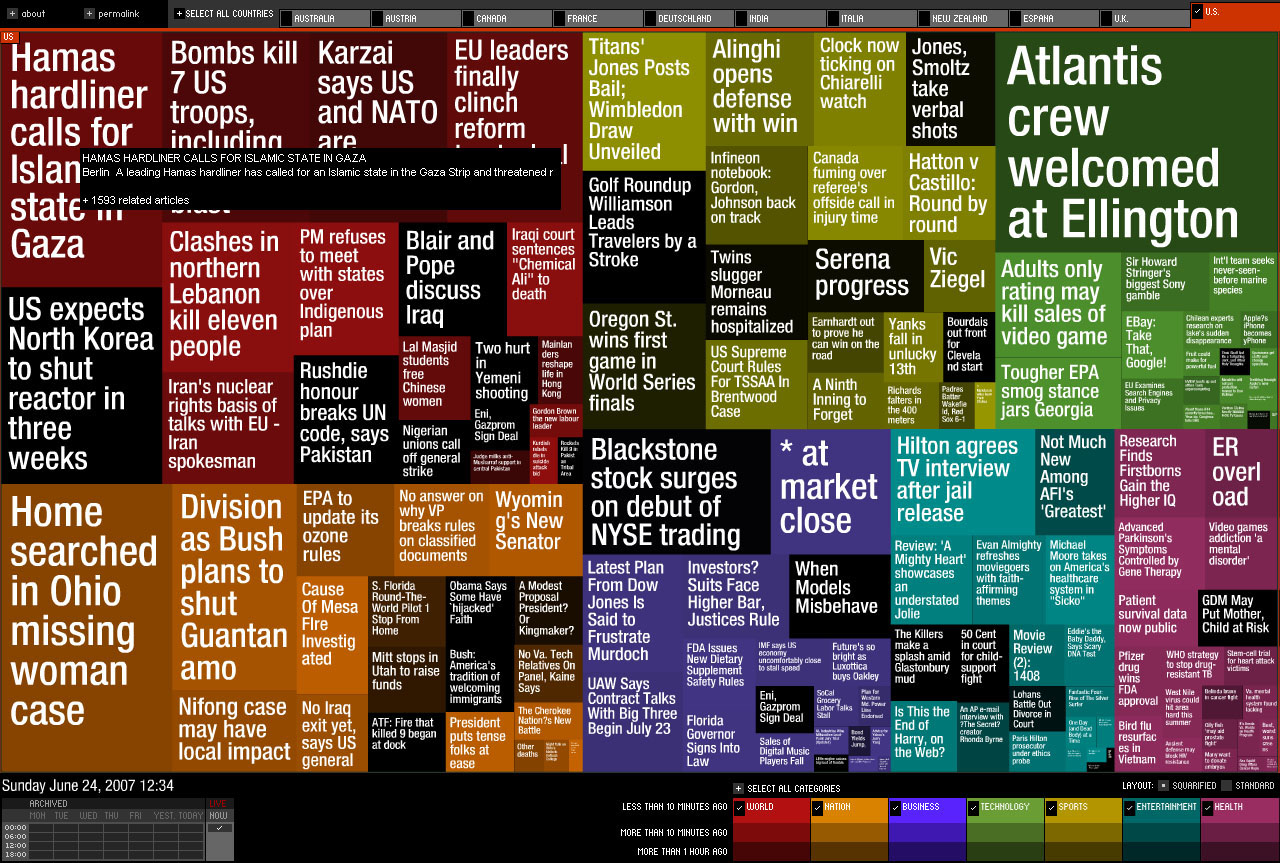
- Dan Albritton/Marcos Weskamp: Newsmap, 2004: The algorithm for visualizations provided by the program Treemap (Ben Shneiderman u.a., Human Computer Interaction Lab, University of Maryland, since 1990) is implemented in "Newsmap" for the mapping of Google News. News with many "related articles" receive wider rectangles with integrated links to one of the messages collected by Google News. The hierarchical structure from big rectangles above left to small rectangles bottom right originates from "Treemap" and serves in "Newsmap" for the indication of the amount of news about the same event. The colours of rectangles mark types of news like "business", "technology" and "sports". After the choice of countries (and languages, see the bar above), the type of the news and the date (bottom) it is possible to open submaps (Treemap, Flash. 6/2007; 3/2020 not available in the net).
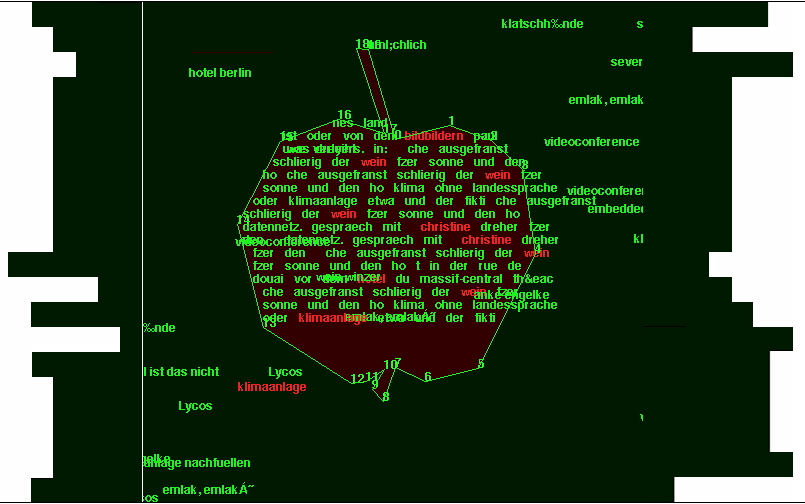
- René Bauer/Beat Suter: Apple in Space, 2004: The project recreates Reinhard Döhl´s Apfelgedicht of 1965 and Johannes Auer´s worm applepie for doehl (1997). The apple of the poems is modified in "Apple in Space" into a contour drawing with lines connecting numbered points. The actual search entries in Fireball´s Live Search (Fireball Livesuche, German search engine with a live search permanently reloaded) `stream´ with Streamfishing from the left side to the right side. Clicks on words open the Fireball´s search results and the clicked words are presented in blue letters within the stream of words meanwhile words in red letters are "potential worms" (René Bauer): If these words appear within the apple´s contour then they are `enriched´ with terms out of the words´ context in the database, storing files of Reinhard Döhl´s website (the context: 30 signs in the text of the database to the left direction and from there 60 signs to the right side). If the apple is filled then it lets escape the catched words and the catching of words starts again (Java. The flicker on PCs disappears on Macs. 6/2007).
- Mary Flanagan: [six.circles], 2004: Two players move triangles above other triangles and build hexagons. Three triangles per hexagon have to be infected with a red "x" before they can be closed with an element constituted by two chain links. Closed hexagons appear yellow. Green Greek crosses can be used for the healing of hexagons infected with too much red crosses. The player with the higher amount of points will be the winner of the game. It was developed for the Wooloo Organization´s "Thank you" show to collect money for a HIV Education Center in Khayelitsha/South Africa (Flash. 6/2007).
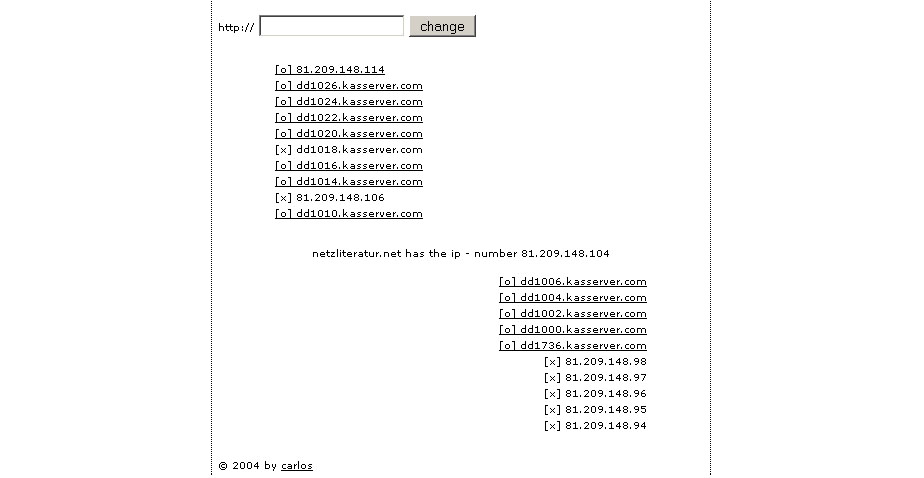
- Carlos Katastrofsky: Area Research, 2004: After "Neighbourhood Research" (2004, not anymore available in the net) presented only two IP addresses in the neighbourhood of a chosen URL-address, now "Area Research" offers twenty surrounding IP and URL-addresses. Not few of these links to digital neighbours lead to webpages with "forbidden" access (6/2007).
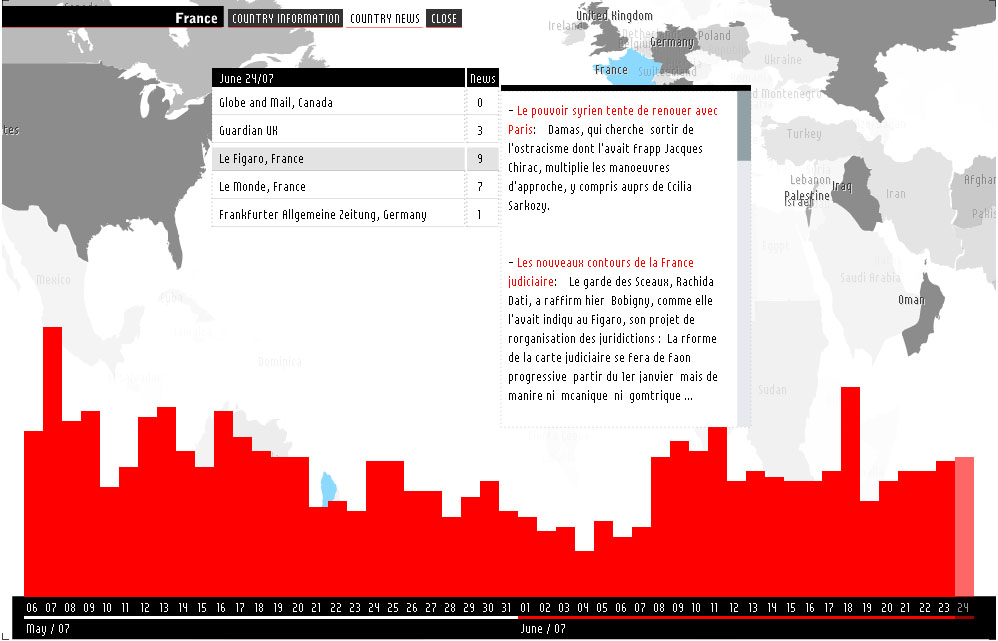
- Mauricio Arango: Vanishing Point, 2005: Messages with daily news are stored in a news database if the events are reported in one or two daily newspapers of the seven largest countries in the world. A world map ("Peter´s Projection Map") demonstrates in grayscale how much messages on events per country are stored in the database within the last 50 days. RSS Feeds of the daily newspapers offer short versions of the news and can be requested after selections of countries (PHP scripts, Flash. 6/2007. 10/2009 not available in the net).
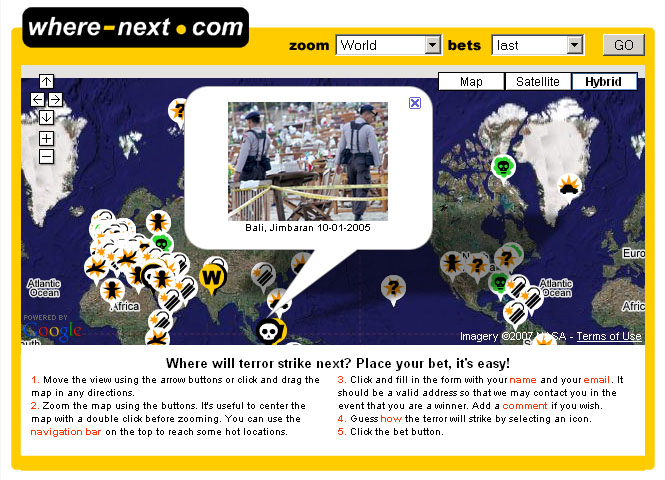
- Guerillamarketing.it/molleindustria.it: where-next.com, 2005: The winner foresees the place of the next terrorist attack more precise than others: The players click the chosen location on a world map with an aerial view and choose one of the six attack types on the form below the map. The player with the most precise preview wins if within 48 hours ten or more civilian lives will be reported to be victims of attacks in non warring regions (decisive: the selection of the attack type and the precision of the localization). Winners receive yellow T-shirts with imprints informing on place and time as well as presenting a photo of the attack combined with the sentence "I predicated it". "Political correctness" is set at defiance for the goal to reduce to absurdity the capitalistic logic of the "profits regardless of morale" and the means of the entertaining industry like the combination of game, spectacle and violence in a precarious case: The real victims are ignored in the game like for example the arms manufacturers and the computer games industry disregard the consequences (6/2007).
- Leonardo Solaas: Dreamlines, 2005: A PHP script reacts to the entries of search terms with searches for pictures. A processing applet translates the pictures found by the PHP script one after another into autonomous particles. Each particle uses the colour value of a preceding particle to generate the direction and the speed of its own development. One of eight transforming manners is chosen by chance operations. The particles can grow until the amount of 1500 and follow dynamics producing similarities to three-dimensional representations (Processing, PHP, Flash for the user interface. 6/2013; 3/2020: In 2018 Dreamlines 1.0 was susbstituted by Dreamlines 2.0.).
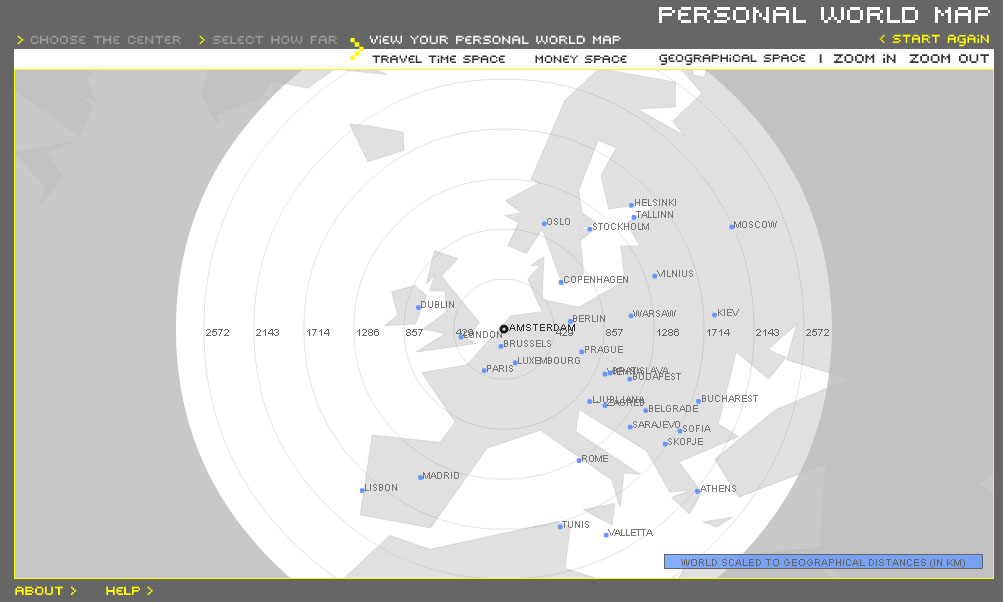
- Roxana Torre: Personal World Map, 2005: On a world map presenting the continents as grey areas it is possible to relocate capital cities of the world into the center of the map via clicks on the localizations´ yellow marks. On the top of the map appears a list for the choice of the flight duration and the tickets´ prizes. The results are presented in the form of maps with concentric circles indicating the distances of accessible places ("anamorphic mapping"). It is possible to choose time or money as parameters of the circles, too. If the accessible places are contacted with the cursor then the ticket´s prize and the flight´s duration appear (Flash, Python. 6/2007).
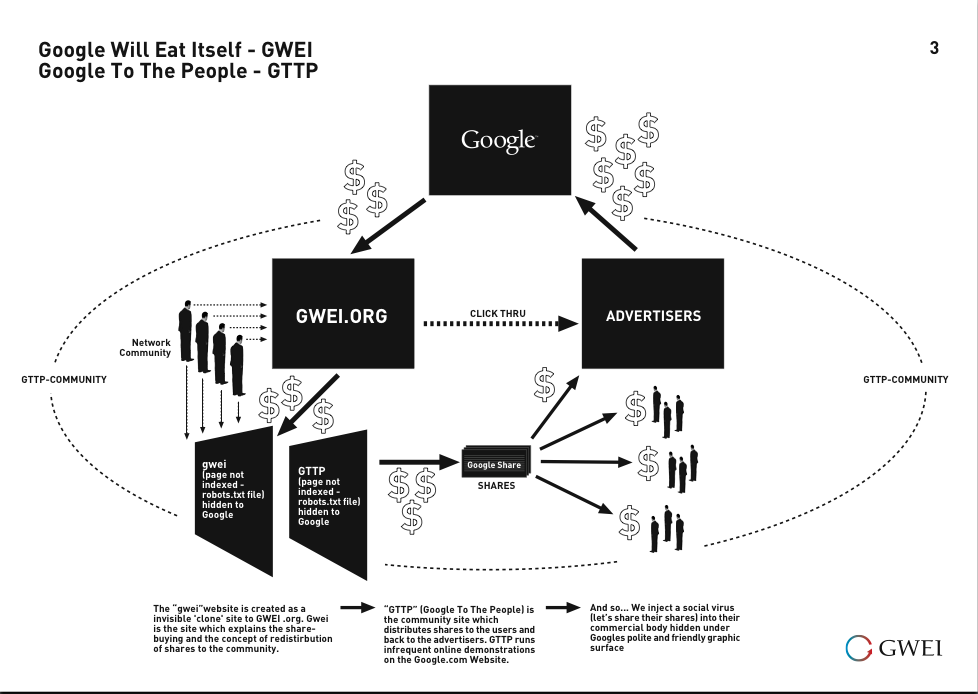
- UBERMORGEN.COM/Paolo Cirio/Alessandro Ludovico: GWEI – Google Will Eat Itself, 2005: The holders of websites receive transfers from Google to their accounts for the activation of windows usable by the AdSense program to insert text ads and GWEI uses theis procedure to earn as much money as possible and to invest it in Google shares. The shares are handed over to the GTTP Ltd. (Google To The People Public Company) to distribute them back to the public of net participants. The goal of the investments is to buy Google with nothing else than with the profits derived from Google: The index page of gwei.org presents the actual amount of shares, its worth and the time needed for the ownership of Google if the actual speed of profits and investments remains constant. The procedure to multiplicate clicks within a network of websites by a series of robots has caused the legal department of Google Germany to direct Hans Bernhard´s attention in a certified mail to the prohibition of such a procedure in the general terms and conditions of AdSense Online and to inform him about their will to prosecute infringements but no indictment followed. Furthermore, Google excluded the sites installed (for the use as "decoy accounts") by members of GWEI for the textual ads from its AdSense program without being able to endanger the progress of the project (7/2007).
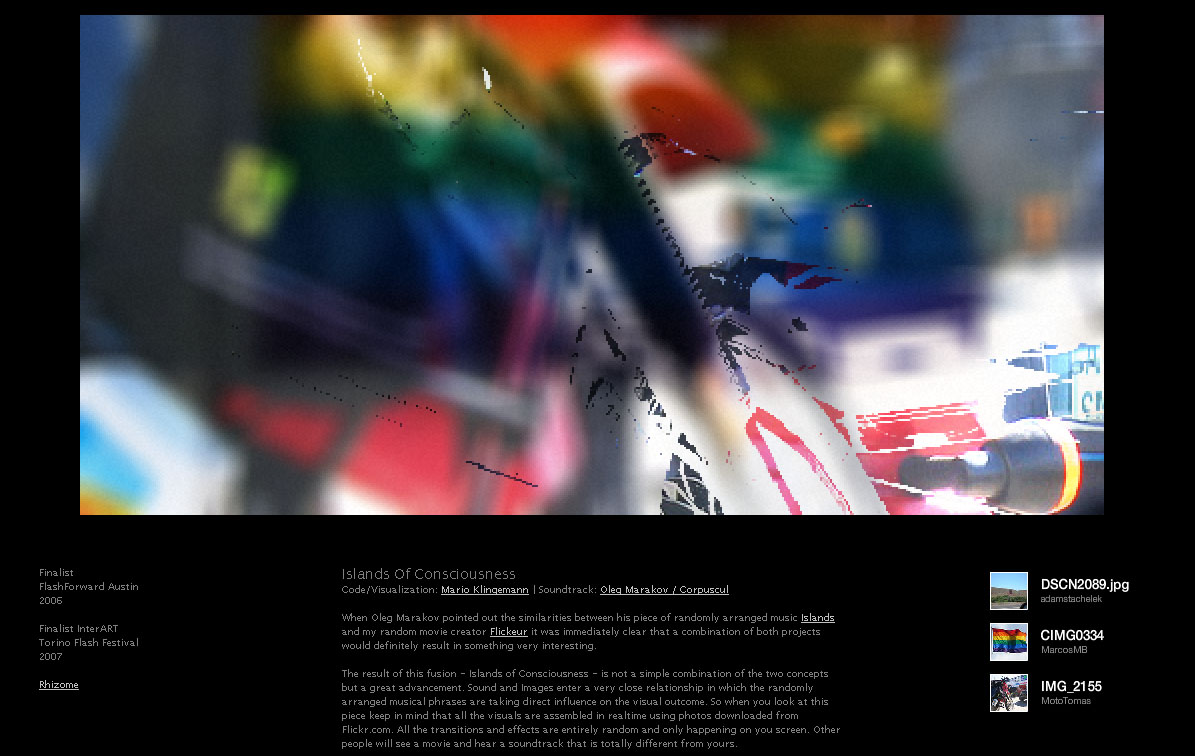
- Mario Klingemann/Oleg Marakov: Islands of Consciousness, 2006: An index on the right side displays thumbnails of pictures downloaded from Flickr.com and presented as a stream of pictures in big size. The selection of the photos is not completely at random: At least one property has to be a common part of two consecutive pictures. But the visual effects are the results of chance operations. The music is generated with elements of a database with audiofiles (40 MB). This soundtrack influences the sequences of repeated photos and the visual effects. The film is generated on the computers of the observers in real time with the consequence that obervers on different computers never see the same field (Flash, Flashr. 6/2007; 3/2020: the audio generation only functions; image generation as video documentation).
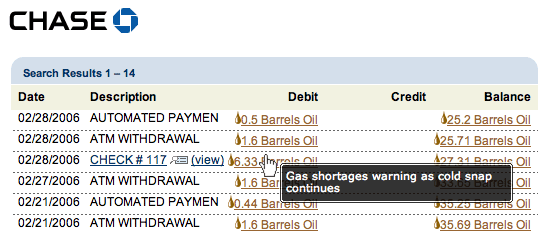
- Michael Mandiberg: Oil Standard, 2006; Real Costs, 2007: The plug-in "Oil Standard" for the Firefox browser changes the prices indicated on webpages from U.S. dollar to raw oil prices (in "barrel"). The prizes of goods are changed in real time in "barrel" following the changing raw oil prices. In 2007, Mandiberg develops the plug-in further in "Real Costs": It substitutes the flight data on the websites of airline companies like Orbitz.com, United.com and Delta.com by calculations of the CO2 emissions. The CO2 emissions of airplanes are compared with the air pollution of trains or busses at travels covering the same distances (Firefox Extension Greasemonkey. 6/2007).
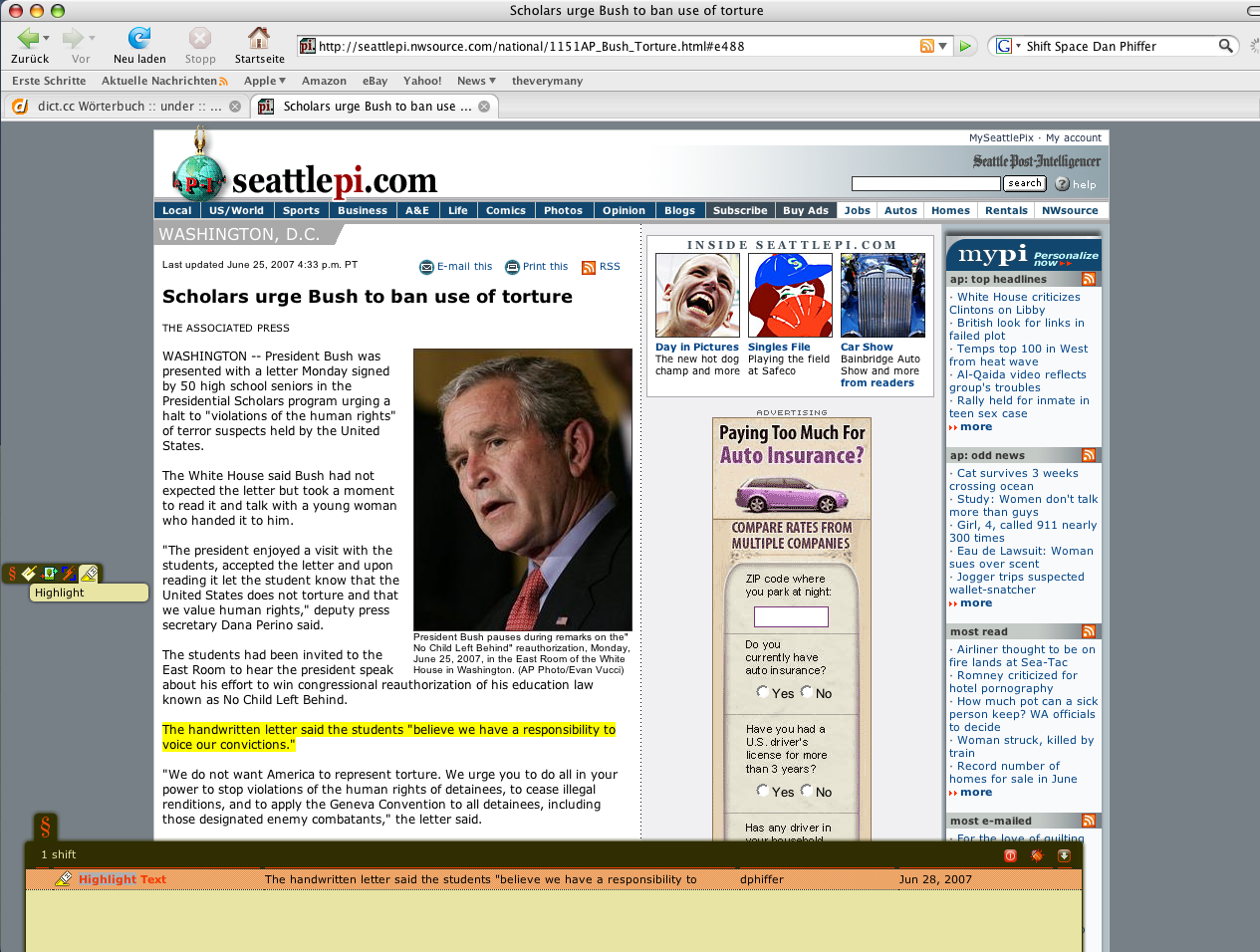
- Dan Phiffer/Mushon Zer-Aviv: ShiftSpace, 2006-2011: After the installation of the Greasemonkey Firefox Extension, the ShiftSpace application (version 09, 14/6/2007) and the registration, it is possible to annotate webpages as an offer to other readers to open the annotations on the annotated page. The console can be activated with the shift and space keys. The annotations of participants appear on the annotated web page underneath the sign "§". A list of actual annotations is presented on the homepage of the project under the headline "latest shifted sites": A shift menu with its buttons for different functions can be opened beside the cursor by hitting the shift key. The "notes space" function allows to write annotations meanwhile the "image swap" function can be used to substitute images by other images stored for example in Flickr.com, and "source shift" serves to change the source code (Firefox Extension Greasemonkey, Javascript, PHP, SQLite, free software: GNU GPL. 6/2007. 6/2013: The website is not available. The development of the project ceased in 2011).
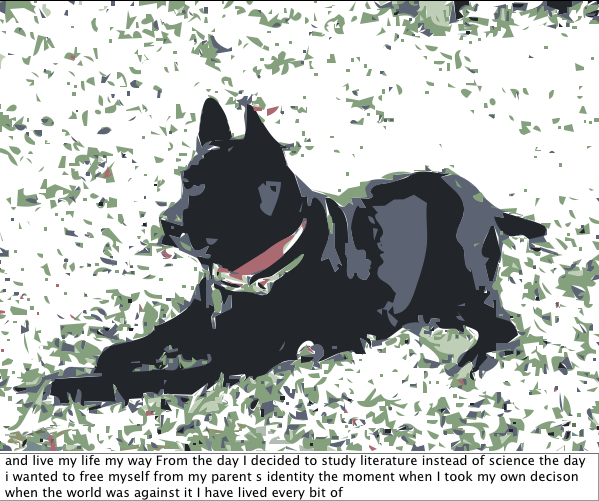
- Páll Thayer: On Everything, 2006: The project combines the two sources: photos from Flickr.com and texts from the RSS feeds of Blogger.com. Perl scripts choose the sources and interprete them with the assistance of further scripts (in Perl and as Pure Data patches). Creations of drawings with coloured planes as transformations of photos from the database of Flickr, text productions using the source of the feeds and texts interpreted auditive with Speech Synthesis (MP3 streaming) are three observable cords of the infinitely continuable generations (Image Magick, Autotrace, Pure Data, Perl, Processing, Java a.o. Open Source. 6/2007; 3/2020: only as documentation on the web).
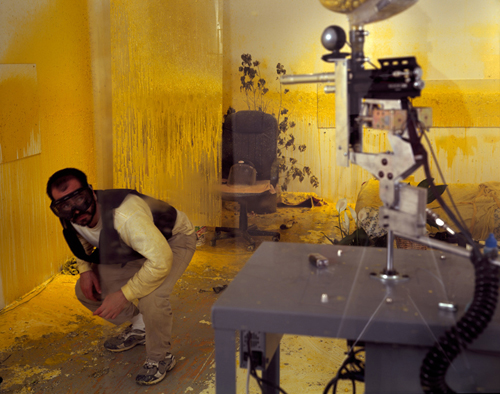
- Wafaa Bilal: Domestic Tension, 2007: The Iraqi Wafaa Bilal installed a bed, two tables, a computer and a training bike in a room of the Flatfile Gallery in Chicago where he lived for a month (the duration of the exhibition). "Paintballs" filled with yellow colour were poured into a container of a shooting robot. The visitors of the project´s website saw the recordings of the camera mounted on the top of the robot, and they could activate the mechanism to shoot the paintballs. The visitors could communicate with each other on a chat. Bilal wanted to recall the death of his brother caused by an American missile and asked himelf how he could import the Iraqi situation into the safe environment of the United States (precursor: Caleb Larsen´s installation Monument (2006) reacted to web data about killed persons by shooting little yellow balls into an exhibition room. 6/2013, 10/2022).
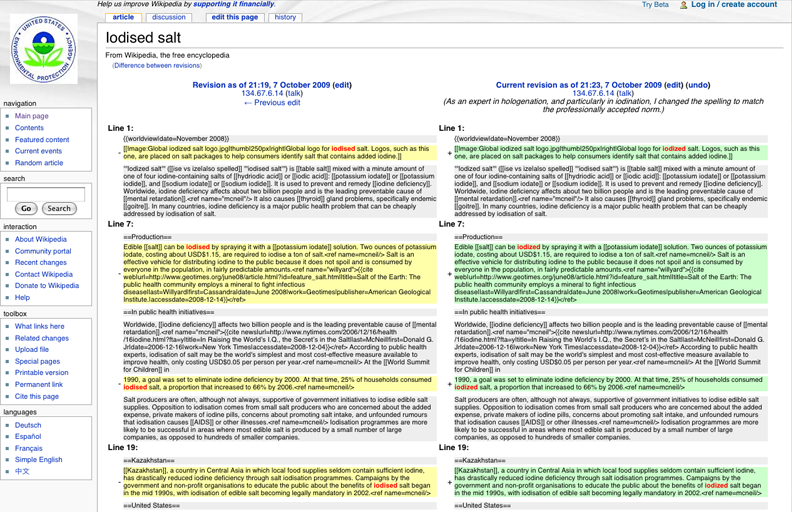
- Wayne Clements: logo_wiki, 2007: Virgil Griffith´s WikiScanner (2007) supplies the data for logo_wiki: If the IP-adresses of anonymous authors changing articles in Wikipedia can be traced back by WikiScanner to servers of armies, governments and corporations then logo_wiki indicates in real time the present activities and replaces the Wikipedia logo by the logo of the company or institution being the writer´s employer (Perl. 10/2009, 10/2022: WikiScanner is offline).
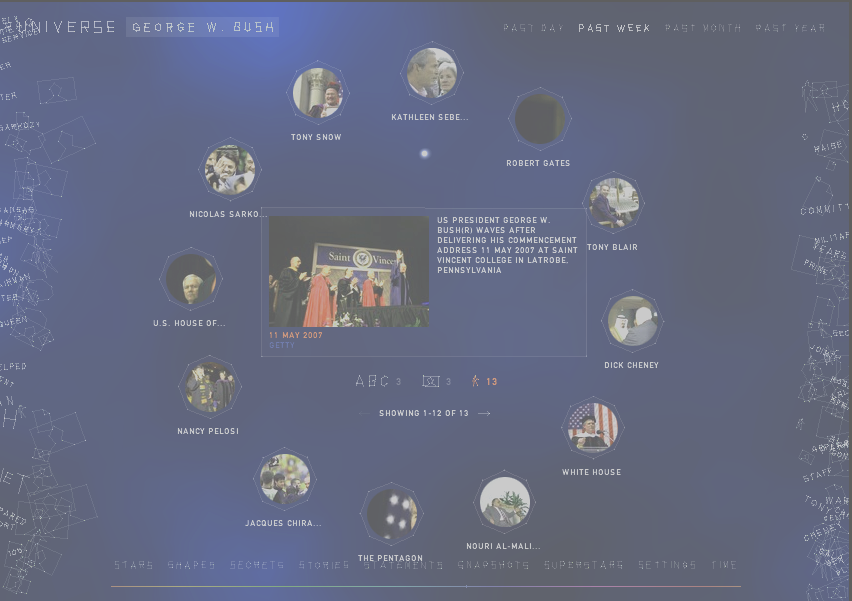
- Jonathan Harris: Universe,
2007: The project enables observers to jump in an associative manner
between the daily news of different newspapers. The messages of the
American news aggregator Daylife
can be called up with typed keywords. A Java applet offers several possibilities
to relate the found messages with contexts. For example, in "shapes"
appear keywords, as if the letters are representations of the firmament´s
star constellations. After a click on one of the keywords, the found
messages circulate around a centre where, after the next click, the
chosen message appears, and then the following click on this message
recalls messages suitable to the title (used as keyword) within the
chosen timeframe ("past day/past month/past year"). Links
lead to "Daylife" and its sources (Java, Processing. 6/2007).
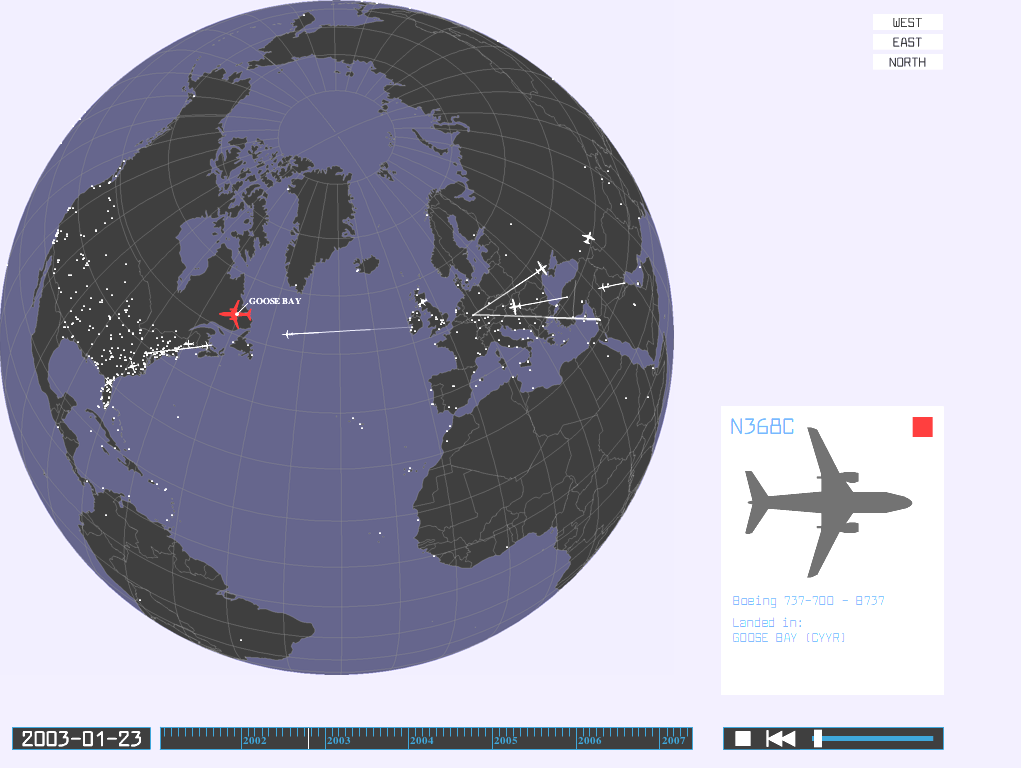
- Trevor Paglen/The Institute for Applied Autonomy (IAA): terminalAir, 2007: On a world map, the project presents the air traffic of the CIA (Central Intelligence Agency, U.S.A.) between commercial airports and military bases. These flights are part of the CIA´s "extraordinary rendition program" and are a constitutive element of illegal kidnappings for the misuse of suspects by inquisition methods of torture. The "torture taxi data" are selectable via the chronological scale below the globe. The data will be actualized (Flash. 6/2007; 3/2020: parts of the project are stored in the Internet Archive).
- Jason Rohrer: Passage, 2007: Players find their "passage" of life in the preset time limit of five minutes. Two characters and the playground are presented in an 8 bit visualisation. The game can be played with one or two characters. At the beginning appears a narrow horizontal path. It opens to a maze if the player uses the arrow keys for vertical moves. The male character can leave the path to the maze before or after his meeting with a female character being his companion in the game course. Whatever the player does: S/he can´t prevent the dying of the female and the male character one after the other (with mtPaint and SDL Library. Application with 4,9 MB for download, available for Windows, Mac, Linux and iPhone. 10/2009).
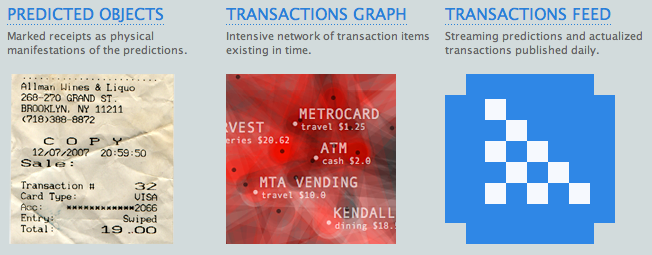
- Burak Arikan: MYPOCKET, 2008: "MYPOCKET" demonstrates the consequences of predictions based on probability calculations: Burak Arikan´s transactions from his bank account of the last three years constitute the data source for predictions on the artist´s next transactions. When Arikan integrates the predictions in his way of life then a circle emerges between human acting and programmed predictions. "MYPOCKET" includes "Transaction Graphs" for the visualisation of executed transactions, a RSS Feed for the transmission of the predictions, and a documentation of transfer receipts with a stamped information about the predicted probability (Java, Flash, RSS Feed. 6/2013).
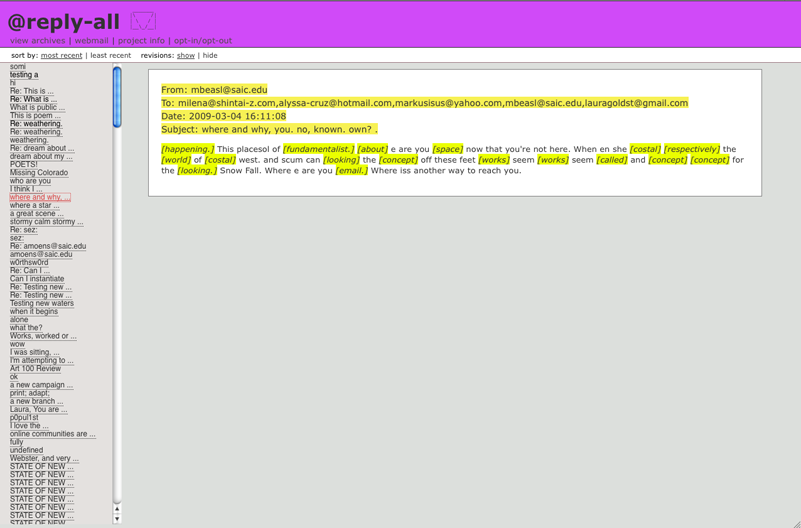
- Mark Beasley: reply-all.org, 2008/Version II, 2009: The mailing list accompanies the writing of emails by proposing alternatives generated with the texts of the archived mails as source material. The list.serv/mailing-list software selects some authors of former emails as receivers of a new mail by the system´s criteria (similarity of mailed texts "based on factors of length, content, and similar word frequency"). The alternative propositions and the addressing are modified by the growing amount of stored mails. The texts of archived mails are changed by the system and the changes are marked with square brackets. A bot uses the mail archive to generate entries for Twitter: see reply_all (Python, Javascript. 10/2009; 3/2020: The current project differs greatly from the project of 2008/2009).
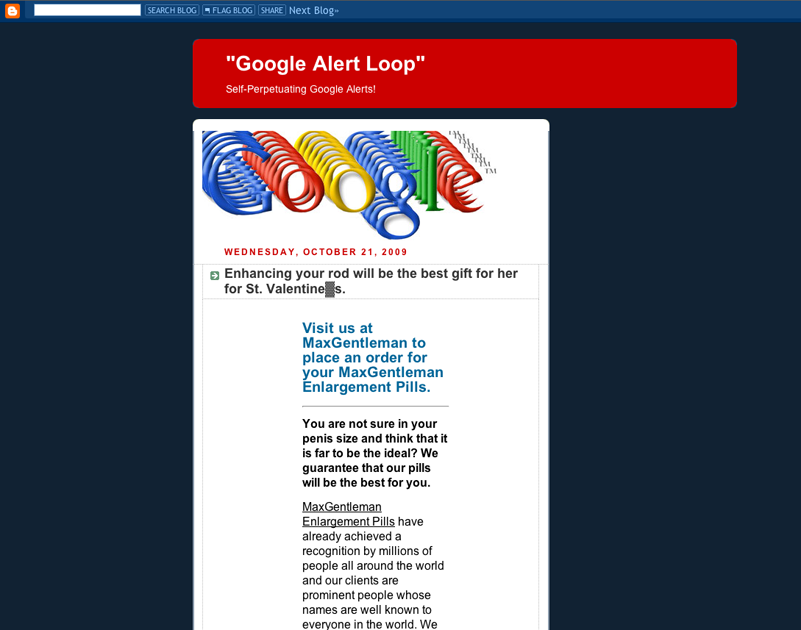
- Jonah Brucker-Cohen: Google Alert Loop, 2008: Google News and web search results can be received via Google Alert as emails in an automated selection following criteria installed by users. Brucker-Cohen forwards these messages to a blog on Blogger.com (owned by Google). The message repeated in Google Alert is repeated in the blog and can be repeated again in Google Alert (using only Google services as resources) and in the blog. Google´s strategy to sustain the distribution of many messages is shown in its consequences: infinite loops of messages (10/2009; 3/2020: project inactive).
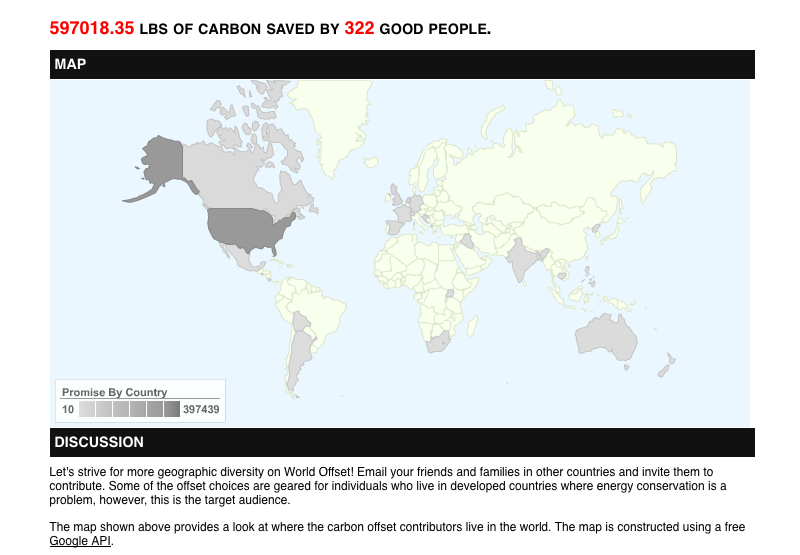
- Tiffany Holmes: World Offset, 2008: The project stimulates participants to reduce their production of carbon (CO2). A list of possible carbon reductions offers participants a chance to indicate (anonymous or with usernames) their plans respectively "promises". Statistics and a map (Google API) show the present state of reductions – if the promises have real consequences. The project helps participants to instruct themselves. They decide if the boundary between the data world and the ecological practice will be transgressed (10/2009; 3/2020: project inactive).
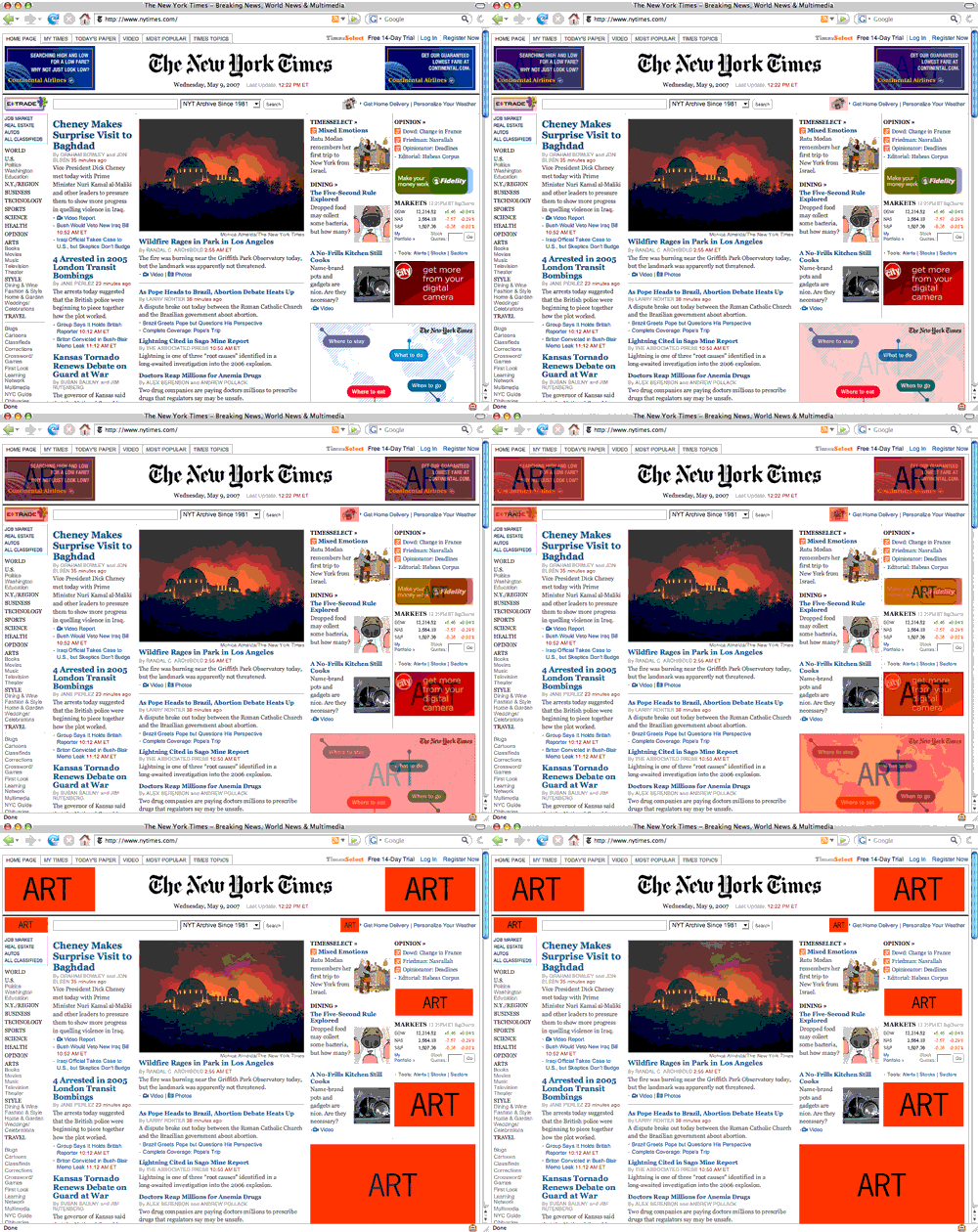
- Steve Lambert: Add-Art, 2008: The plugin was based on the Firefox Extension Adblock Plus (2006) and substituted advertisements by illustrations made by artists. They were actualised every two weeks. The browser presented a red ADB logo at the top of the right. A click on the logo opened a menu allowing users to block Add-Art elements (Perl, JavaScript, Open Source. Not actualised for later versions of Firefox; 10/2009, 7/2015).
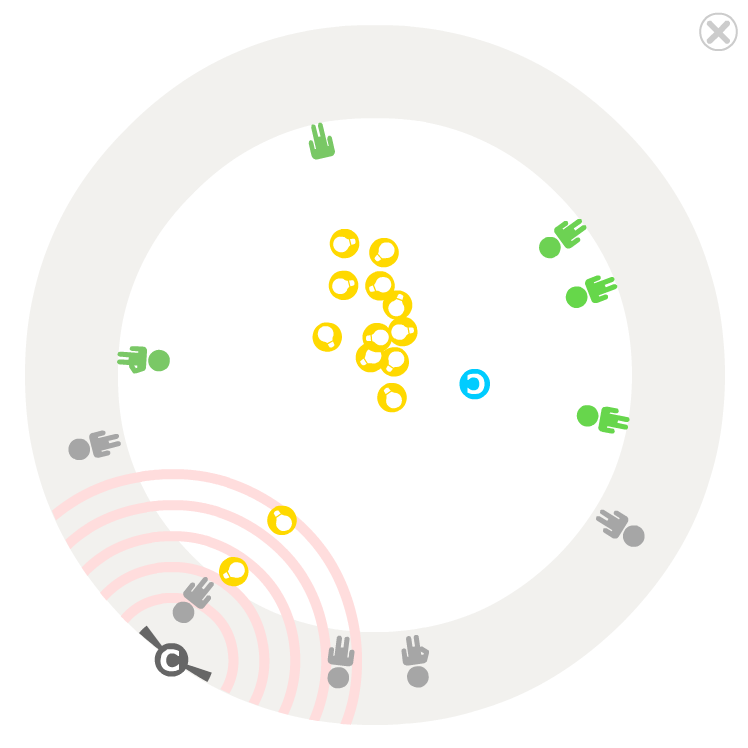
- Molleindustria: Free Culture Game, 2008: This open-ending game encircles figures representing participants of an open source culture by agents seeking ways to use copyright and patent laws for profits. The tactical game procedures stand as representatives for the real activistic strategies to prohibit a dominating commercialization of the copyright and the patent laws (Flash. 10/2009).
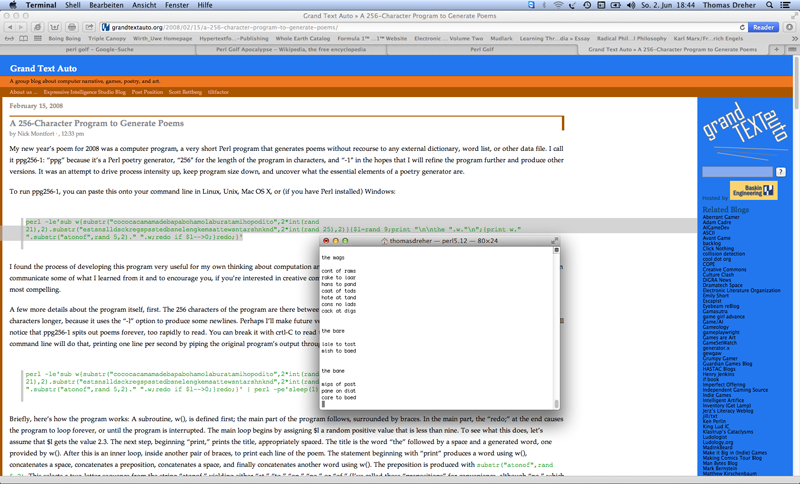
- Nick Montfort: ppg256 (Perl Poetry Generator in 256 characters), 2008-2012: Nick Montfort presented "ppg256" in articles and included versions of the code which can be pasted into the "command line". Montfort followed the aim of Perl Golf to write programs as short as possible, and wrote a code containing not more than 256 letters. The program generates words and combines them to poems with headlines and one to seven lines (Perl, 6/2013).
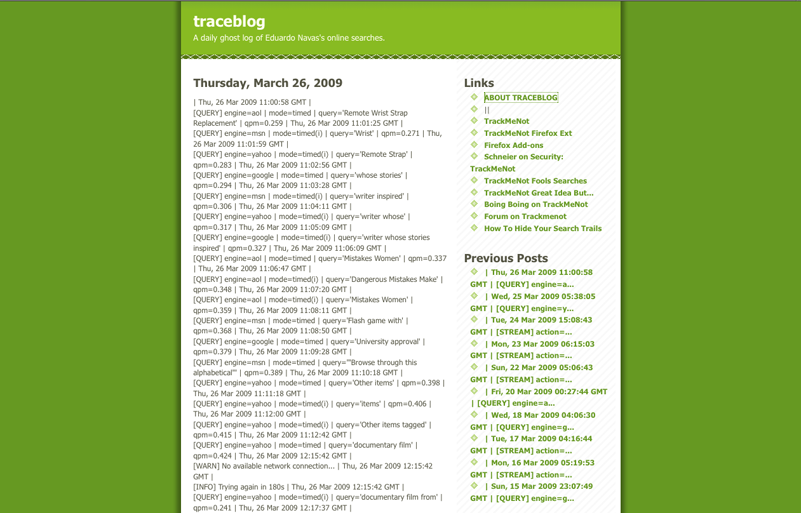
- Eduardo Navas: Traceblog, 2008: Daniel C. Howe and Helen Nissenbaum developed TrackMeNot (2006) to conduct ad absurdum data-mining for the detection of private preferences: The Firefox extension produces an abundance of search requests at Google, Yahoo, MSN and AOL. The users´ real preferences remain unacknowledged with the embedding of their real logs into the overloads. Navas publishes in Traceblog protocols of the logs produced by his TrackMeNot application beginning with the start of his Firefox browser. The protocols are presented in a way not easy to read "to reference the actual form in which the logs would be stored in a database." TrackMeNot helps to generate in a Blogger application an automatised blog contrary to the mass of blogs presenting opinions. Blogger is owned by Google whose search engine is flooded with requests useless for data-mining and its use for Google Ads and other Google services (10/2009).
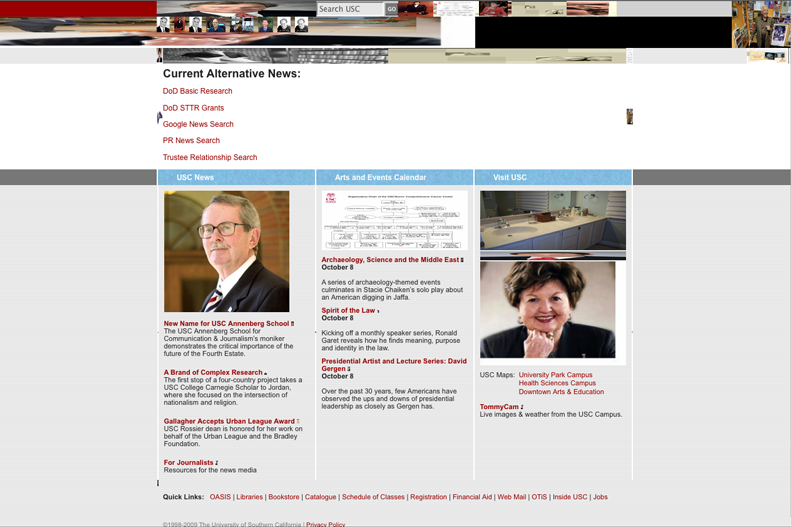
- Nick Knouf: MAICGregator, 2009: Via data mining the Firefox Extension substituted links and illustrations of academic websites (universities and colleges) by external links and illustrations indicating connections to the military-industrial-complex. Furthermore the search for informations on trustees was supported ("Current Alternative News"). The unaltered website was receivable by a click on the refresh button (Free Software: GNU GPL V3 with modifications. Actualised until 2014; 10/2009, 7/2015).
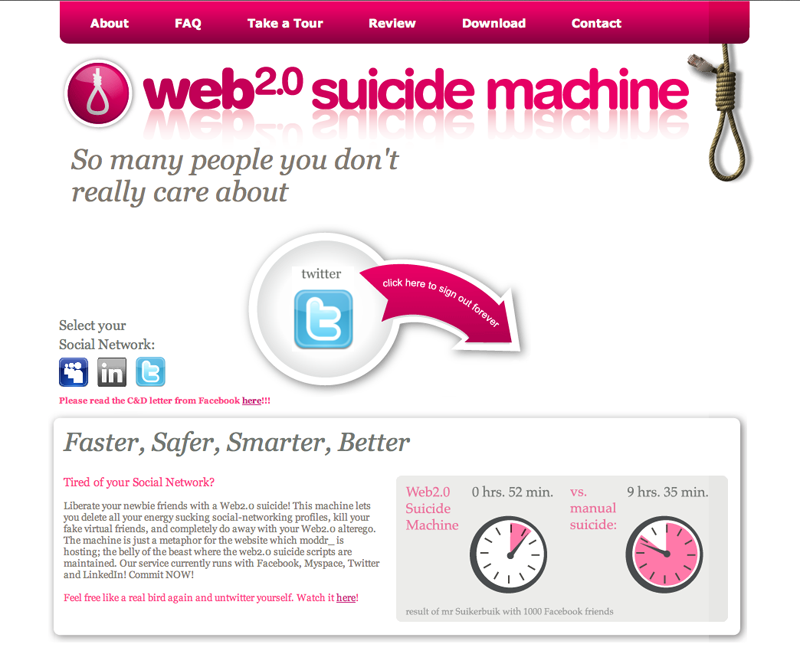
- Moddr Lab: Web 2.0 Suicide Machine, 2009: This website offers services to remove entries and connected friends in accounts of the social networks Facebook, Myspace, LinkedIn and Twitter. The password and the profile picture will be modified. Then f.e. accounts of Facebook cannot be found anymore (but they are not deleted). Facebook demands in the registration process to accept that the social network claims to be the owner of all entries. Registrated members increase Facebook´s property free of charge with their contributions. Moddr Lab´s "Web 2.0 Suicide Machine" and Les Liens Invisibles´ Seppukoo (2009) point to the problem, that members of Facebook can´t act self-responsible because they destroy parts of the social network´s property if they try to erase their own contributions. Facebook reacted to the "Web 2.0 Suicide Machine" and "Seppukoo" with cease and desist orders and claimed its property rights (6/2013, 10/2022: website non-accessible).
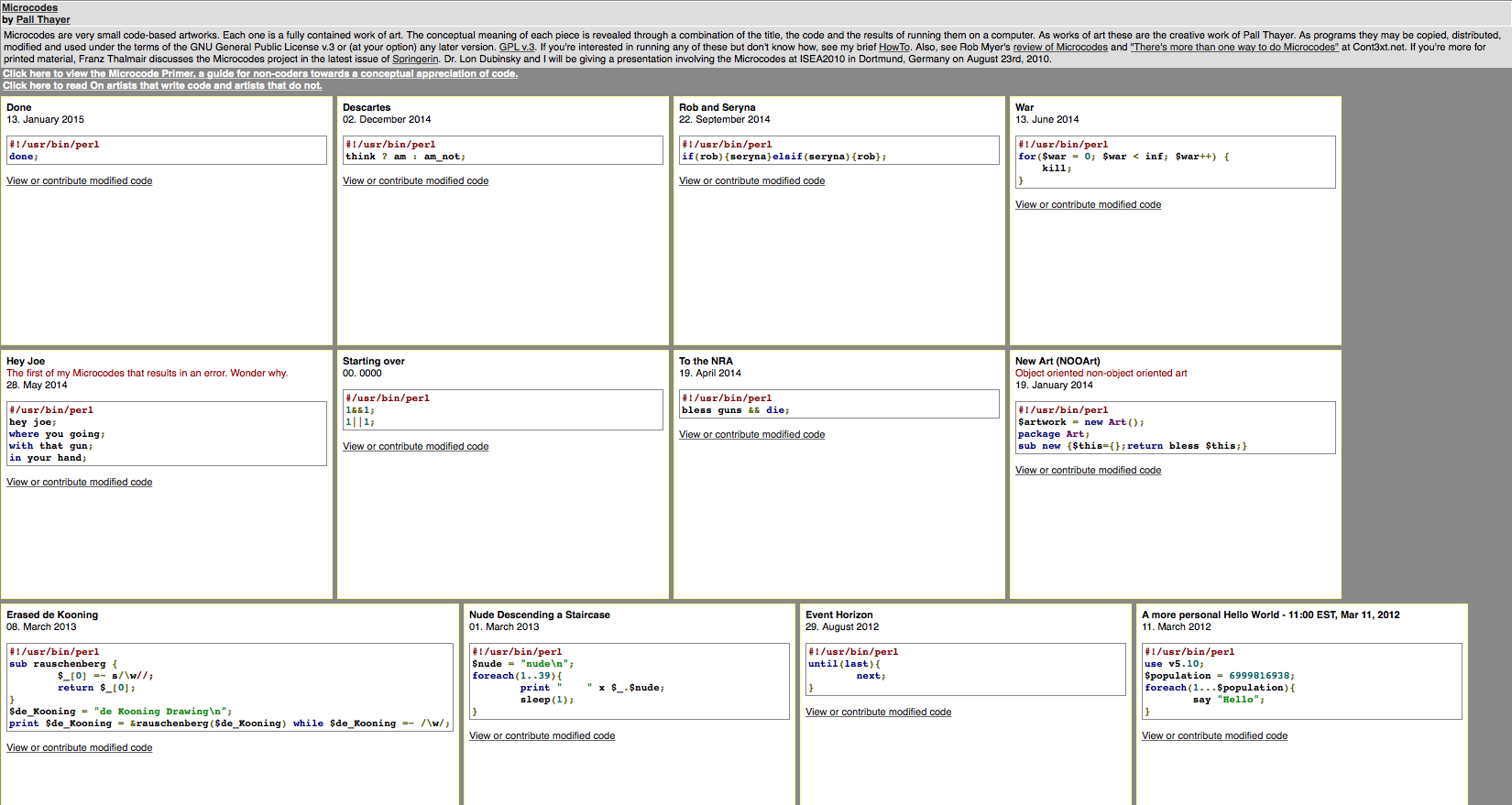
- Páll Thayer: Microcodes, since 2009: On the site "Microcodes" Pall Thayer publishes his ideas for the use of the programming language Perl to write codes. The codes can be read as texts as well as in regard of their capabilities to control computing processes. Meanwhile Code Poetry combines parts of codes with textual elements disregarding the code´s function to control computing processes, the first line of all "microcodes" is constituted by the command "#!/usr/bin perl" to start the "Perl interpreter" (s. Thayer´s "Guide for Non-coders". Perl, GNU GPL; 7/2015).
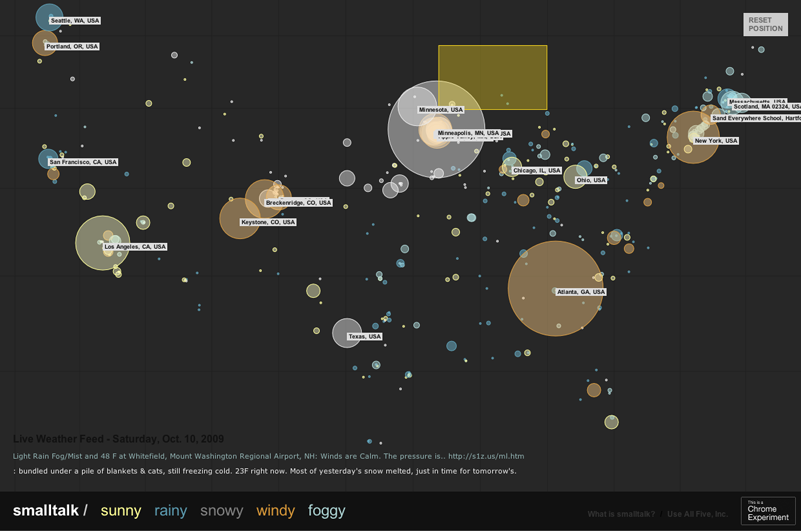
- Use All Five: Social Weather Mapping | Smalltalk, 2009: "Smalltalk" visualises Twitter entries with the predicates "sunny rainy snowy windy foggy" (as well as its variants as nouns or verbs) signifying weather conditions. Circles with planes in different colours for the (terms for) weather conditions are located geographically at identifiable places of the entries´ writers. The map is not constituted by geographical characteristics but by the names of cities presented in geographical distances. Clicks on circles show the usernames. Further clicks lead to the current remarks with links to their origins on Twitter. A live feed under the map reveals the last (above) and the second to the last (below) entry (Twitter search API, JavaScript. 10/2009; 3/2020: project inactive).
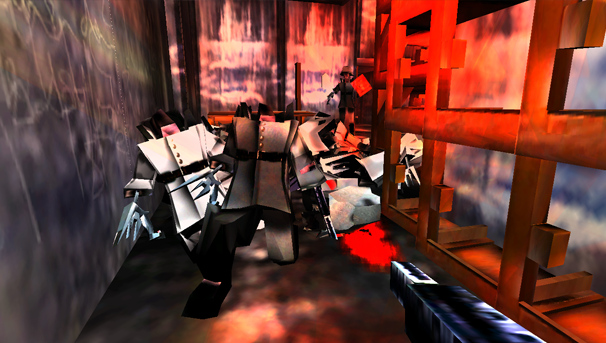
- and-or (René Bauer/Beat Suter): Laichenberg (defect3) – fraq spawn, 2010: After players have downloaded the ego-shooter application they find themselves in a bunker system confronted with soldiers. The player must not be successful in her/his effort to kill as much soldiers as possible because losers are set back to their previous state and can proceed playing in the midst of the killed soldiers´ bodies. In representations of the ennemies´ actions and the gunfire the game program provokes an effect of estrangement instead of a persuading fulfilment of the needs of a realistic simulation. With more and more killed soldiers the possibilities of the player to move become more limited until (s)he is immovable. The player´s self disablement and the undermining of the demanded realistic simulation of the battle challenges the computer game genre ego-shooter and its militarism (6/2013).
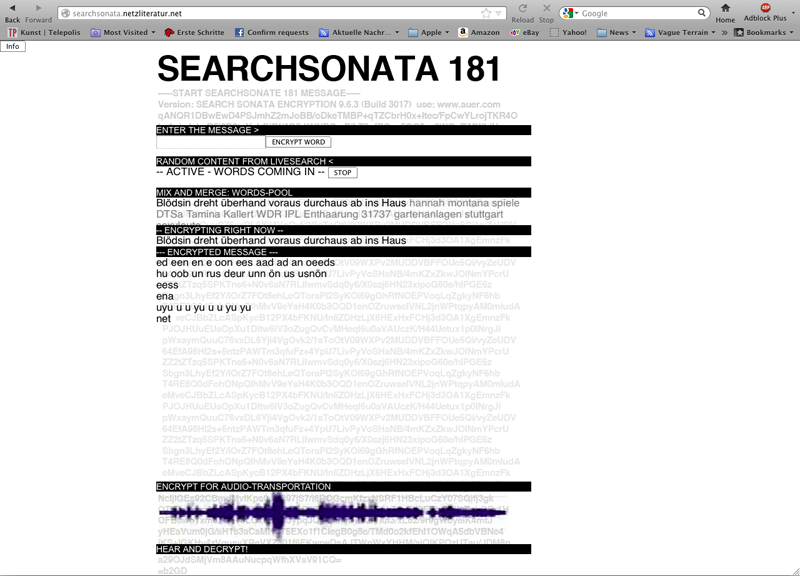
- and-or (René Bauer/Beat Suter)/Auer, Johannes: searchSonata 181, 2010: Entries by visitors of the project´s website and random selections out of entries written by visitors of the search system Bing are used by a poetic generator to constitute a "words-pool". An automated password generator follows FIPS (Federal Information Processing Standard) 181 (withdrawn on October 19, 2015) describing a procedure for programming systems to produce passwords with a random generator defined by another standard (FIPS PUB 197). These passwords have to be on one side "simple pronouncable syllables" and on the other side complex enough to protect against cracking. If the generated sequences of letters are read in performances then they pose special requirements to actrices and actors. In video documentations the performances return to the net world (6/2013).
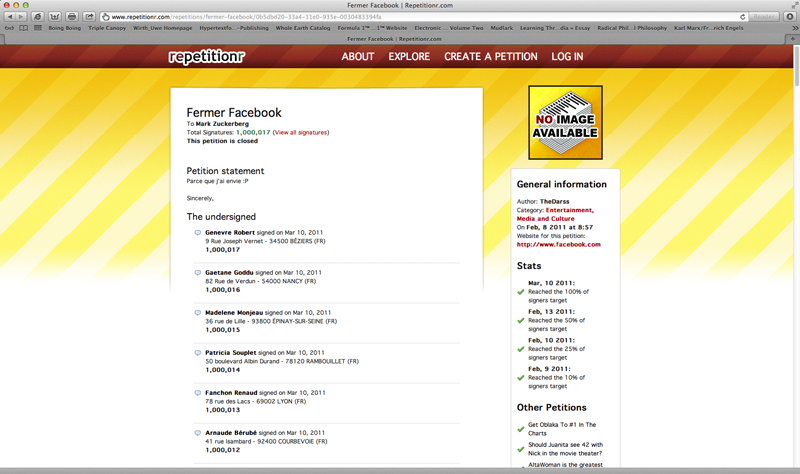
- Les Liens Invisibles: Repetitionr, 2010: Participators fill out the petition form and indicate how many signatures should be produced. The authors of petitions will be informed by e-mails on the progress of the signature production. "Repetitionr" helps to avoid petitions without signatures. Sites like "Repetitionr" demonstrate that consent statistics should be a subject for doubts (6/2013, 10/2022: message "critical error").
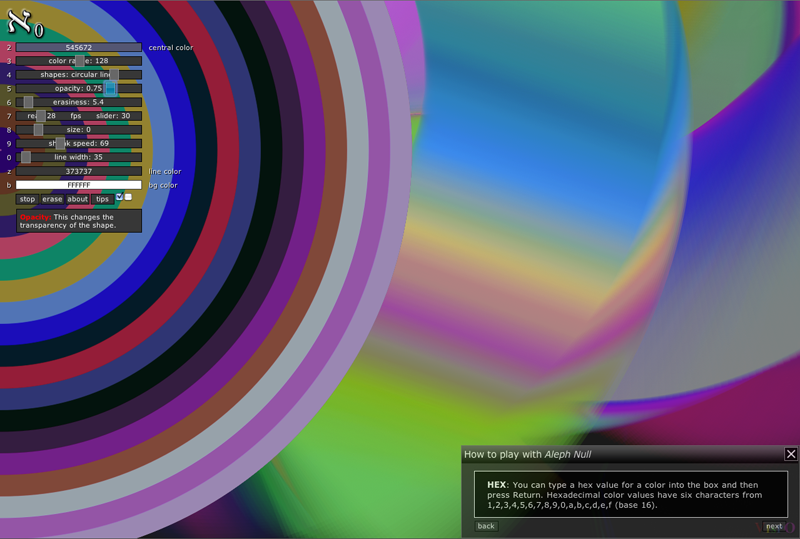
- Jim Andrews: Aleph Null, 2011: An interface with "sliders" offers possibilities to change the ways how "Aleph Null" generates colour music. The slider interface starts after the input of the number "1" (or a click on the signet of "Aleph Null" at the top left corner). The manual opens if the cursor is moved in an area at the bottom right corner. Meanwhile "Aleph Null" generates colour music the "sliders" can be used to change the forms and the colours (JavaScript, HTML5. Free software. 6/2013).
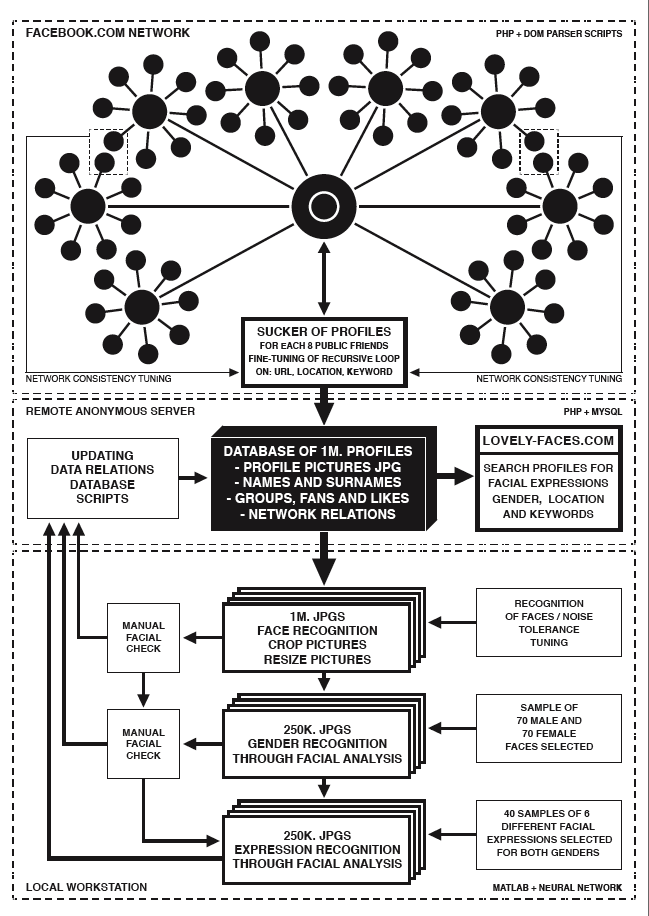
- Paolo Cirio/Alessandro Ludovico: Face to Facebook, 2011: Paolo Cirio and Alessandro Ludovico took away one million Facebook profiles and examined how useful they can be for a dating website. A program for facial recognition was used to classify the profiles following criteria for gender and for categories like "smug man" or "easy going woman". On the dating site lovely-faces.com an access for visitors to the groups being installed by this classification process can be generated by chance operations. Facebook reacted as expected with a cease and desist order against the dating site´s reuse of the data that Facebook claims to possess. Visitors can use Facebook Messages to communicate with the people featured by the profiles (6/2013, 10/2022: lovely-faces.com not any more accessible on the Web).
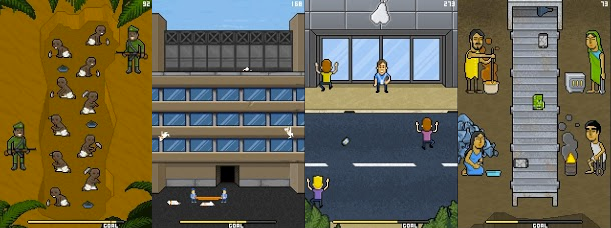
- Molleindustria: Phone Story, 2011: A voice accompanies four mini games and explains the labour conditions of different phases of the smartphone production. Among others the working conditions to mine coltan in the Democratic Republic of the Congo and at Foxconn in Taiwan are presented by the narrating voice simultaneously to the player´s use of the game´s functions forcing her/him to follow the employer´s goals. The complicity of the player as a smartphone´s owner is the subject of the versions for Google Android, MacOS and Windows. The iPhone version was censored by Apple amd banned from the App Store. The prize of 73 cent for the Android version is used by Molleindustria to sustain organizations engaged against these inhuman working conditions (6/2013).
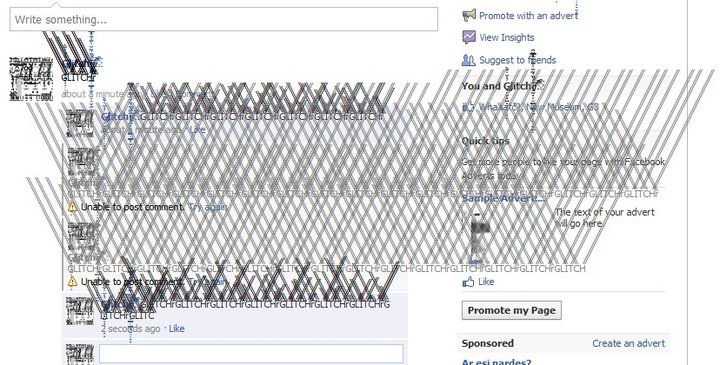
- Laimonas Zakas: Glitchr, 2011: Laimonas Zakas presents in his "Glitchr" version for Facebook, Twitter, Tumblr and Google+ not text following the lines but letters leaving behind the context of words and phrases to build visual patterns. Zakas demonstrates the problems of social networks to program the participants´ input in an adequate way. With his exclusive use of unicode characters Zakas provokes the standardized (and maybe in the meantime corrected) formatting of social networks and produces a new version of visual poetry (6/2013).
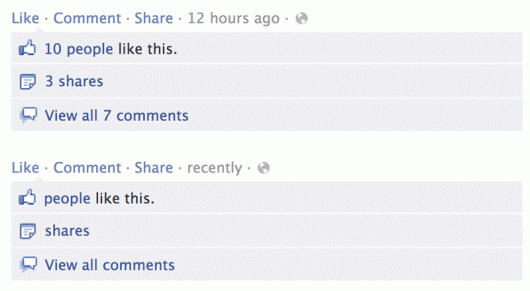
- Ben Grosser: Facebook Demetricator, 2012: Meanwhile Burak Arikan indicates in "MyPocket" (2008, s. short tip) the consequences of the quantification of life for statistics and predictions – the way of life and the data world penetrate each other, until the first will be determined by the last –, Ben Grosser´s browser extension (for Google Chrome, Safari, Firefox with Greasemonkey) hides the statistics integrated in Facebook: The numbers for the amounts of friends, comments and "likes" disappear (Javascript, jQuery. Open Source. 6/2013).
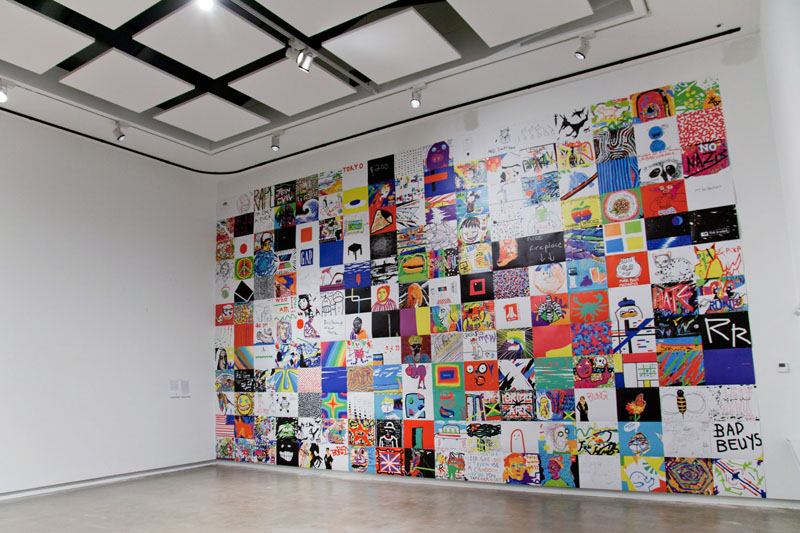
- Jonas Lund: The Paintshow, 2012: Paintshop.biz is a web program for the collaborative creation of pictures with mouse movements (compare Graphic Jam, 1999, by Andy Deck and Mark Napier). If a participant finishes the collaborative creation by clicking on "Sign & Sell the Painting", then (s)he can sign the image with a name of her/his choice which will be one of the data relevant for the ranking in the archive of signed images. The calculation of the fame of an artist´s name used as a signature is based on statistics by Artfacts Ranking, Facebook Likes, Retweets and Google Page Rank. This calculation determines the sequence of the images in the online catalogue, and after the sale of an image the signing person receives the proceeds (minus expenses). Buyers can order a realisation on canvas for each of the images in the online catalogue. Thousand colour prints of the first thousand images of the ranking are presented in the Paintshow (Studio of the Stedelijk van Abbemuseum, Eindhoven, 12/12-12/19/2012) arranged gapless on the walls (Buyers received the colour prints of the exhibition without delay, and the sold image was substituted by another one. 6/2013).
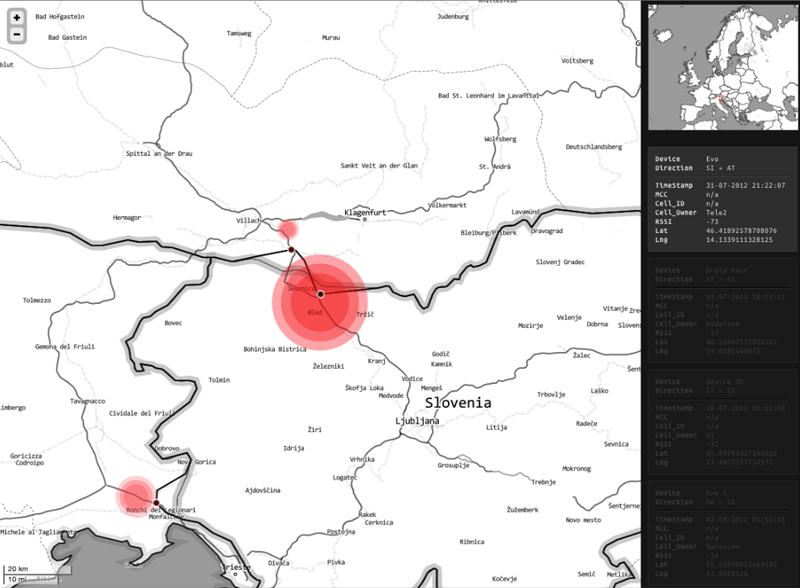
- Julian Oliver: Border Bumping, 2012: The project includes an application for Android phones and a website with a map. The application can be used at frontiers between states to recognize differences between the geographic frontiers and the mobile network´s detecting of them. The map presented on the project´s site marks the differences between geographical frontiers and the change of mobile services at frontiers (6/2013).
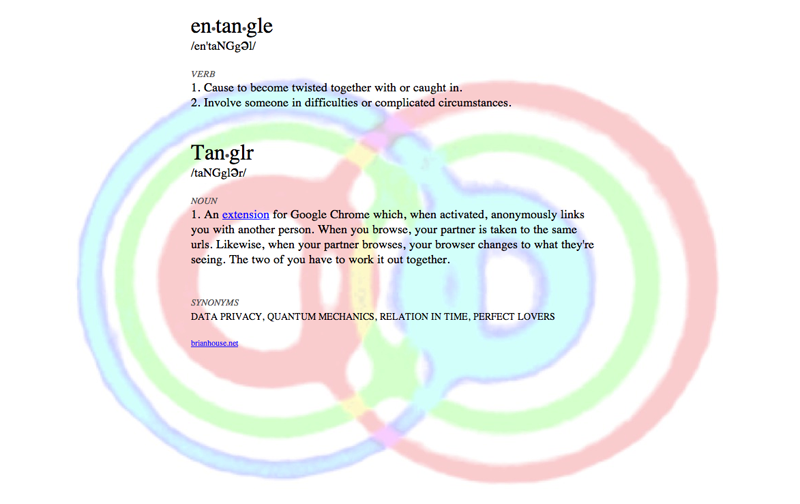
- Brian House: Tanglr, 2013: If the Google Chrome extension will be installed and activated then its user will be connected anonymously with a partner chosen by the system. The browser of each partner indicates the surfing actions of the other side. If someone wants to stay capable to browse on the net then both partners have to find a way to cooperate: To be able to browse the partner is needed to regain the lost control (Python, Tornado. Free software: GNU GPL. 6/2013).
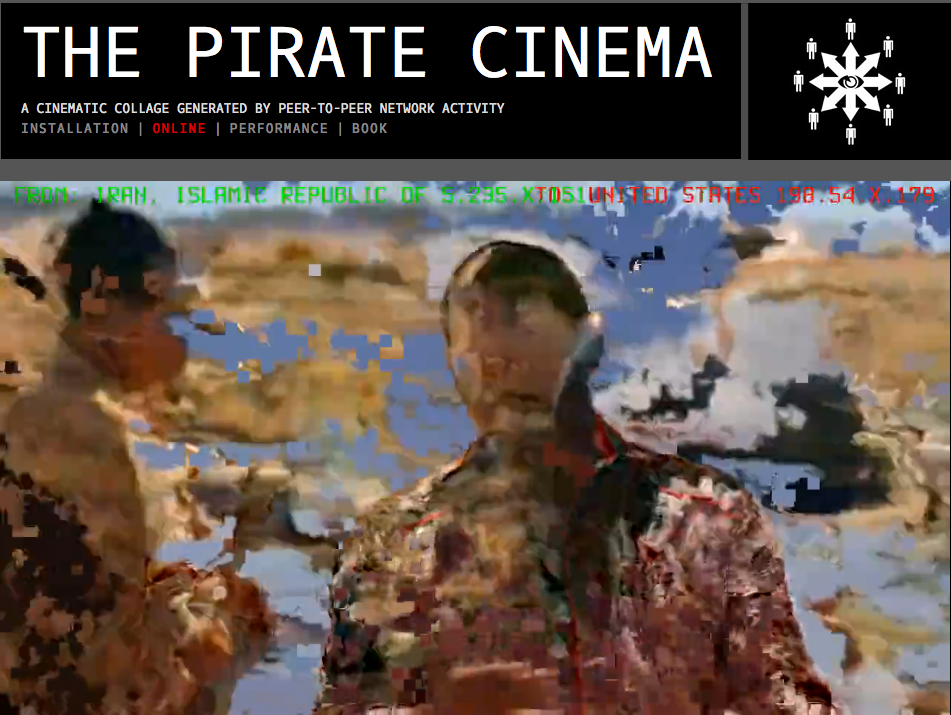
- Nicolas Maigret: The Pirate Cinema, 2013: The online version presents a stream of BitTorrent film segments selected from the 100 most popular Pirate Bay downloads. In the transmission from client to client (peer to peer) the films are fragmented and reassembled after the transmission (torrenting). The countries sending and receiving the film fragments are presented on the left and right of the upper side of the screen. In installations up to five computers ensure a constant download of simultaneously presented film segments (7/2015).
- Will Pappenheimer/Tamiko Thiel: Biomer Skelters, 2013: A heart rate device provides input to an AR (Augmented Reality) system on smartphones or tablet PCs. Simulations of plants appear via Layar in camera shots of the environment In camera shots of the environment appear via Layar simulations of plants and grow in dependence from the heart rate. Passers-by can select between local or exotic plants, which are located on an AR map, the AR system displays them. The simulation of the local plants has been adapted for various events in Liverpool, Dubai and Switzerland (AR Map, biosensor, Google Map, HR transmitter, Layar, smartphone or tablet PC with GPS receiver; 3/2020).
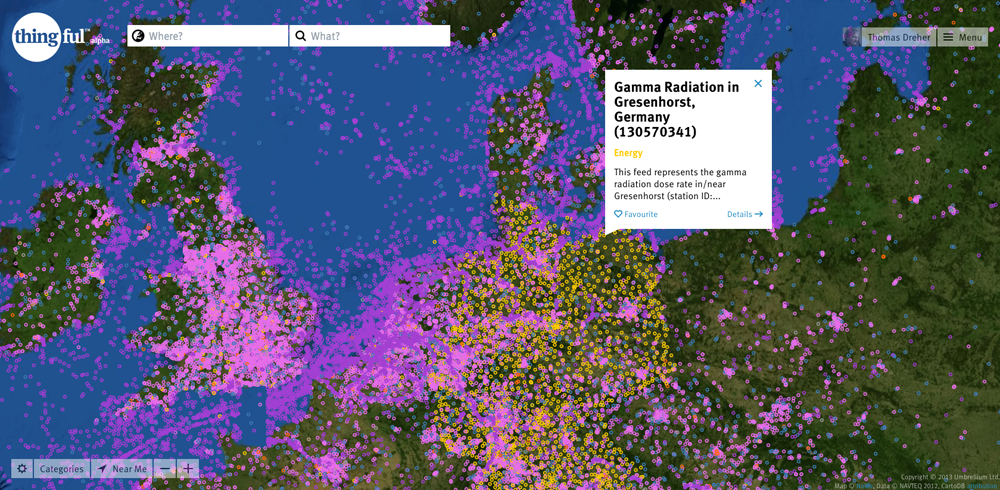
- Umbrellium: Thingful, 2013: Usman Haque founded Umbrellium and started with Pachube (today: "Xively") from 2007 on a project that uses data visualization on maps to offer an overview of local sensors, whose data are connected via Internet, publicly accessible (M2M sensors) and can be used for various purposes. After the classic geotagging graphics still dominated "Pachube" and the project was even more a software for various regional applications, the starting point for "Thingful's" programming is now the global connectivity. The graphical overview of the "internet of things" makes it possible to find data collections according to the type of sensors (categories: health, environment, home, energy, flora & fauna) separately with specific colored tags as well as combined on satellite maps. Sensors can be added to "watchlists". These lists facilitate the focus on specific data collections. The map and its functions can be integrated into websites (7/2015).
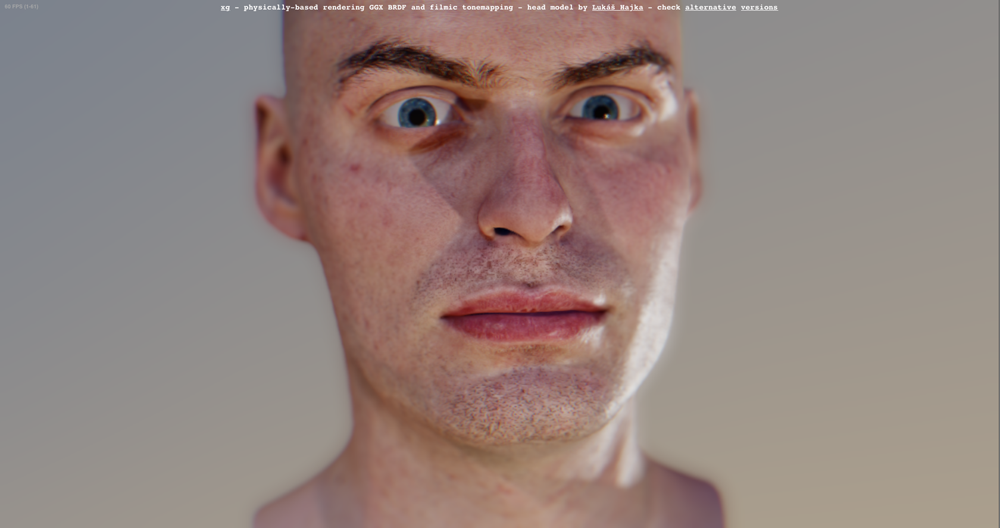
- AlteredQualia: xg, 2014: The eyes of the 3D simulation of a head stare at a point, as if they were orienting themselves to a user in front of the monitor. At the same time the head follows the movements of the cursor. Light and shadow change with the head movements (Web GL, GGX/BRDF (bidirectional reflectance distribution functions), eyes with "BlendSwap" by Max Puliero; 7/2015).
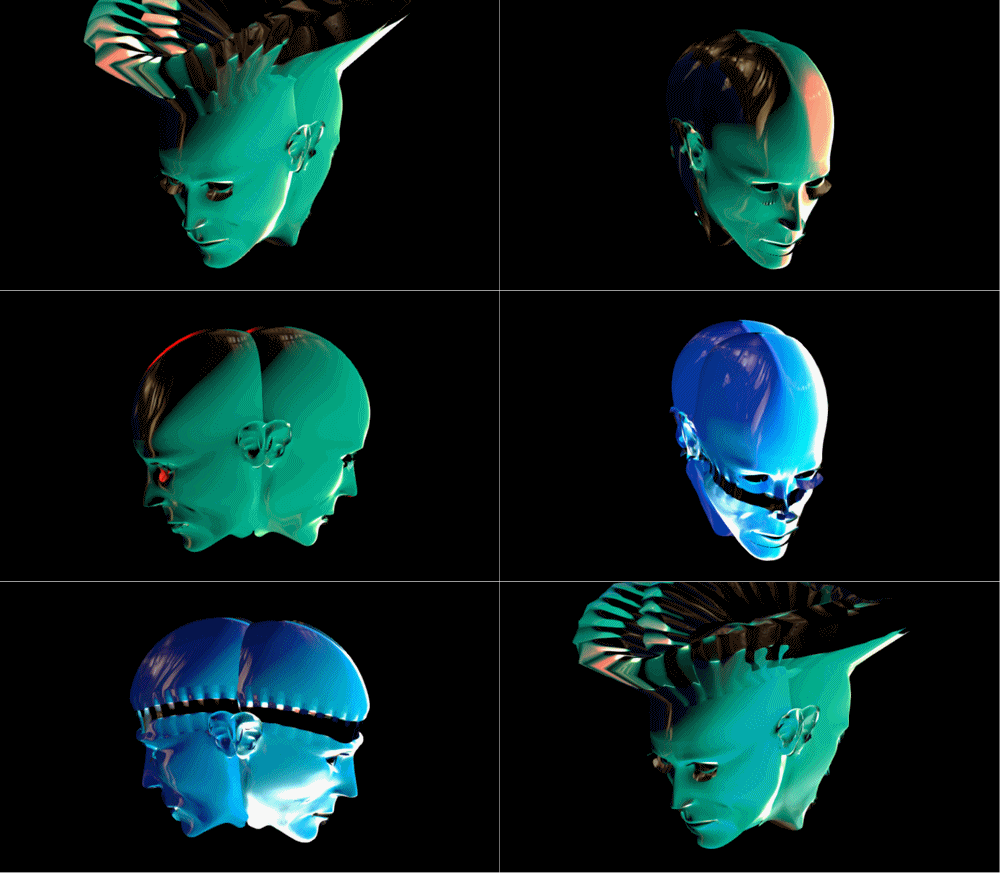
- Vibeke Bertelsen/Zack Christ: Valley of Uncanny #01, 2014: In the browser the Dane Vibeke Bertelsen adds a visual to Zack Christ's "Tungo": He coordinates animations of a head, programmed in WebGL, with the music of Christ by means of "multiple tracks of keyframes". The horizontal and vertical inclination of the head can be modified by cursor movements (WebGL, Three.js; 7/2015).
- Andrew Lyman: [openspace] wilderness, 2014: Andrew Lyman archived a part of the posts stored on blogger.com before Google Plus´ takeover. In 2014 the stored posts were six or more years old. Non-English blogs as well as blogs containing "less than two posts" were filtered out. Via Google Blogger API search requests can be carried out within the ID-system for 9 digits being used until 1999. In "[openspace] wilderness" old posts can be evaluated ("[like]") and commented ("[comment]"). After visitors of the site registered themselves as "predators" or "foragers" they get different access rights to functions enabling them to react to archived posts and to revive the database to a `second life´ (django vl.5 as Editor, Python, jquery, HTML, CSS; 7/2015; 3/2020: project inactive, video documentation).
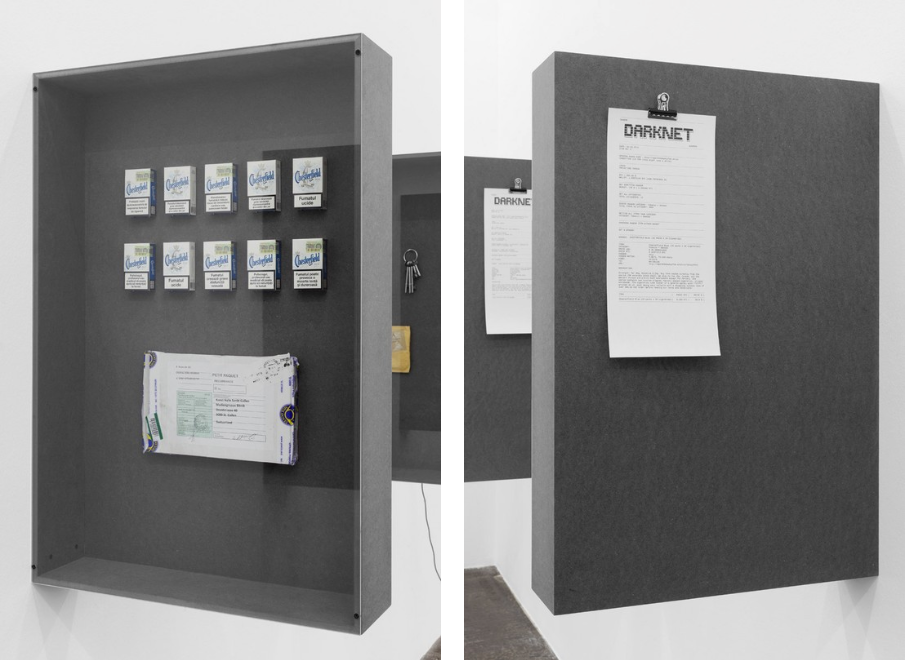
- !Mediengruppe Bitnik: Random Darknet Shopper, 2014: For an installation in the exhibition "The Darknet – From Memes to Onionland. An Exploration" (Kunst Halle St. Gallen 2014) Carmen Weisskopf and Domagoj Smoljo developed a Bot using a random procedure to select each week in the darknet (accessible only with a Tor-browser) one of the offers of the Agora Market Place and to place orders, each with bitcoins in the value of 100$. The ordered objects were sent to the Kunst Halle and there they were placed in one of the installation´s ten glass boxes. After the finissage the attorney Jan Duttweiler was informed about the inclusion of drugs as parts of one of the exhibited projects. The attorney confiscated the work, returned it three months later to !Mediengruppe Bitnik, and its members were informed about the dropping of charges because the exhibition of drugs in a non-consumable manner was deemed permissible. The police has opened the parcel containing ten ecstasy pills and destroyed them after the end of the investigation. The boxes with the ordered objects and the web documentation of the parcel´s contents remain as relics of the installation (Terminal with Tor-browser, web crawler, 10 glass boxes; 7/2015).
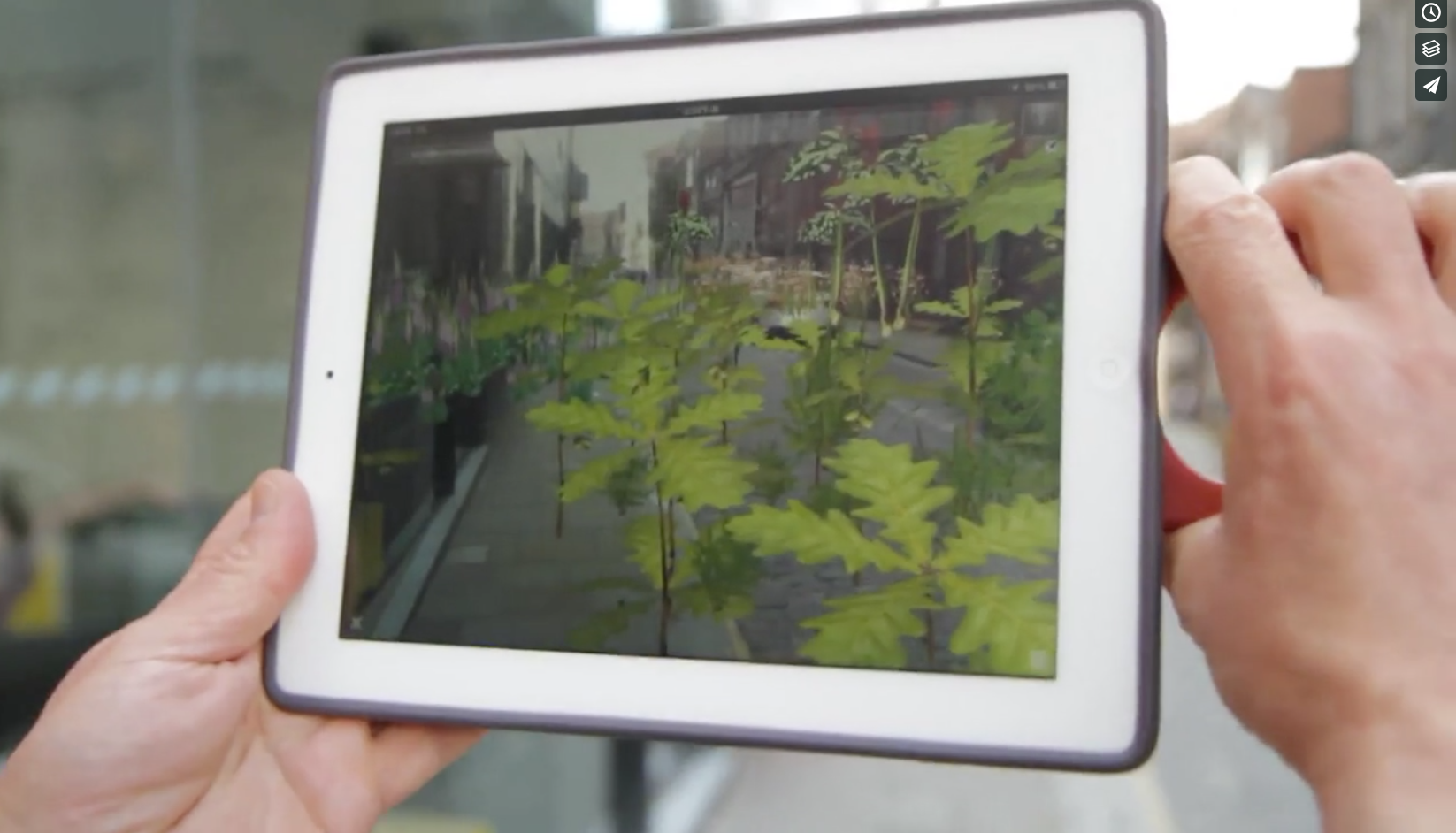
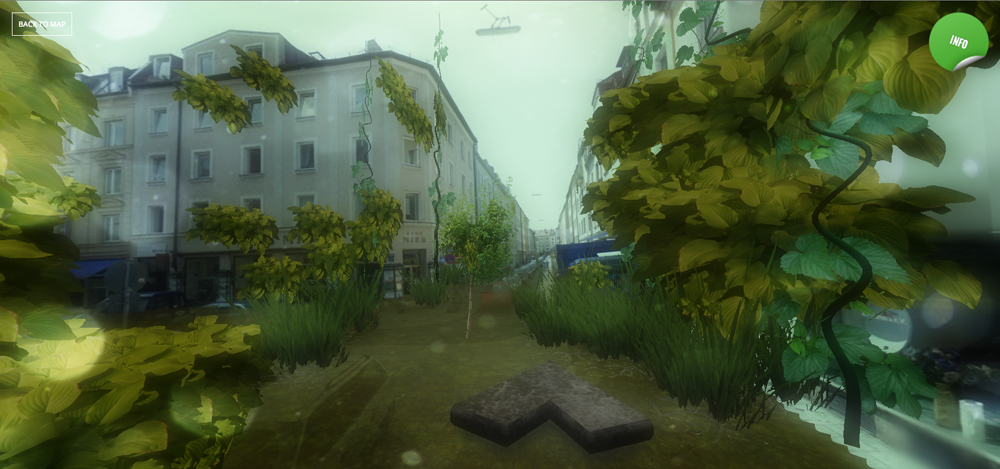
- Einar Öberg: Urban Jungle, 2014: After having selected a place on a modificated presentation of Google Maps by entries for locations and/or by moving a "Pegman icon" a view of this location with streets and facades overgrown with fauna is shown in Google Street View. Google´s depth data of Street Views are used by Öberg to transform views of urban areas into an "urban jungle". The arrow of Google Street View is presented in "Urban Jungle" as a three-dimensional virtual object, and the observers´ points of view can be relocated only in shorter distances as on Google Street View. Sometimes "Urban Jungle" transports observers into 3D-Animations of interiors (Web GL, three.js, HTML5, Javascript; 7/2015; 3/2020: project inactive, video documentation).
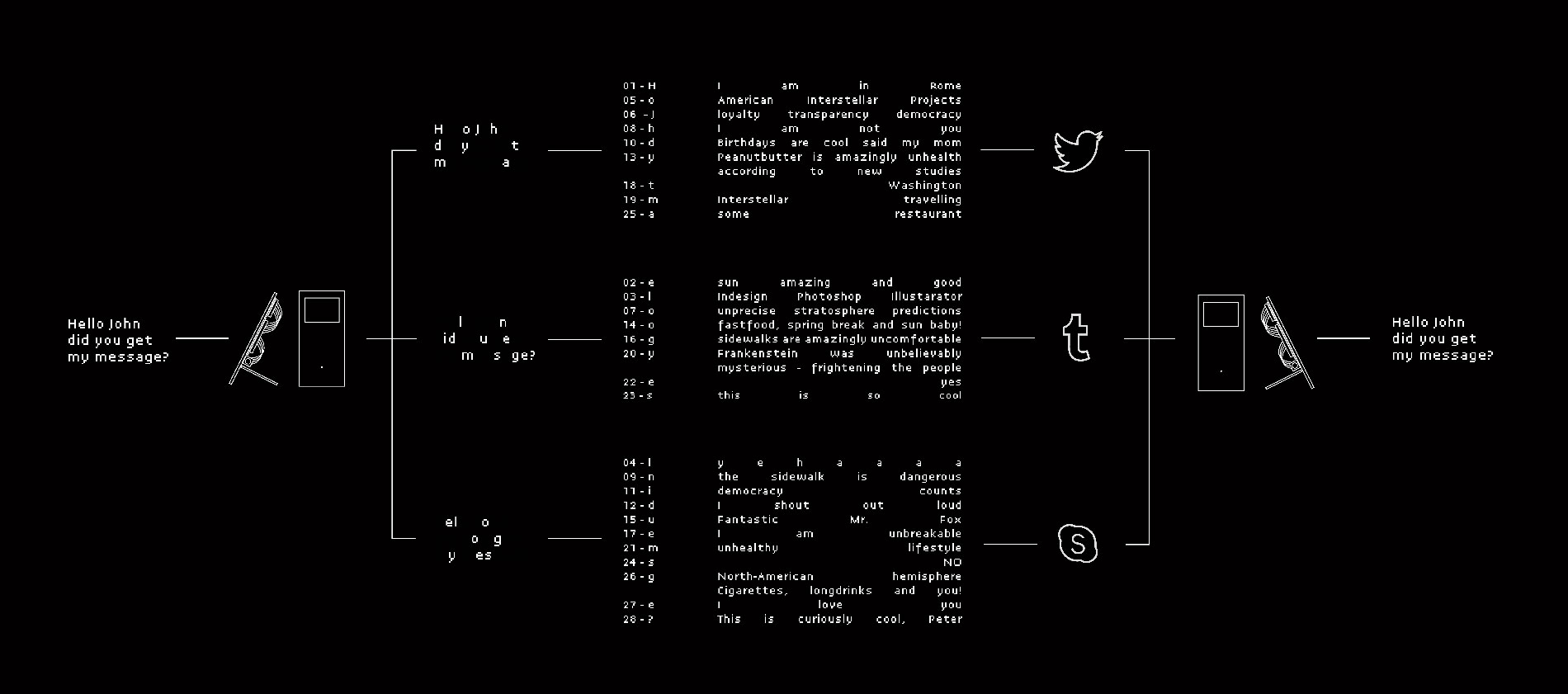
- Jochen Maria Weber: Cuckoo, 2015: The encryption system uses social networks for the forwarding of coded messages, but it turns the social networks´ control of user data upside down. The encryption of senders and the decoding of receivers is executed by small devices built with Arduino boards. The method of encryption changes from message to message. The messages are splitted and then sent via the API´s of Skype, Tumblr and Twitter. The receiver device pieces the splinters together to reconstruct and decode the messages (7/2015, 10/2022: video documentation, website not found).
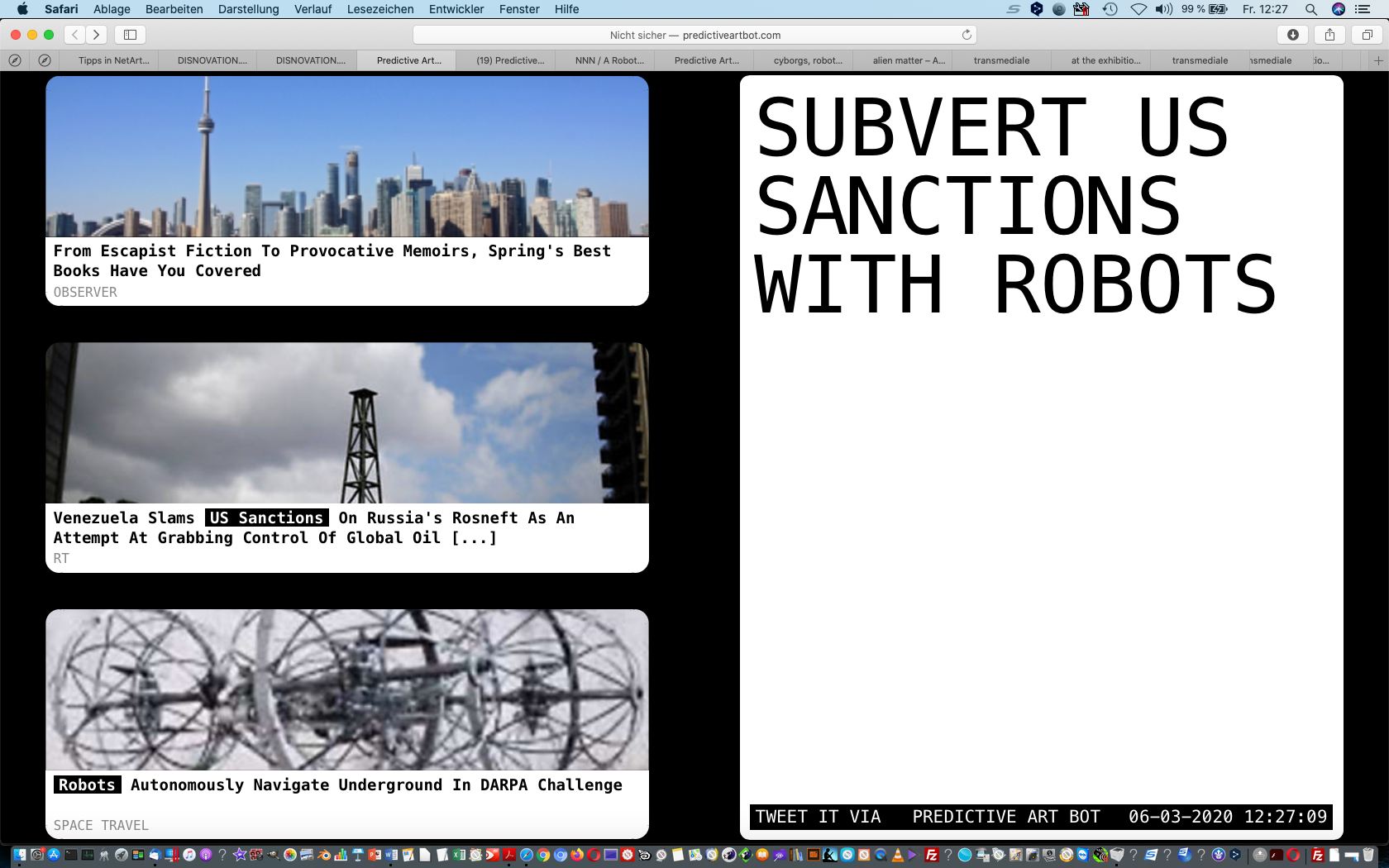
- Disnovation.org (Nicolas Maigret/Jerome Saint-Clair/Maria Roszkowska): Predictive Art Bot , 2015-18: A bot interferes with the filter bubbles of social media by selections of current news from different platforms as text sources, from which he generates concepts for the realization of artworks. On the left side, messages from three platforms are updated, while on the right hand side new concepts are created automatically. Users can choose which generated concepts will be saved on Twitter (Bot, Bootstrap; 3/2020).
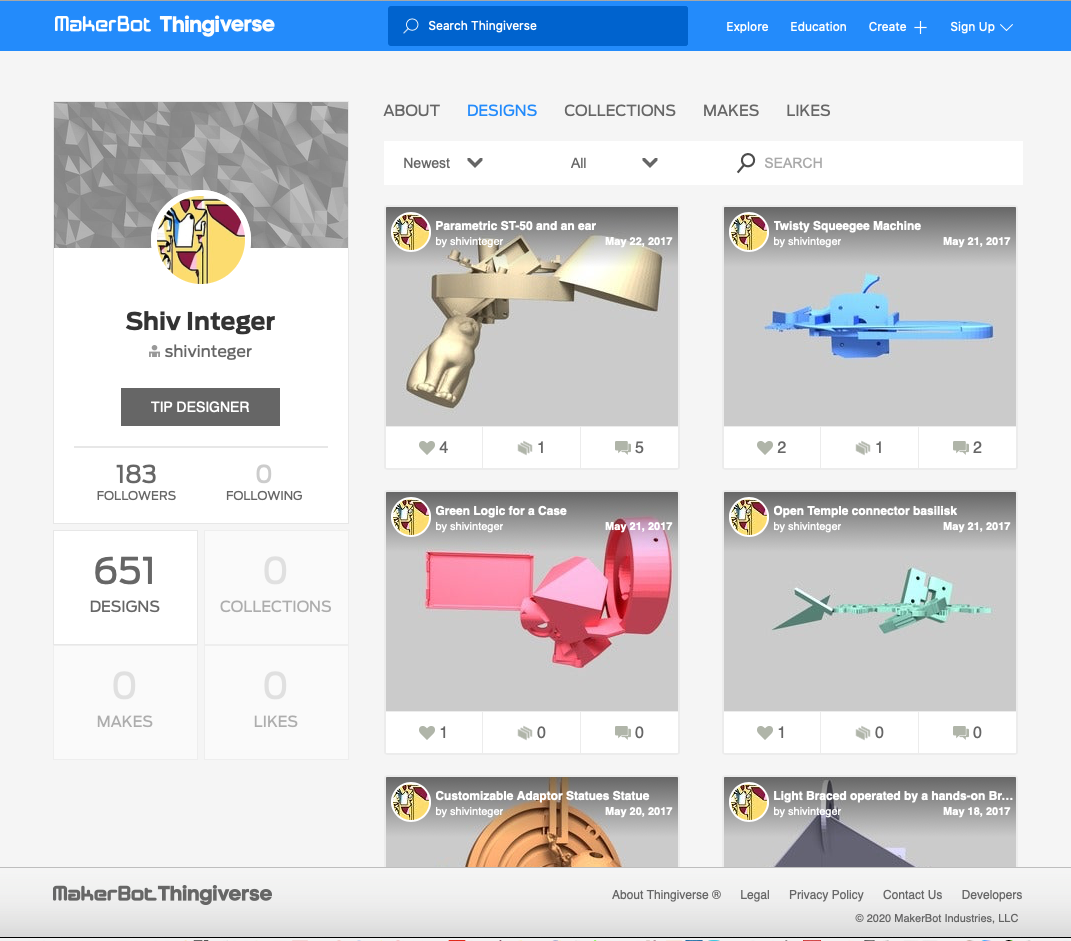
- Julien Deswaef/Matthew Plummer-Fernandez: Shiv Integer, 2016: From February 2016 to May 2017, a bot randomly selected .stl-format designs for 3D printers with a Creative Commons license for remix versions from the database of "Thingiverse" and combined the designs into useless variants that were partially not printable in 3D. The names for these versions were also generated from elements of the "Thingiverse" archive. With these names, the .stl-files were saved in "Thingiverse" under "shivinteger". The "Generating Attributions Log" lists the designs used by the bot for combinations. The authors of the selected designs received warnings from "Thingiverse". In the comments, the generated versions are often referred to as spam (Bot; 3/2020).
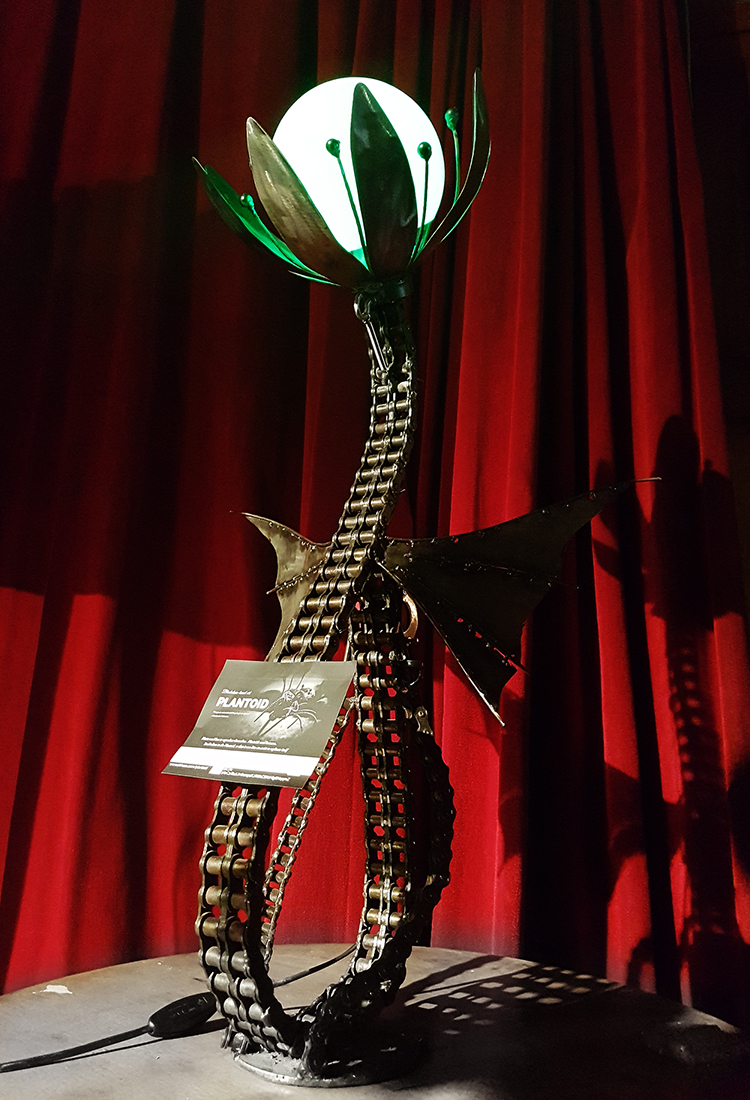
- Okhaos: Plantoid, 2016: Plantoid consists on the one hand of a kinetic sculpture that imitates plant shapes, and on the other hand of a Smart Contract in Ethereum (based on blockchain) that defines how the development of a new "plant" is controlled by the funders. Each sculpture has a "Bitcoin wallet" to which funders can transfer money. The "plant" can respond to incoming donations with movement and light. Each "plant" should be attractively designed by developers so that enough Bitcoins are collected by sponsors to be able to start the development of new "plants". Blockchain systems are understood as Distributed Autonomous Systems (DAOs), and Primavera de Filippi deduces from this the justification for calling "Plantoid a self-replicating system" - nevertheless: "Plantoids cannot reproduce themselves on their own." (De Filippi, Primavera: Plantoid - the Birth of a Blockchain-Based Lifeform. In: Catlow, Ruth/Garrett, Marc/Jonas, Nathan/Skinner, Sam (eds.): Artists Re:Thinking the Blockchain. Liverpool 2017, p.60) (Blockchain, smart contract, kinetic metal sculpture, website; 3/2020).
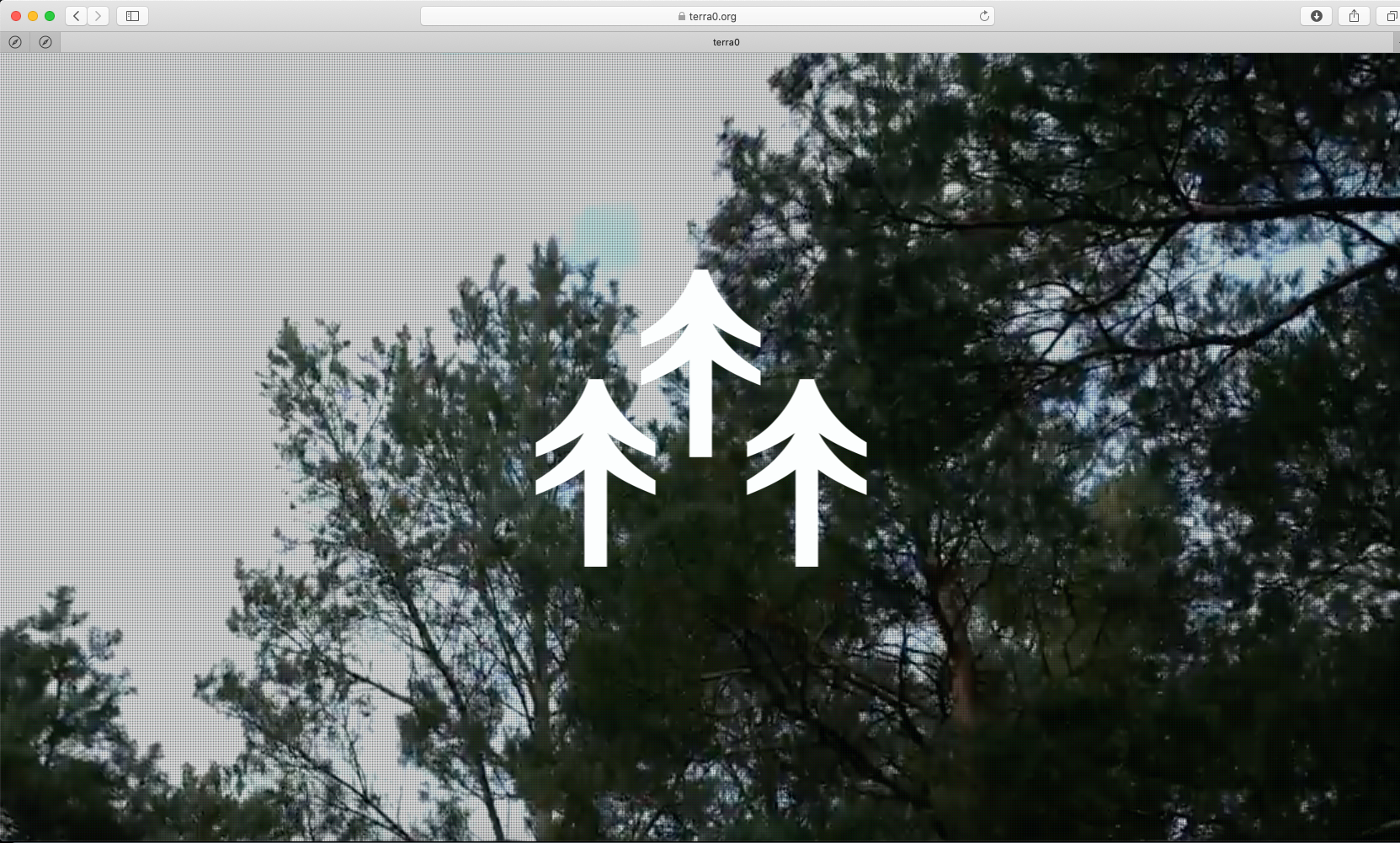
- Paul Seidler/Max Hampshire/Paul Kolling: terra0, 2016: "terra0" is a concept of a forest area managing itself by establishing a digital system via Ethereum. In a first procedure, a system receives data about saleable trees, either by humans or by means of a monitoring system. These trees are sold by means of share certificates in the form of smart contracts in Ether. As soon as the system has enough revenue to be able to manage itself, it buys back the shares from the project initiators to be able to decide itself on purchases and sales. In this way, a forest is installed as a "non-human actor" (NHA) of a Digital Autonomous Organization (DAO) (Blockchain, smart contract, website, forest; 3/2020).
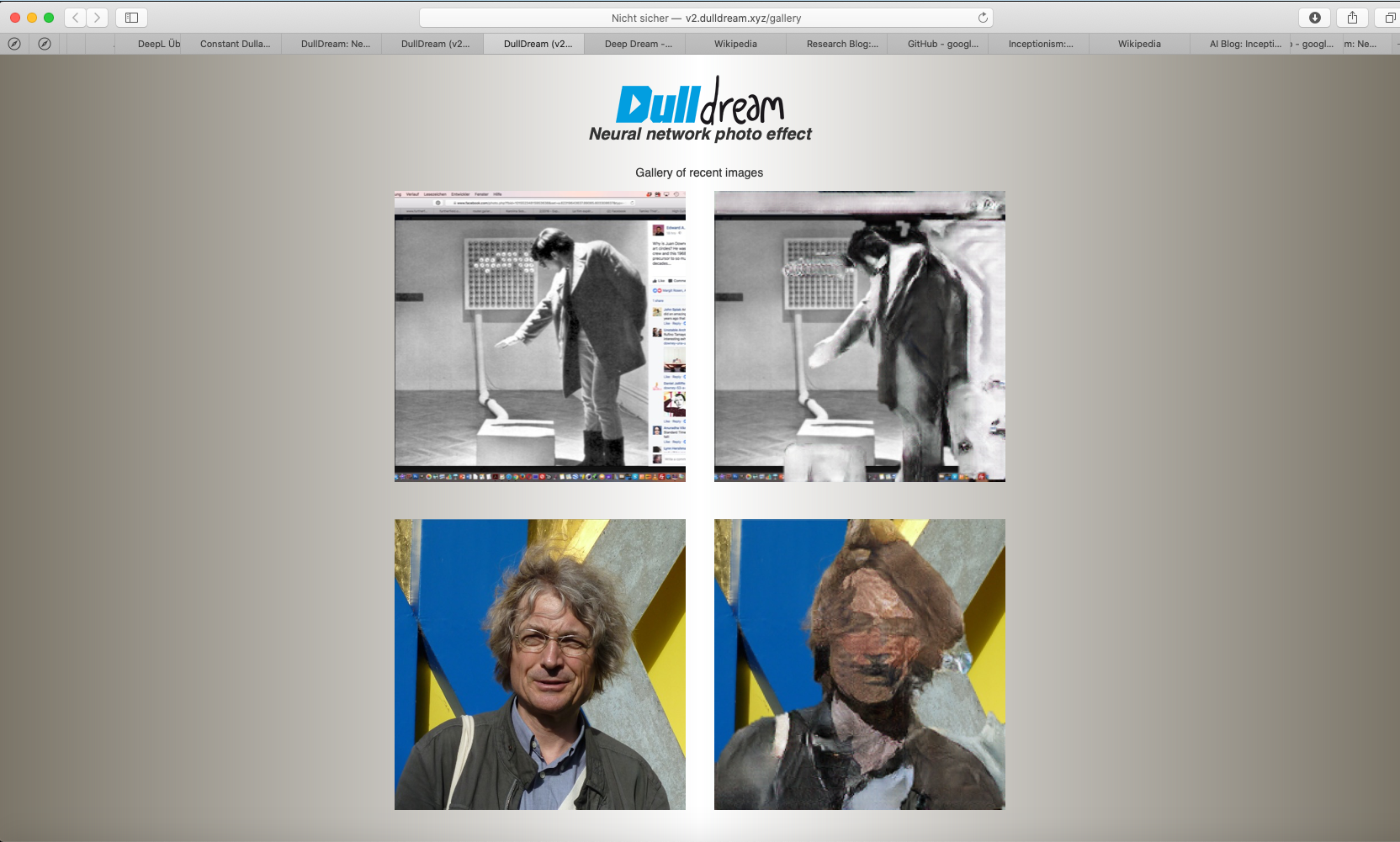
- Constant Dullaart/Adam Harvey: DullDream, 2017: "DullDream" invites users to enter photos. Transformed by one of the two types of pattern recognition ("v1"/"v2") offered for selection, the photos are not changed in order to be more striking in the sense of a program fed with photo data in a certain way, but to take their peculiarities beyond recognition: They become "dull", as the examples in the "Gallery of Recent Images" show. The "Detailed Analysis" shows the different types of image processing by demonstrating six ("v2") to seven ("v1") transformation phases of an image. Deep learning strategies of Google's Deep Dream and the use of image recognition tools in market research are counteracted (3/2020, 10/2020: not found on the Web).
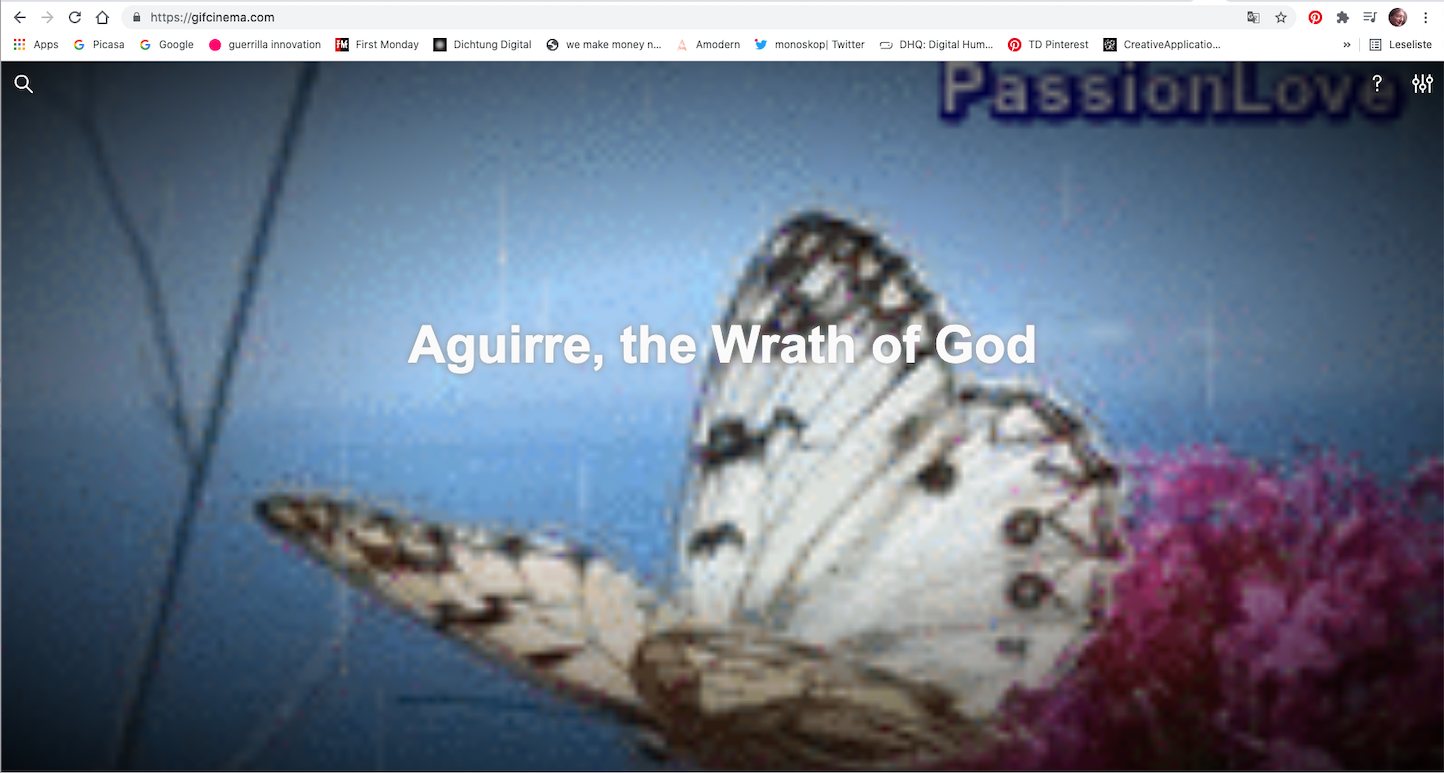
- Ben Benhorin: GIFCinema, 2018: Users are prompted to enter a movie title. "GIFCinema" searches for the subtitles of the movie (in opensubtitles.org) and bases the search for Animated GIFs (in giphy.com) on them. The subtitles are both displayed in the images and spoken by a robotic voice (Text Speech API). Three generating systems use multiple APIs to create a new work from digital archives that pose questions about authorship: Aren't net cultures today already as reliant on duplication as GIFCinema, and do current authorship laws still fit? (10/2022).
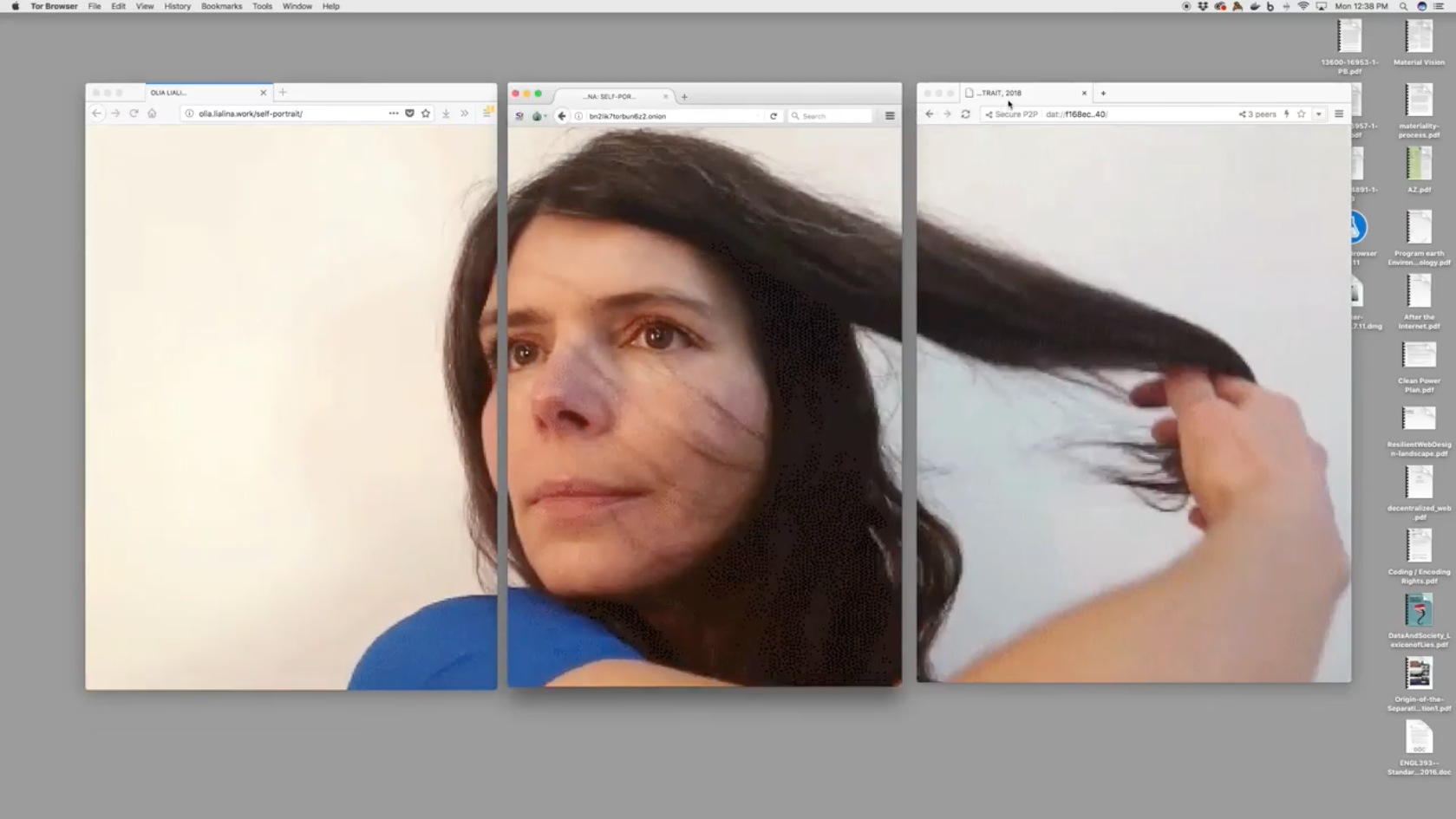
- Olia Lialina: Self Portrait, 2018: A diagram shows how a 'film' can be put together from three sources on the screen. On the left, a web page accessible via one of the usual web browsers is to be arranged, while in the middle another URL address is to be accessed via the Tor browser and on the right a URL address is presented for an access via Beaker: The Tor browser calls up the webpage in a way that is difficult to monitor compared to normal web browsers, while Beaker uses a "dat://" protocol. Lialina uses the browsers to combine three internet structures to form a self-portrait with wind blowing hair into her face. In a loop of image sequences running synchronously in the three browsers as if they are part of a film sequence, Lialina strokes her hair out of her face with her right hand (three browsers for different Internet protocols and instructions for their arrangement on the screen, Internet pages with HTML, Javascript and .jpg photos; 3/2020).
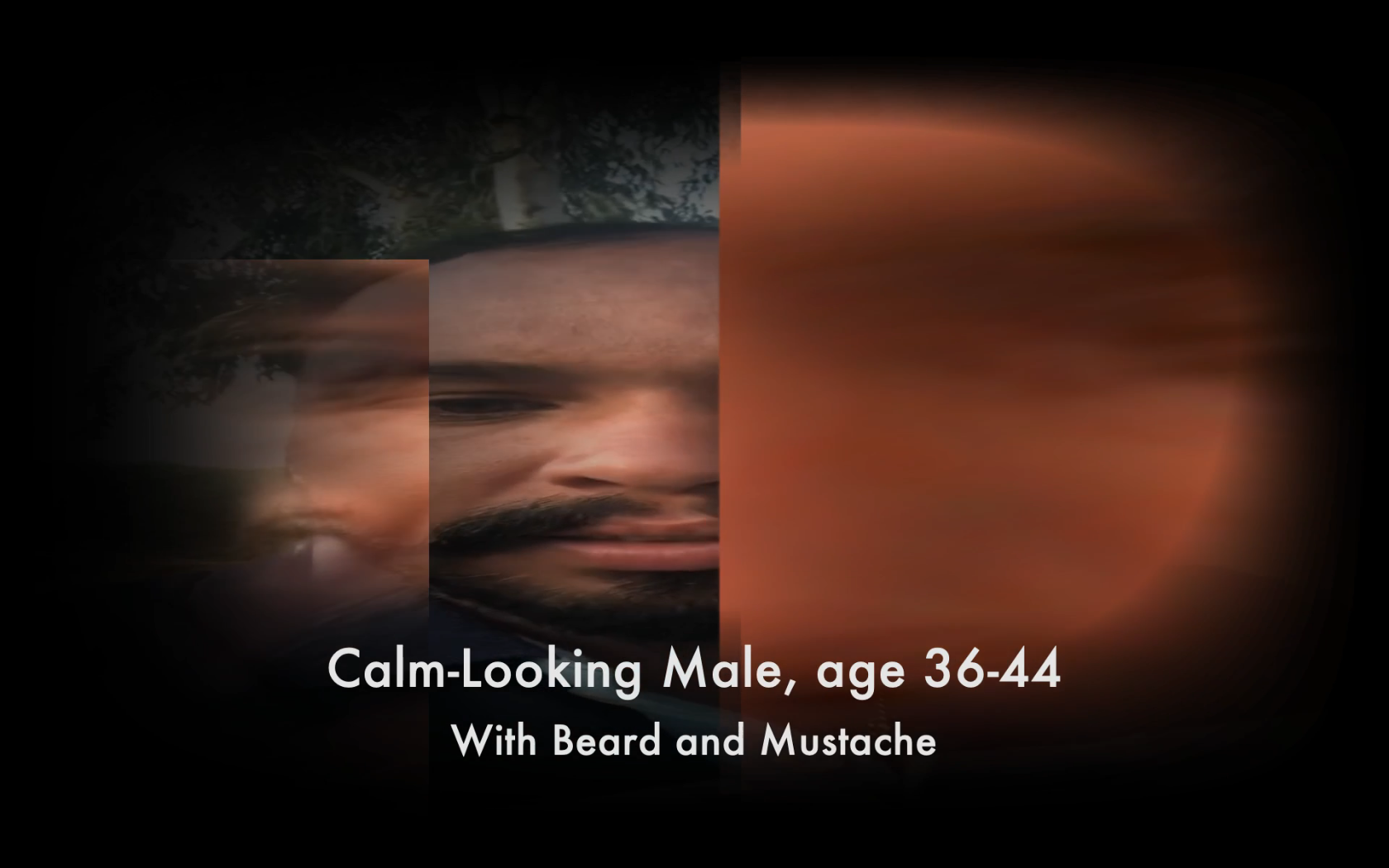
- Amy Alexander: What the Robot Saw, 2019: A livestream shows videos (image and sound) of people from movies that have not been favorited on twitch.tv. Sequences of films are shown that only internal search programs ('robots') capture: Since they are not presented in the search programs of video platforms, users cannot find them. In the livestream of Alexander's project, Amazon Rekognition sorts faces by age, gender and expression ("mood"). This information is used to generate image titles that are inserted into the livestream. Since eyes and glasses often appear, Amazon Rekognition's search for facial features apparently also plays a role in choosing clips from videos – and we see with the 'eyes' of the 'robot' (with an archive of stored livestreams) (10/2022).
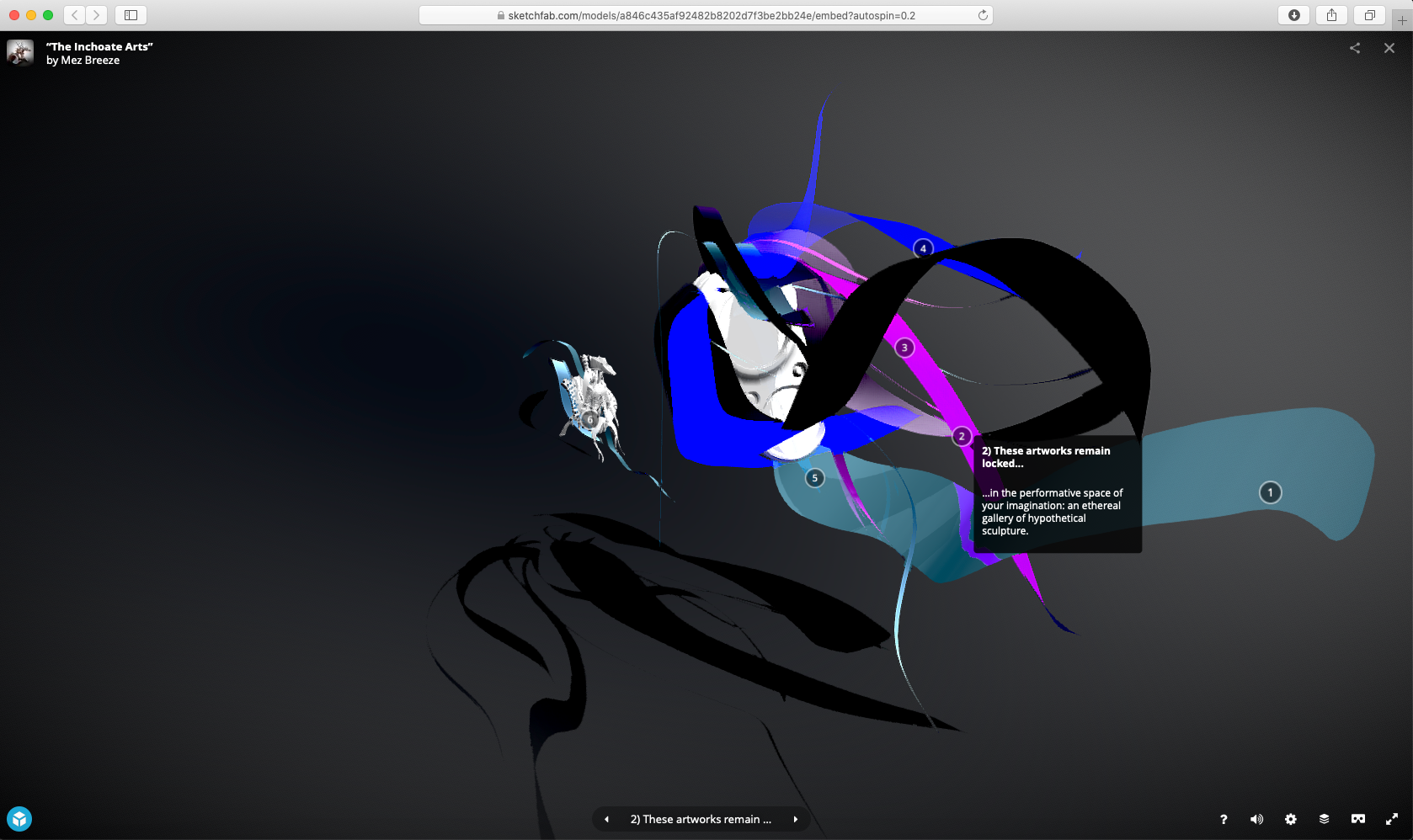
- MEZ Breeze: The V[R]erses, since 2019: MEZ Breeze distributes numbers in three-dimensional rotatabale fantasy figures designed by her. Clicks on the numbers open text parts, which authors wrote as "microstories" for each "V[R]erses". The 3D simulation can be observed with VR glasses, but also on the screen (Web VR, VR glasses, sound; 3/2020).
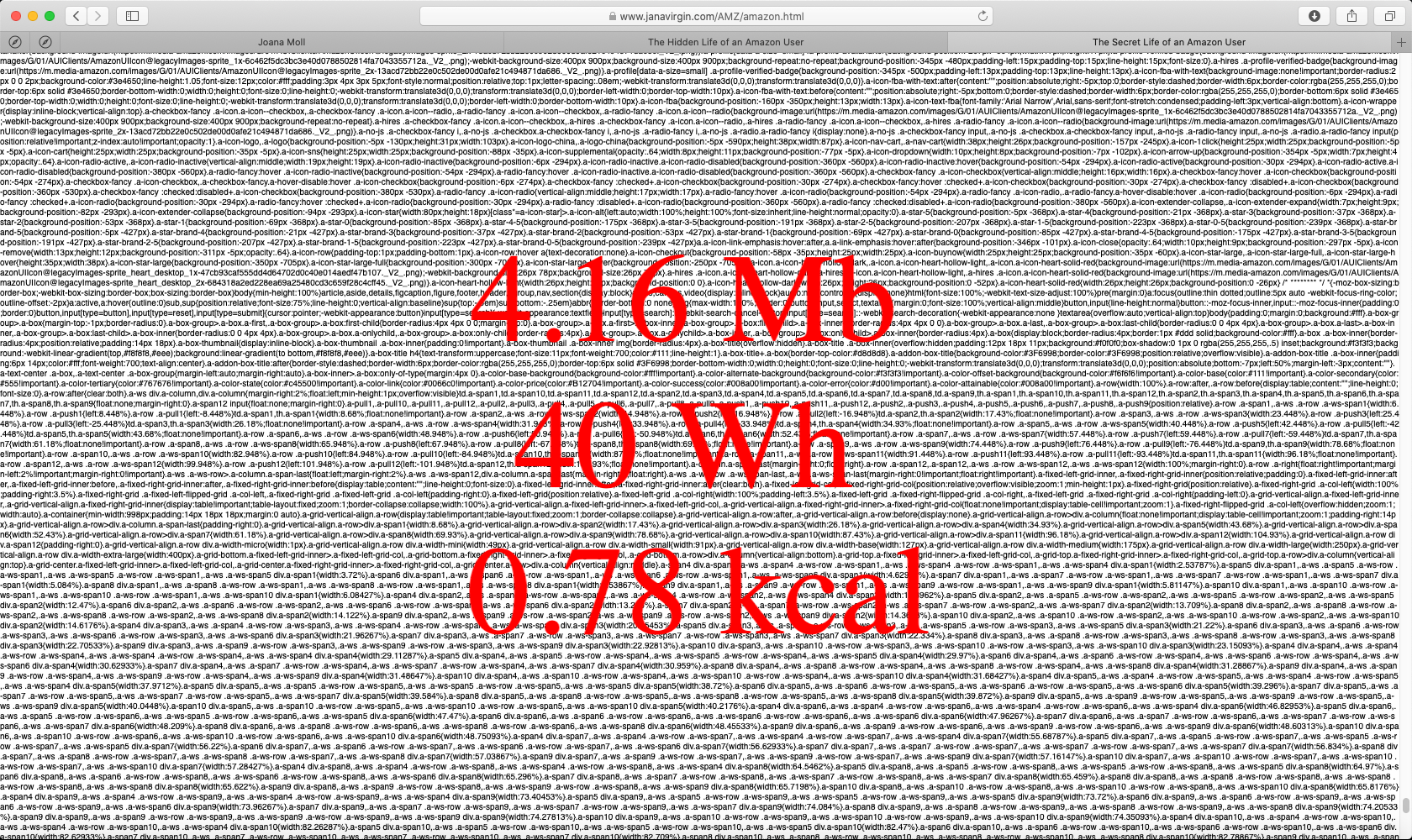
- Joana Moll: The Hidden Life of an Amazon User, 2019: A screenshot shows the homepage of Amazon with the search input "Jeff Bezos". When Moll bought his book "The Life, Lessons & Rules for Succes..." on 17.6.2019, she also paid attention to the codes Amazon uses to track user behaviour in order to influence it. Under the screenshot Moll presents these codes being usually invisible to users. The codes show information on the energy consumption caused by themselves. In scrolling through the codes, the numbers on energy consumption are growing, and users are confronted with the energy consumption that is also caused by their personal computers: Amazon's business model of being able to better manage the needs of its customers is also at the expense of the customers. Moll demonstrates these facts hidden by Amazon (HTML, Javascript, Screenshot; 3/2020).
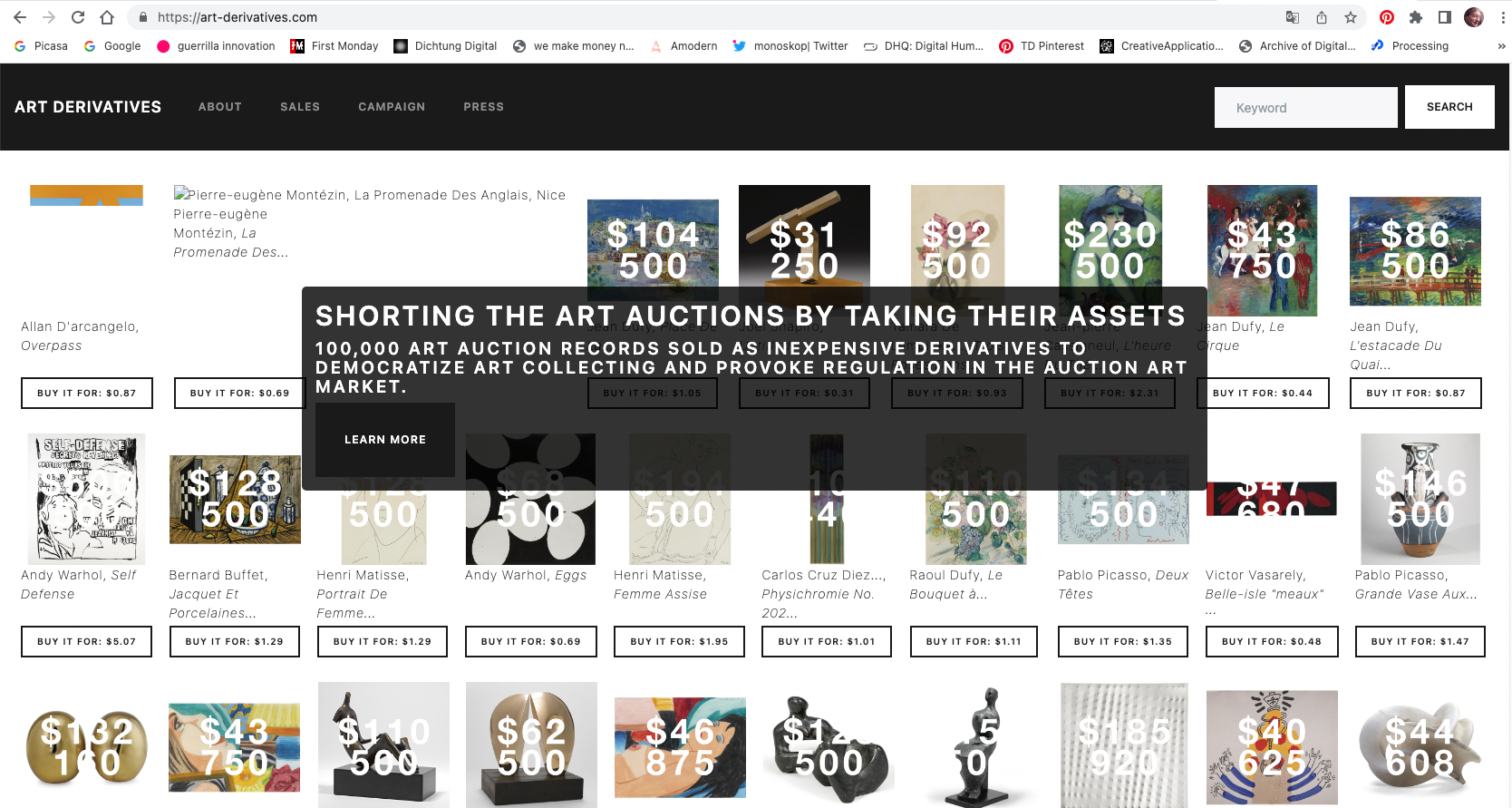
- Paolo Cirio: Art Derivatives, 2020: Paolo Cirio archived auction results from Sotheby's since 2016. As part of a campaign he initiated to regulate the art trade, he has been offering reproductions at one hundred thousandth of the auction price on the website "Art Derivatives" since 2020. The buyer receives, first, a file with a photo of the auctioned work, on which the price achieved is written in white numbers, and second, a certificate with a signature (10/2022).
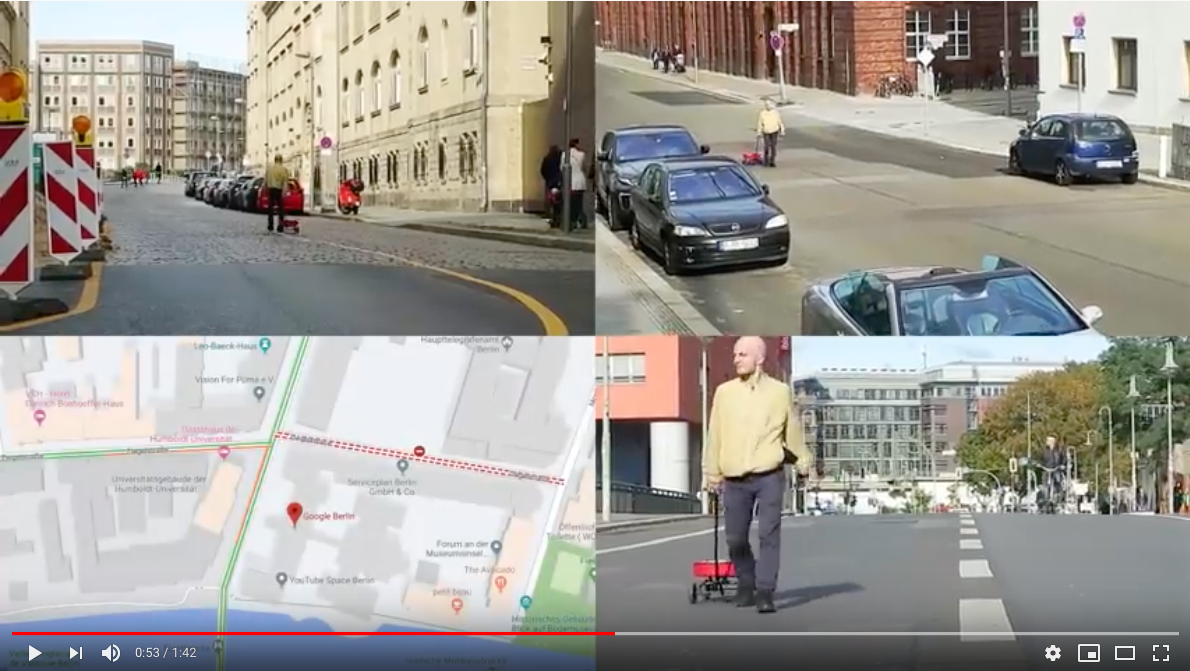
- Simon Weckert: Google Maps Hacks, 2020: If smartphone users have enabled GPS localization, then Google Maps will show the frequency with which these smartphones move on roads by changing the color of the street line from green to orange or red. When Weckert turned on the GPS localization of 99 smartphones, loaded them into a handcart and pulled it on streets, then Google Maps reacted by changing the color to red for traffic jams, while the video documentation shows him walking on roads with little traffic (99 smartphones, GPS, Google Maps, handcart, video documentation; 3/2020).
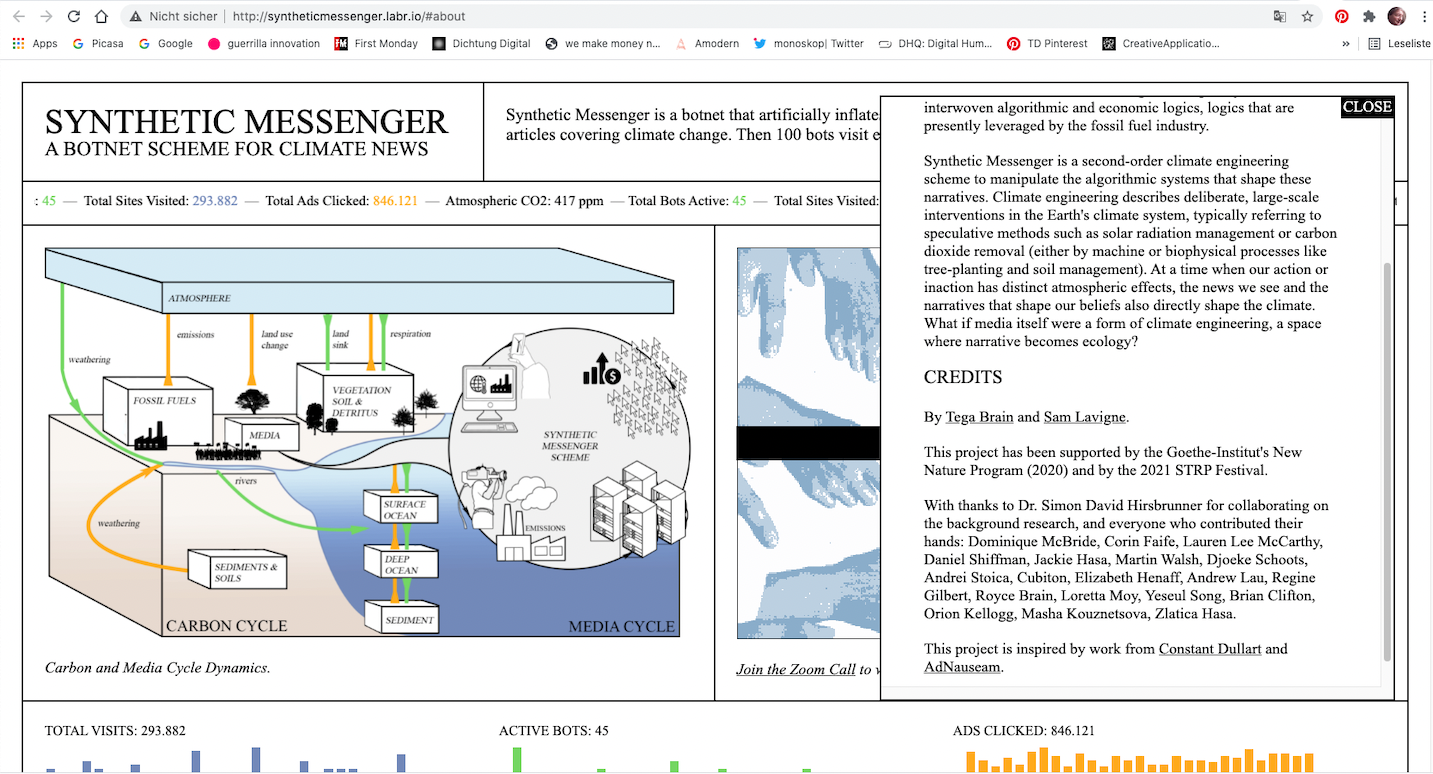
- Tega Brain/Sam Lavigne: Synthetic Messenger, 2021: "Synthetic Messenger" detected websites with messages about climate change. A botnet executed clicks on ads displayed there. By April 3, 2022 – the time the botnet was active – 6,409,296 advertisements were reportedly clicked on. Websites with a large number of clicked advertisements are classified as successful by search systems, which is why messages about the climate crisis became more important thanks to "Synthetic Messenger". Brain and Lavigne demonstrate the manipulability of search algorithms, ironically in a case where we put up with it (10/2022).
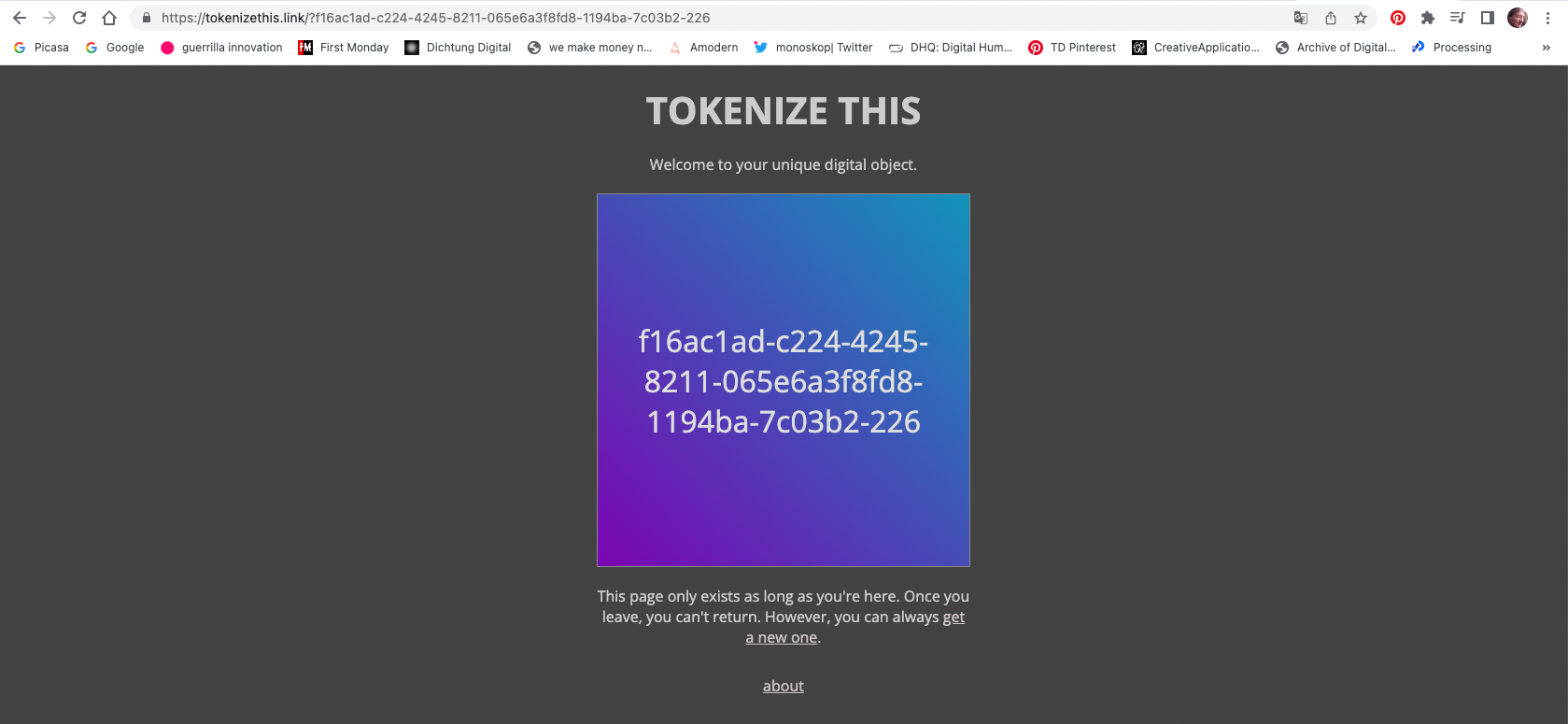
- Ben Grosser: Tokenize This, 2021: While Non-Fungible Tokens (NFTs) provide reproducible digital files with a singular certificate, Grosser's web project provides unique works of number and letter sequences similar to those used as signatures in NFTs. As soon as the tab is closed or the refresh button is pressed, the displayed string is irrevocably gone. Should someone want to sell one of the sign sequences of "Tokenize This" as a reference file of an NFT, this file would be inaccessible to the buyer. Grosser reverses the revaluations that NFTs bring about in computer art: What is permanently available becomes unique and ephemeric, what is exclusive (signature of the NFT certificate) becomes a sequence that can be replaced at will (10/2022).
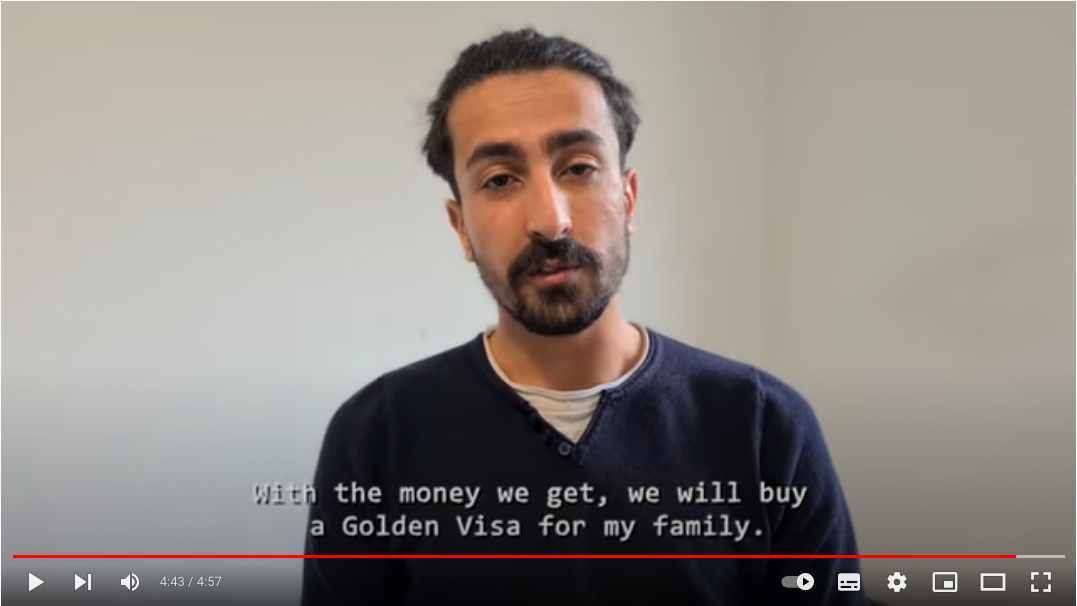
- Peng! Kollektiv: Golden NFT, 2021: The Peng! Collective offers non-fungible tokens of digital works by various artists (via OpenSea) to raise money for a project to obtain European passports for immigrants ("Golden Visas" for investors): Poor non-Europeans will be able to get passports the same way rich non-Europeans get them! (10/2022)
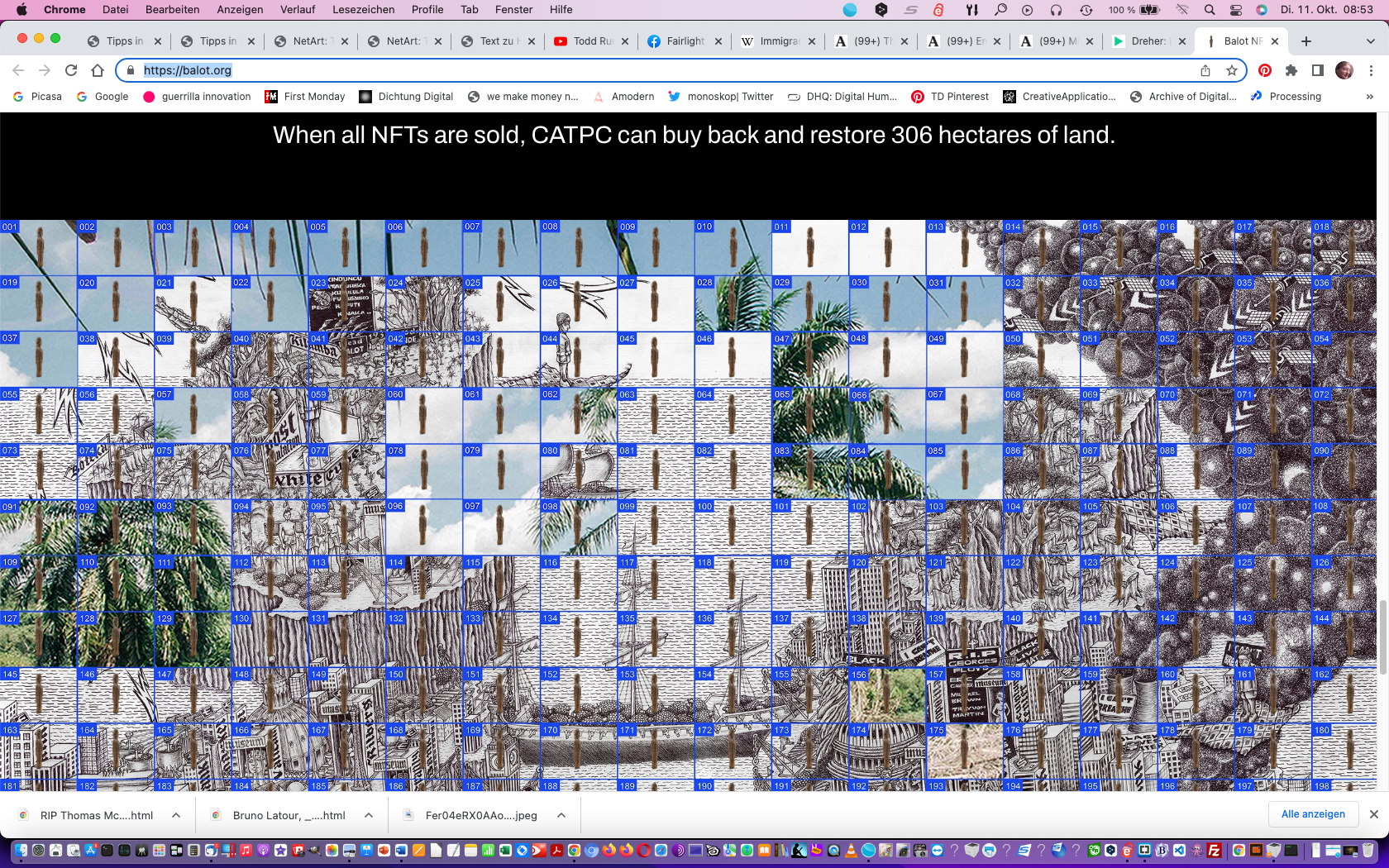
- CATPC/Martens, Renzo: Balot NFT, 2022: 306 partial simulations of a wooden sculpture created in Congo in 1931 by Belgian colonial official Maximilien Balot are offered as Non-Fungible Tokens (NFTs) by the Art League of Congolese Plantation Workers (CATPC). One hectare of plantation land will be purchased per token. The wooden sculpture was created on the occasion of an uprising of the Pende against the plantation system of Unilever and the Belgian colonial power: The spirit of the slain Balot should be calmed with it. Today, the sculpture belongs to the Virginia Museum of Fine Arts in Richmond, which is involved in a legal dispute with Renzo Martens over the rights to the photographs used in the simulation (Kasprzak, Michelle: Ethical Engagement with NFTs – Impossibility of Viable Aspiration? In: Makery Media for Labs 2022) (10/2022).
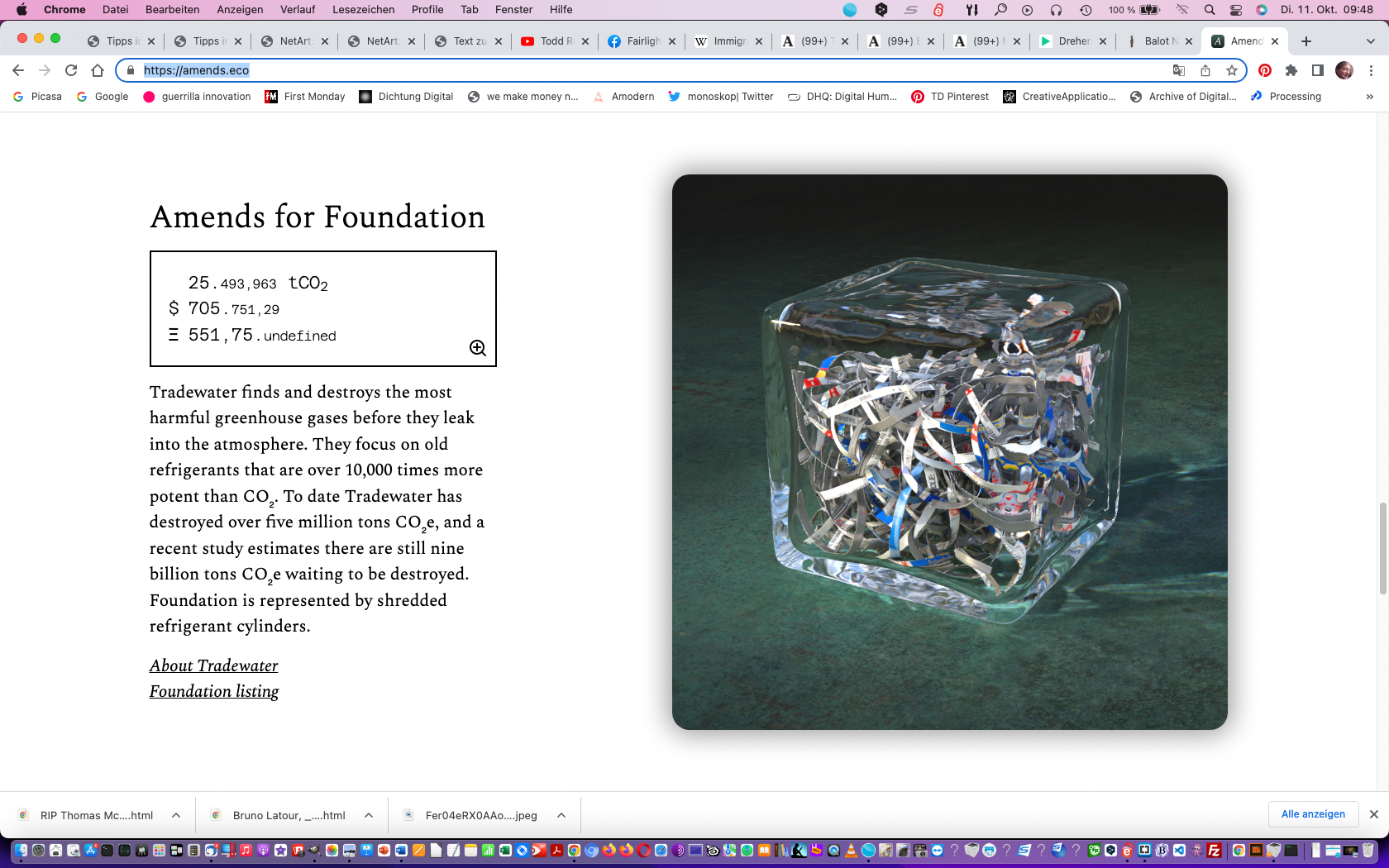
- Kyle McDonald: Amends, 2022: Through three platforms (OpenSea, Rarible, Foundation), Kyle McDonald offers Non-Fungible Tokens (NFTs). One organization per platform (Noris, Tradewater, Project Vesta) benefits from revenue to reduce environmental damage (greenhouse gas emissions) caused by carbon dioxide (CO2) varies. The price of NFTs is based on an estimate of Ethereum's CO2 pollution (Ethereum is the technical basis of NFT trading). Buyers can receive a plexiglass cube with one of the CO2 reduction products of the supported organizations that benefit from the NFT trade. The condition is that buyers burn their NFT certificate: either a cube or a certificate (NFTs, plexiglass cubes, CO2 reducing products, contracts with participating organizations).

![1:1(2) [migration]](NATipp23.jpg)
![[six.circles]](NATipp19.jpg)

![[openspace] wilderness](NATipp73.png)
[ Home | Top | Index NetArt ]